
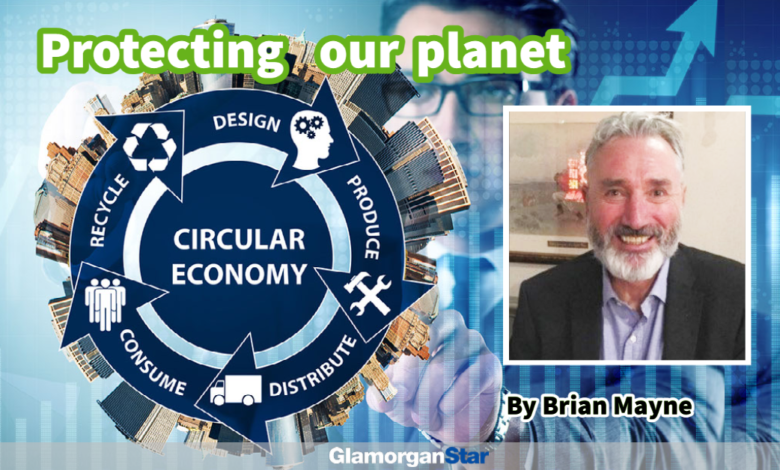


The ‘circular economy’ is not the same as recycling
This month’s column looks at the circular economy, what it means and the benefits it can provide.
MOVING towards a more circular economy will see us keeping products and materials in use as long as possible, getting maximum value from them, reducing waste and supporting the efficient use of resources.
The circular economy contrasts with our present linear economy, where we take materials from around the world make products from them, and eventually throw them away as waste. In a linear economy, value is created by making and selling as many products as possible.
A key element of this linear process is planned obsolescence, where manufacturers deliberately shorten a product’s useful life, which means we are continually faced with having to buy new goods. This is done by manufactures often changing the design of products and stopping the supply of spare parts. If you have ever bought something only to find it break down soon after the warranty has ended, you know exactly the frustrations of planned obsolescence.
People often think that the circular economy is just another term for recycling – it isn’t. Recycling begins at the stage where we discard a product at the end of its life. The circular economy, however, goes right back to the start of the process to prevent waste and pollution from being generated in the first place. In the face of our current environmental challenges, whilst recycling has a key role it won’t be enough to overcome the vast amount of waste we produce.
Moving from a ‘throwaway’ consumption model towards a circular economy supplies numerous economic, social, environmental and well-being benefits.
According to the UK Government, businesses could benefit by up to £23 billion per year through low cost or no cost improvements in the efficient use of resources. In Wales, studies have found the adoption of a Circular Economy could save the Welsh economy up to £2bn and has the potential to create up to 30,000 jobs.
Refurbished and remanufactured products, an outcome of the circular economy, can also cost less than new products because of cost savings made from the recovery of the materials. Prices of remanufactured goods are usually 20 to 40 per cent lower than equivalent new products, which would be welcomed by all of us during the present cost of living crisis.
Finally, according to Public Health Wales, a circular economy approach in Wales, if successful, can have a profound, beneficial health impact at population level.
To realise these benefits, we need governments at all levels willing to take bold steps to develop policies and support businesses to adapt to deliver a circular economy.
- The views expressed by columnists of this newspaper do not necessarily reflect the views of the Glamorgan Star, its employees or its proprietors.
Next:
- Penarth ramblers enjoy their weekend in Sussex
- Ramblers explore Sully Island
- Ramblers celebrate with a picnic in the park
- Penarth ramblers take a liking to Lydney
- Ramblers explore two sections of the Heritage Coast
⭐ All of our social media in one handy place – here


Pencoed tangled up by ‘Seaweeds’
Primary school’s former deputy head is banned from teaching
I make no apologies for calling Plaid Cymru ‘separatists’

‘The importance of participation and continued learning’

Opposition leaders clash with First Minister over independence rally

How Kevin saved a stranger’s life