






Cowbridge U3A news:
It is always a pleasure to hear a well-researched and presented talk, and Keith Jones did not disappoint the Cowbridge U3A History Group in recently with his story of The Great Stink of London.

In the 19th Century, Londoners were no strangers to filth; the many thousands of horses in the capital filled the streets with dung, soot from coal fires blackened buildings, families were crammed into insanitary, overcrowded houses and there was rubbish everywhere. Human faeces, known euphemistically as “night soil”, drained into many cesspits, which were emptied irregularly, with the contents being sold as fertiliser to farmers on the outskirts of the city.
As the population of London doubled between 1800 and 1850, there was too much night soil and too few farmers.
The River Thames had become a “monster soup” of effluent, depicted in cartoons from the 1820s onwards, but little was done to clean the fetid water. The increased popularity of flushing toilets, with the contents going directly into the river, was a major contributor to the Great Stink event of 1858.
That summer, London had a two-month long heat wave, with temperatures up to 118F (48C). Water levels in the Thames dropped dramatically, with six foot deep mounds of faeces forming. The stench was horrendous and the press widely publicised the dire situation. Queen Victoria was forced to curtail a boat trip on the river because of the unbearable malodour.
Eventually, Members of Parliament began complaining, even though windows in the Houses of Parliament building were kept firmly shut and the curtains were soaked in strong bleach. With the problem now on their own doorstep, the House of Commons acted with unheard of speed, legislation being passed in only 18 days.
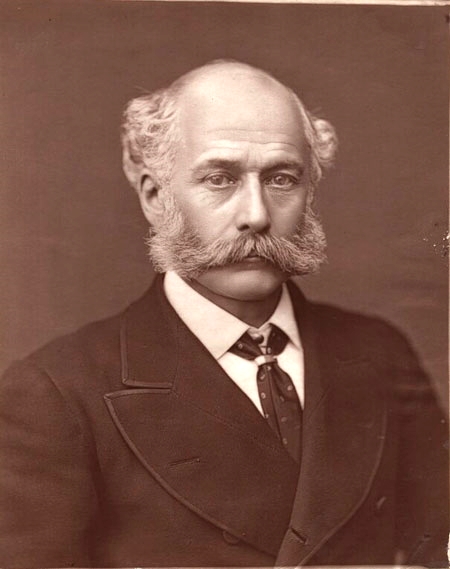
Joseph Bazalgette was appointed to be in overall control of building a new sewage system for London. He was an inspired choice, showing tremendous foresight and a close interest in the work as huge, interconnecting sewers were constructed to capture London’s human waste before it reached the Thames. The project was well-planned and executed, with the work, which took 16 years, being done to the highest specifications and standards.
There were 82 miles of main sewers, 1,100 miles of street sewers and four pumping stations (now all listed buildings). The Victoria, Albert and Chelsea Embankments are all products of the mammoth construction project.
As the sewage was still deposited, untreated, into the Thames, albeit further downstream from London, complaints persisted until the 1880s, when treatment works were introduced.
It is a tribute to Bazalgette’s integrated sewage system that it still operates efficiently underground in London today. Designed to cope with the “output” of 3 million people, it was still effective into recent times, despite the population increasing by 240 percent.
The ongoing Thames Tideway Tunnel infrastructure project is designed to combine Bazalgette’s existing sewers, still in good repair, with a new, ‘Super Sewer’, planned to prevent untreated sewage being discharged into the Thames during periods of heavy rainfall.
SPM
🌟 This article first appeared in the printed edition of the Glamorgan Star on 02.06.22
| Scroll down to comment on this article



• | The Cowbridge family with links to Tsarist Russia


Pencoed tangled up by ‘Seaweeds’
Primary school’s former deputy head is banned from teaching

I make no apologies for calling Plaid Cymru ‘separatists’
‘The importance of participation and continued learning’

Opposition leaders clash with First Minister over independence rally

How Kevin saved a stranger’s life

| Scroll down to comment on this article


