




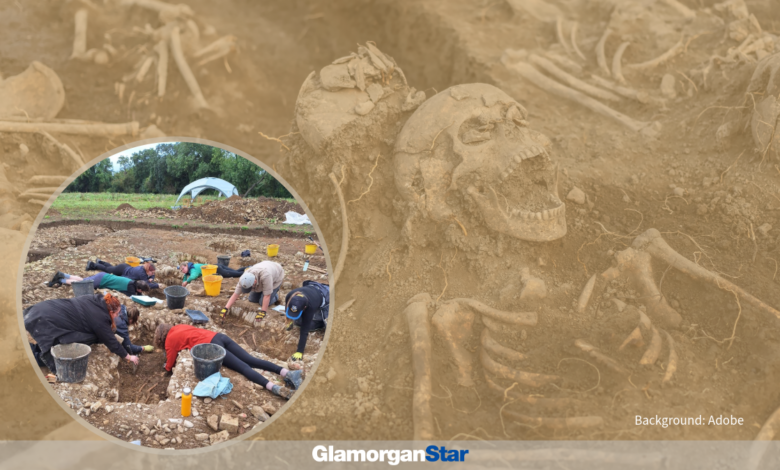


IN the last month, several significant archaeological finds here in south Wales have been brought into the public domain.
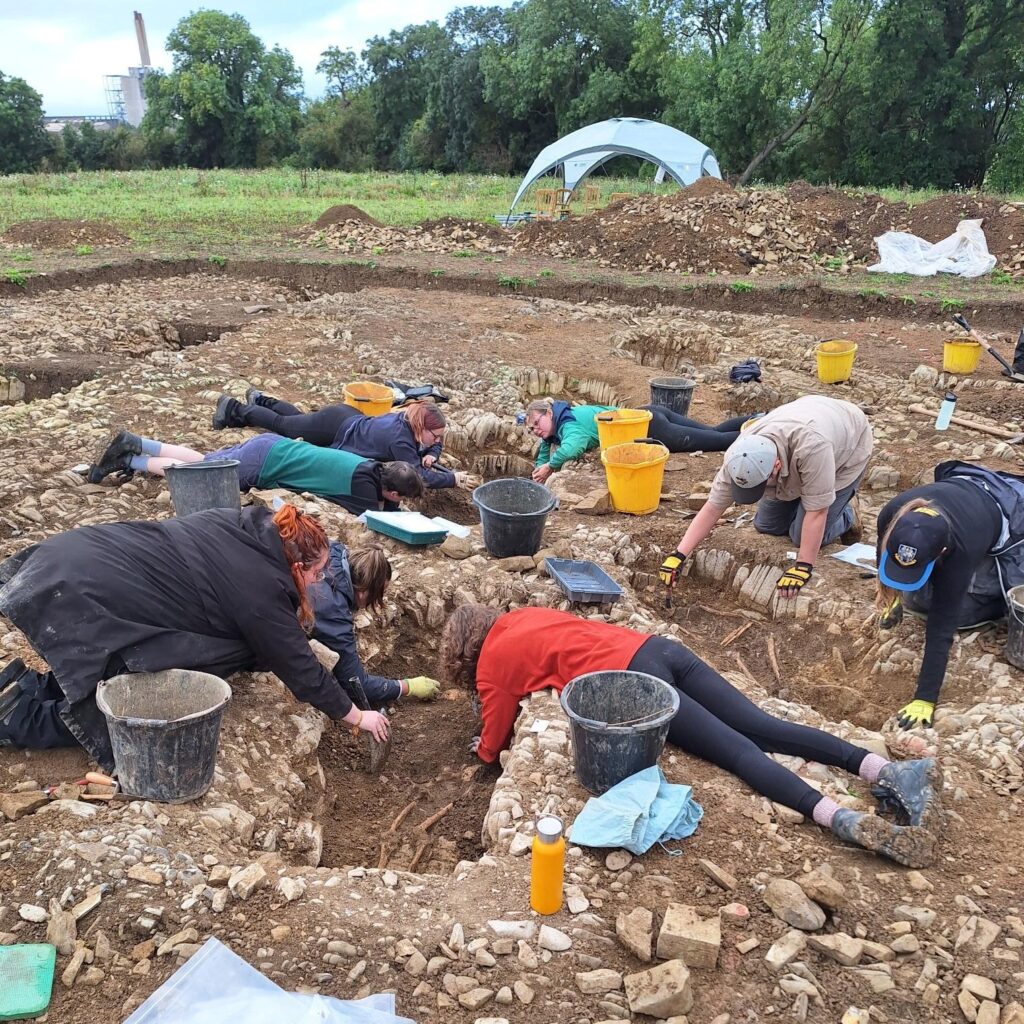
The BBC TV programme ‘Digging for Britain’ has revealed some amazing discoveries. Including an incredible 5th Century burial site in Fonmon. The reason why that one in particular is so significant is because it tells us something about life during an episode of history known as the Dark Ages.

For centuries we have all been taught in history lessons at school that during this period the ancient Britons effectively rewound the clock and abandoned civilisation. Supposedly, they all moved out of their stone-built palaces and chose instead to live in mud huts. Like some post-apocalyptic scene from Mad Max.
But is that true? Or even likely? And now that archaeologists are tripping over evidence left, right and centre that it probably is not true, why did we all accept it for so long?
The period of history we call the Dark Ages begins in 410. That is the date when it is officially recorded that Rome tells the Britons to “Look to your own defences”. It then runs to 597, the year when Pope Gregory the Great of Rome credits himself with converting the heathen Britons to Christianity.
So, the first thing that stands out, is that as Ages go, this one is not a particularly long one. Not even 200 years. And here is a typical example of how academic historians have traditionally written about it. In 1943, the revered historian Sir Frank Stenton wrote “between the end of Roman government in Britain and the emergence of the earlier English kingdoms, there stretches a long period of which history cannot be written”.
Admittedly, there are fewer surviving written records from this period than there are for the preceding Roman period. But, even leaving the announcements in the last month aside, we already had plenty of archaeology to show that Britain was still very much a civilised society in this period. The trouble is, because we have all been taught in school that this was a dark period where nothing civilised happened, no one was looking for the signs.
Let me give you some examples. Take the Roman town of Roxeter which was discovered in Shropshire just over a century ago. This place was excavated by Victorian archaeologists who just labelled everything they uncovered as Roman. Had any one of them veered from that prognosis they would have faced ridicule.
Why? Because there was no appetite to prove wrong the accepted wisdom that the Dark Ages were very, very dark indeed. Especially when you bear in mind that the Victorian era was a time when the British Empire was at its height. And the Victorians very proudly compared the British Empire with the Roman Empire. It really suited them to believe that when a great empire collapses, chaos and darkness ensue.
So, the last thing they were looking for was evidence of civilisation between 410 and 597. Especially when they had been taught at school that such a thing could not be possible.
There was a fresh dig in the 1980s with some slightly more open minds and a massive new building was discovered on top of the foundations of the Roman granaries. It is dated to the late 5th Century – around 100 years after the Romans left. And this is far from an isolated incident.
Arguably the biggest case of all for a civilisation in Britain during the Dark Ages is once again on our own doorstep. The holy monastery and school founded by St Illtyd in Llantwit Major. It was producing saints and intellectuals by the truckload. Even before 590, when Pope Gregory the Great took credit for converting the heathen people of Britain to Christianity, it is on record that he was urged to read the theological works written by Gildas the Wise. A monk in Llanilltyd Fawr who was regarded as one of Europe’s foremost theological thinkers in his time.
So, the Dark Ages really weren’t that dark round here. It would seem that pockets of Glamorgan were amongst the most enlightened places in the known world.
By Graham Loveluck-Edwards
- Graham Loveluck-Edwards writes books on Welsh folklore and legends. They are available on Amazon and at all bookshops. For more information visit here.
- Let’s build something better for our communities

- Plaid Cymru is ignoring plight of Heath Hospital
- Vale Show highlights importance of the rural economy

- I’m proud that all parties agreed on children in care plan

- Royal Welsh highlights the role of the rural economy
- My personal journey will drive my work in the Senedd
⭐ All of our social media in one handy place – here


Pencoed tangled up by ‘Seaweeds’
Primary school’s former deputy head is banned from teaching
I make no apologies for calling Plaid Cymru ‘separatists’

‘The importance of participation and continued learning’

Opposition leaders clash with First Minister over independence rally

How Kevin saved a stranger’s life


