Ken Skates in Barry – picking up the pieces after May 7
An exclusive interview with the Glamorgan Star

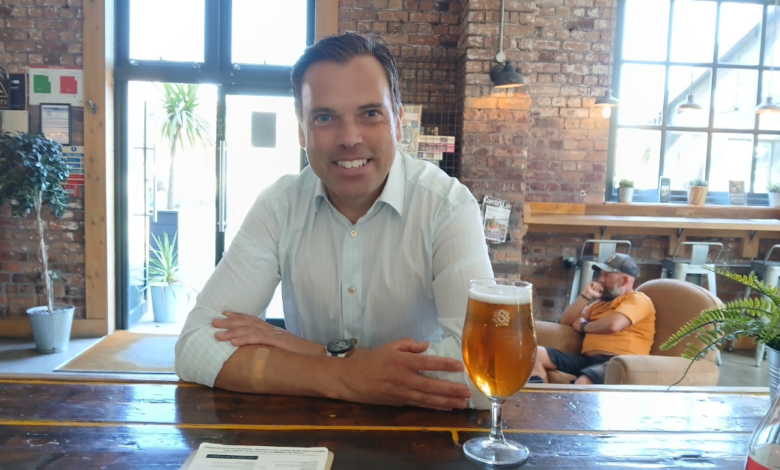


LAST month, Ken Skates was confirmed as the new leader of Welsh Labour, having held the role on an interim basis since the party’s heavy defeat at the Senedd election in May.
On Friday, he visited Barry as part of his Wales-wide summer tour, where he was interviewed at the Academy Espresso Bar by Marcus Stead.
Q. In May, Welsh Labour took a severe drubbing at the Senedd election. With just nine members, the party now has fewer than 10% of the seats in the chamber. It was a catastrophic result for a party that has largely dominated Welsh politics for a century. What lessons have you learned from that experience?
A. It was an historic result, and one that we’ve got to take seriously. We need to reflect on it dispassionately and objectively, so there’s going to be a review reporting in the early autumn. It’s being carried out externally by experts looking at what led to the defeat, how we got there, not just as a result of the campaign itself, but in the months and years leading up to the election.
In parallel with that, I’m speaking with members of the party, getting around Wales on a tour so we can learn how people felt about the party not just leading into May, but how they felt about the situation within the country.
Some early lessons that are emerging are that you should always resist becoming institutionalised, and especially for the Labour movement it’s vitally important we represent the communities we serve in the Senedd, not the other way around. We’re not spokespeople for authority within our communities, and that means people have to be willing to be rebellious, we have to be willing to stand up for what is right and support our values. We need to listen to people, not lecture people, and we need to prioritise what matters most, which is health and wealth for all.
We’ll learn more lessons as the independent assessment is carried out. I’m hearing from party members every day, members of the public every day, and with what’s currently happening at Westminster, there’s an opportunity to reconnect with the public, and that’s what Andy [Burnham] and I will be doing in the current weeks and months.
Q. Talking to Glamorgan Star readers, I sense there is a disconnect between Welsh Labour and the electorate. The party still has the support of some middle class voters, particularly people working in the public sector, though even a significant proportion of those have switched to Plaid Cymru. But where Welsh Labour’s support has fallen most drastically is among working class communities such as people living in Cadoxton, the valleys and many other places, too. Welsh Labour has also lost support among the self-employed and small business owners. In other words, your party is no longer backed by sections of society who are really struggling to make ends meet at the moment, they blame Labour policies for that, at both Welsh and UK level, and their support has largely gone to Reform UK. If Welsh Labour is to have any hope of recovering from May’s result, you’re going to have to find ways of re-engaging and connecting with these communities, including people who voted Reform. How do you plan on doing that?
We are a party that was established to represent the workers, we were established by workers, but as the party that ran the Welsh Government for 27 years, we got to a point where we became part of the establishment, and there’s always a risk that when you become part of the establishment that you become risk averse, and when you do that you’re not necessarily representing people who have severe challenges, and want their concerns to be heard and responded to in an appropriate way.
Somebody contacted me the other day and said I’m the most working class leader the Labour Party has had in Wales. I’d never thought about it in that way, but I reflected on it and I realised that yes, I am probably the most working class leader of the party in Wales since devolution. My parents met at the steelworks in Shotton. Those steelworks still hold the pretty awful record for having the biggest loss of jobs at a single facility in European industrial history. So I grew up in the aftermath of 8,500 people losing their jobs, and I know what hardship is, I know what week-to-week struggle means to people, how you respond to it and how it lives with you and how it scars you.
I also understand how important it is to have political leaders who, when they listen, actually understand what sort of a life you’re living, the sorts of struggles you’re facing every day, and the real day-to-day problems that exist with the cost of food, having enough money to stretch to the end of the week, being able to keep the house warm, being able to pay the bills, and being able to give your children something to hope for.
Right now, it’s incredibly difficult for people. We had the best part of managed, sometimes unmanaged economic decline for nearly two decades. We had the financial crash in 2008, we had a decade of austerity, then we had Boris Johnson borrowing heavily, then we had Liz Truss’s mini-Budget, and in between that we had Covid and Brexit. So, for a huge number of people, they’ve never known anything other than austerity. It’s no wonder that people are angry and frustrated, because they haven’t seen change fast enough.
Q. But with all due respect, up until a few months ago, Welsh Labour had been in power since the start of devolution 27 years ago, sometimes alone, and sometimes with a coalition partner or less formal co-operation arrangement. Are you now not in a similar situation to the one the UK Conservative leader Kemi Badenoch has in Westminster, whereby she’s making policy announcements large sections of the electorate agree with, but people can say to her, ‘hang on, you were in power at Westminster for 14 years, you were a government minister for some of that time, why didn’t you get to grips with these matters when you had the chance?’. In your case, aren’t people going to say: ‘Mr Skates, Welsh Labour were in power for 27 years, and you were a member of the Welsh Government cabinet for the 13 years before May’s elections, why didn’t you address these problems then?’
That’s a parallel that some people will try to present and some people will draw. The reality is that with the powers that the Welsh Government has, and the budgetary limitations we worked within meant that the best we were able to do was mitigate against the effects of austerity. But actually, we want to be in a position where we’re not just there to mitigate, but to grow people out of poverty, to empower and enable communities to thrive in the most difficult of environments.
Q. Does that not mean you have to be a friend to small and medium sized businesses, and help create the conditions for them to thrive?
Absolutely. It’s about prioritising the economy and prioritising economic growth for young people. I think it’s a moral outrage that we risk losing pretty much a generation of young people to worklessness as a result of various factors, but they are factors we can and need to address, and Andy Burnham has been very, very articulate in presenting a vision of education, training and economic growth that is fair, open to all and that prioritises opportunities for young people.
Q. A few days before he became prime minister, Mr Burnham was at The Hayes in the centre of Cardiff where he conducted a question-and-answer session. But he was answering questions about housing, education and social care, and these are policy areas that have been devolved for the last 27 years. Mr Burnham promotes himself as a champion of devolution, he says he wants to replicate the model of Greater Manchester in other parts of England, but he doesn’t seem to know how things work in Wales, does he?
One of the challenges you have if you’re a UK leader is being relevant across all parts of the UK at all times, and so when he was answering questions on The Hayes, he was obviously speaking to people who live in Wales, which is a country that has a devolved government, but the answers he was providing were for a wider audience, across the border in England, as well as in Wales. So he was trying to traverse a pretty difficult constitutional environment.
But ultimately, what he was talking about applies to Wales, the need for more affordable and social housing, the need for better health outcomes, the need for better economic outcomes, it all applies to Wales. And as prime minister of the UK, I think he’s right to show interest in whether people have access to adequate housing in Wales, and if not, call out those who are not providing it, regardless of what colour politically they are.
Q. But it’s fine to say, ‘call out those who are not providing it’. Rhun ap Iorwerth and Plaid Cymru are now in power, but for a very long time, right up until a few months ago, it was your party.
Yes, absolutely, but under the last Welsh Labour government, we were hitting targets on social and affordable housing. We were building a huge number of new homes. The challenge now is for Plaid Cymru to maintain that, and it’s going to be very difficult for them, because it doesn’t appear to be a top priority for them. They’ve come in, and in the first 100 days they’ve announced a lot of reviews, a lot of commissions.
Plaid Cymru seem to have prioritised a lot of support for the farming community, they’ve talked about muck spreading, they’ve talked about easing farming administration, but they haven’t really talked about housing. They haven’t really talked about education, quite the opposite, they were refusing to put in an extra penny towards additional learning needs during the Budget negotiations. Eventually they came forward and said £20m then £40m, which we said was a bad deal, we were calling for £100m as a minimum to be allocated to additional learning needs. That’s not just for young people, that’s right for their parents, and for schools and councils.
Q. As President Lyndon B. Johnson said long ago, “the first rule of politics is to learn how to count”. Looking at the arithmetic of the Senedd, Plaid Cymru have 43 seats, that’s six short of an overall majority. We’ve already seen the difficulties they’re having in passing legislation. Plaid Cymru have lent support to previous Welsh Labour administrations, but you’re in a tricky position now, aren’t you? Considering what happened in May’s election, there isn’t much appetite for Labour to enter into a coalition or even a less formal arrangement with Plaid Cymru any time soon, and yet we could end up with one stalemate after another if they can’t get their legislation through. What sort of opposition are Welsh Labour going to provide?
Principled opposition. We’re not going to play games. We’re going to be very, very clear in our objectives, and those objectives are based on our principles.
We were asking for one thing during the Supplementary Budget negotiations, and that was an extra £100m for additional learning needs, from consequentials [meaning when Westminster allocates extra money to English public services, a population-based share is automatically calculated for Wales] of over £300m. So, we were only asking for a fraction of what the Plaid Cymru government got from Westminster as a result of increased spending on education in England.
Moving forward, we’ll go by the same strategy. We will negotiate on the basis of what is right for the people that we serve on a principled position. We won’t be playing games. We won’t be doing daft political stunts. This is purely about getting the best outcomes we can for people.
Q. It’s been said that your political thinking is more towards the centre of the Labour Party than the left-leaning Mark Drakeford. As recently as June, following very poor election results for Labour in Wales and elsewhere in the UK, you said of Sir Keir Starmer, “Keir is doing, I think, an incredible job in incredibly difficult times.” Clearly, a substantial number of your Labour colleagues didn’t agree with you. Mr Drakeford called for Andy Burnham to become leader of the UK Labour Party around the same time you said that. What is the dynamic going to be like between you and Mr Burnham? Are you on a similar wing of the party?
I think the days of a left – right spectrum are pretty much gone. There are some issues where I’d be considered more left wing than the politicians you’ve identified. There are other issues where, in the traditional mould, my position would be seen as more centrist.
Ultimately, my politics is based on a very simple demand that no young person should have their future determined by their background. And whatever comes of that, whether it’s left or right, I care less than ensuring that every young person gets the best possible chance in life.
I’ve known Andy [Burnham] for quite some time. We worked together closely during Covid, and I backed him in his two previous attempts to be leader of the Labour Party. I’m from a very similar background, and I don’t think people are going to be able to pin on Andy or on me a very simple, straightforward assertion that on every issue we are at a certain point on the party spectrum. Politics is so much more complicated than that. When people do that within a party, they do it for their own comfort, they don’t do it because it’s necessarily an intelligent or rigorous process analysis.
Q. Stephen Kinnock is the new Secretary of State for Wales. What does that role entail in the current constitutional context? It had a clear, defined purpose prior to devolution, but the Welsh Government and the Senedd has now taken on those responsibilities. Is the role of Secretary of State for Wales now obsolete?
The purpose of the role is to amplify Wales’s interests at Westminster. If we take a broader look at how British politics works, it’s generally driven by a socioeconomic and political establishment based in and around the southeast of England. That’s where the mass of population is, and crucially, that’s where the wealth is.
As a result of that, we’ve had the Treasury Green Book rules applied for generations that has led to further investment in the southeast of England at the expense of other parts of the UK. I think with what Andy [Burnham] has proposed in a devolution revolution, we will see more powers going to English metro mayors. I hope we will see more powers come down into communities in Wales as well, from the Welsh Government and the UK Government.
The Wales Office, and the Secretary of State for Wales, will still have a role of being a champion for Wales within the cabinet. In recent times, it’s been absolutely critical in securing major support, whether it be in the AI growth zones, the small modular reactors being built on Anglesey, and support for the £14bn in rail investment which Andy Burnham has committed to that Sir Keir Starmer secured.
Without having a Secretary of State for Wales, I doubt we’d have secured all of those investments. With the devolution revolution promised by Andy Burnham, which I hope will also be embraced by the Plaid Cymru government in Wales, there will still be a need for a Wales Office to guarantee that Welsh interests at Westminster are prioritised and promoted as much as possible.
Q. With that thought in mind, Mr Kinnock has said that he is not yet entirely convinced that additional powers should be devolved to the Welsh Government. Do you agree with him?
What he’s talking about is the need to demonstrate with clarity what the beneficial outcomes of additional powers are. For example, I’d have argued that the additional powers and investment required really concern research and innovation primarily.
Research and innovation will make economic growth, and they should be devolved from Westminster to Wales, but I’d add in to that they should be devolved into the regions of Wales so that universities, colleges and councils have a greater role in determining what to invest in.
I think Stephen [Kinnock] has identified certain areas of reserved powers that have been considered ready and right for devolution, and that’s the right question – what are the beneficial outcomes of devolving it? Demonstrate how it would benefit people in terms of health, in terms of wealth, and I think that’s a fair demand to ask.
Q. We regularly see examples in the Glamorgan Star of how local people are charitable, caring and outward-looking, but the ‘Nation of Sanctuary’ policy has brought problems to the area and the concerns raised are legitimate. We recently discovered that an Afghan who was given asylum in the Vale has been convicted of a sexual offence. Are you committed to the ‘Nation of Sanctuary’?
Yes, because the ‘Nation of Sanctuary’ as a title for a programme has obviously become something of an overrising issue. But actually, in practice, what the ‘Nation of Sanctuary’ has done is ensure that the Ukrainian refugees who came here had opportunities to be welcomed into the communities.
It meant that Ukrainian refugees who came here had access to public transport, it meant we avoided the situation where people were subject to really difficult circumstances, with no support from their local authorities or their council.
So, in practice, I think it’s worked very well indeed. I accept, though, that the title is something that is attacked from the far right, by the far right, and I don’t think that’s responsible or acceptable, but obviously Reform and others are appealing to the negative emotions that people have, whether it be anger or frustration, and ultimately if we’re going to deal with those emotions, it’s only through giving every person in Wales the best possible outlook in life, the best possible opportunities in life to growing the economy. It means making sure, as Andy Burnham has said, you get fair growth in every postcode.
By Marcus Stead – News Reporter
- First Minister accused of ‘letting victims down’ over grooming gangs inquiry
- Two venues benefit from Arts Council cash
- Welsh Government puts Rhoose housing on hold
- Shock as Reform MS joins Plaid Cymru
- New pet crematorium planned for Cardiff
News, Letters, Sport and advertising are welcomed by the Glamorgan Star – the largest newspaper or magazine in the Vale of Glamorgan. Contact us today here.
First Minister accused of ‘letting victims down’ over grooming gangs inquiry

What does my ‘Sentinel Apiary’ actually do?
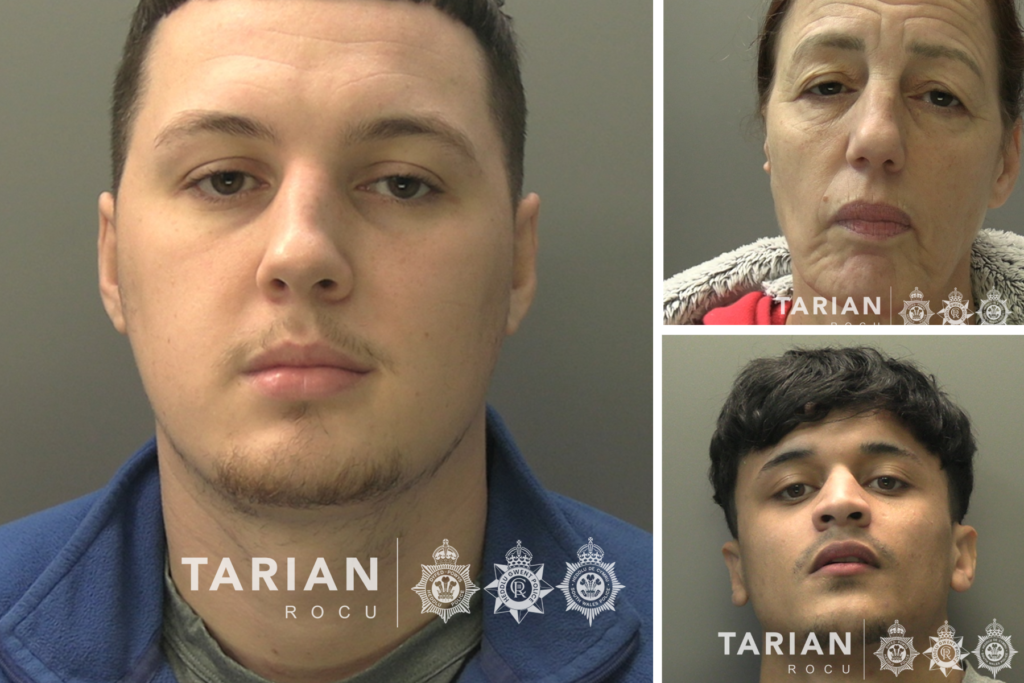
Trio are sentenced over ‘drugs in prison’ plot
The bells, the bells – bringing a Time and Tide Bell to Barry

Penalty shoot out leads to Cup exit for Airport

Ring rusty Barry RFC make a promising start


j


⭐ All of our social media in one handy place – here