



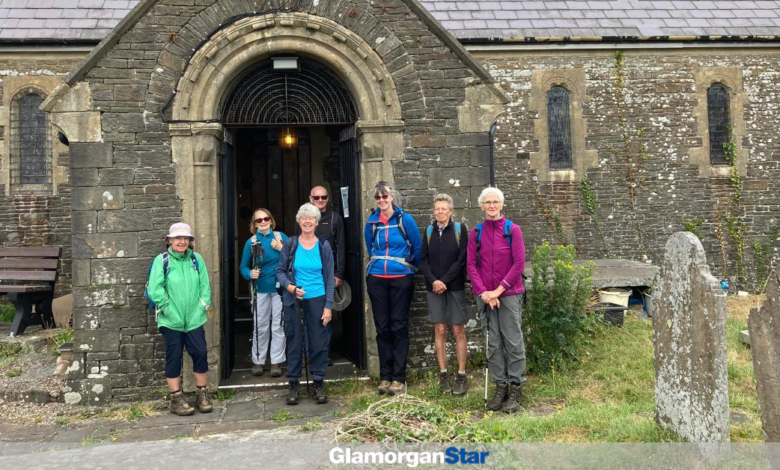


SHEILA from Penarth and District Ramblers led a walk starting at Parc Penallta entitled ‘Escape to Eglwysilan’. The walk was promoted by Caerphilly Council.
Penallta Colliery opened in 1905 and despite surviving the miner’s strike, British Coal finally closed the colliery on 1st November 1991, when the last ever shift was led out by a brass band.
The park is famous for Sultan the pit pony, which is one of the largest earthworks in the country – 200m in length and 15m high. It was begun in 1996 by the Welsh sculptor Mike Petts using around 60,000 tons of coal shale and rock. Sultan was given this name by the community and was one of the last pit ponies in Wales. Indeed, he was still alive at the time the memorial earthwork was being built.
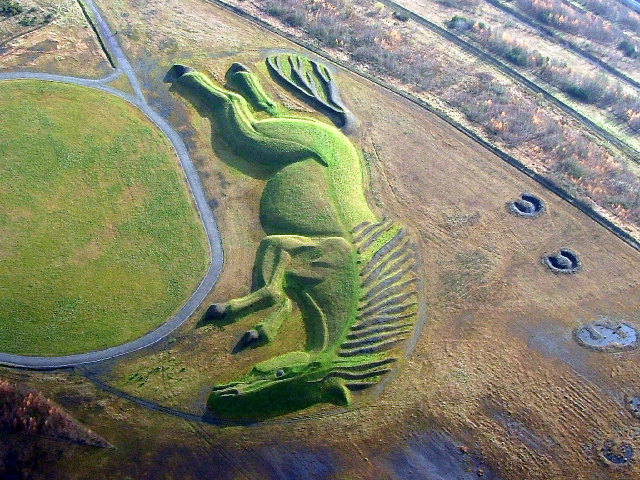
Photo: copyright of Phil Matthews and reproduced under license.
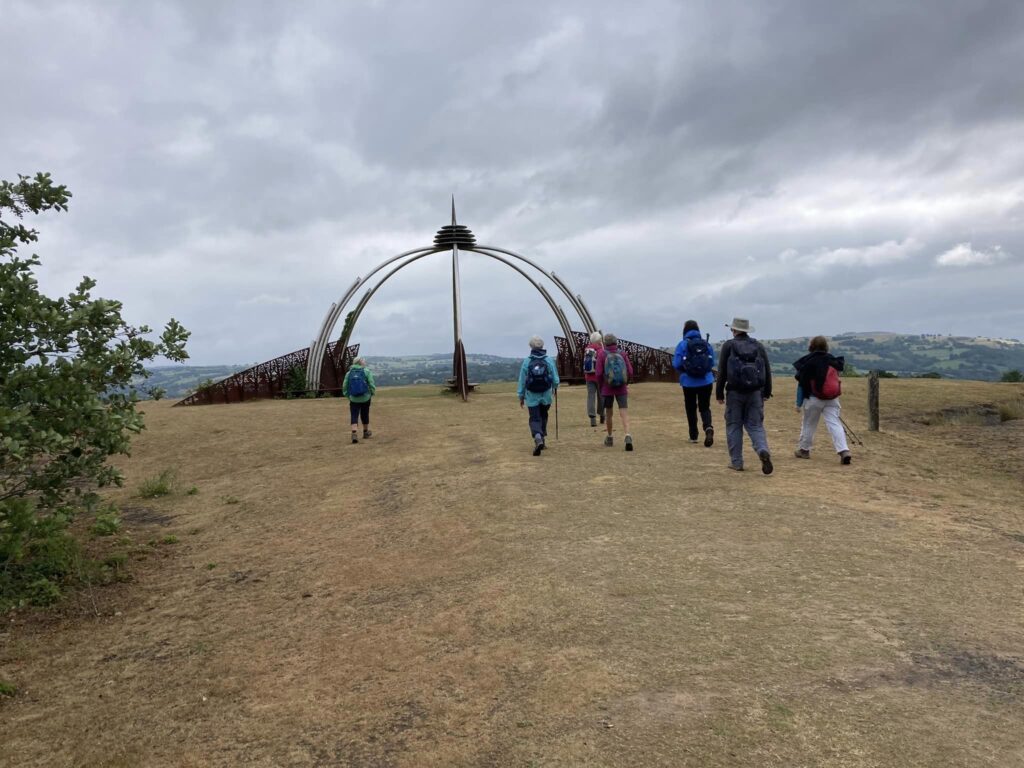
The group made their way to a viewing point with interesting artwork cut into metal struts before descending to read a storyboard which includes the history of the colliery (and Sultan). A little further on they encountered work being done on climbing walls designed as large rocks and, crossing bridges over two railway tracks, a shady path led them to the busy main road. A fairly steep climb, during which they paused occasionally to enjoy the far-reaching views, led them up onto Mynydd Eglwysilan which rises to 355m.
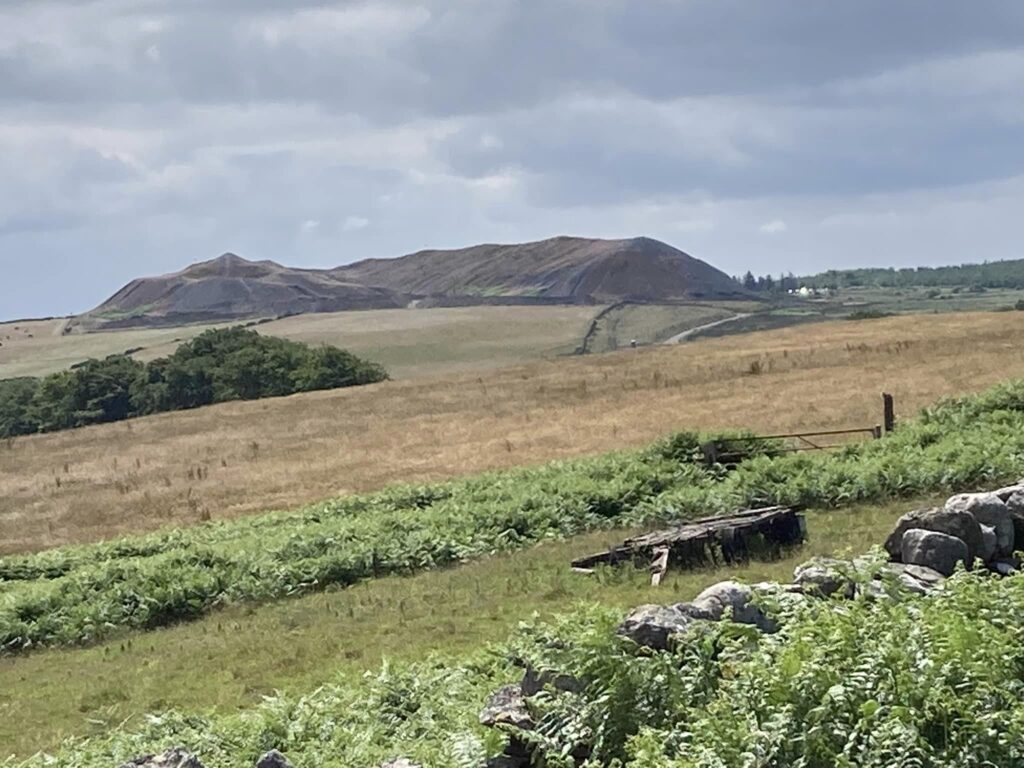
Reaching the summit and stopping for refreshments in sunshine sheltered by a bank of gorse, there were 360-degree views to be enjoyed, up the Aberdare and Merthyr valleys, past Treharris, Trelewis, Ystrad Mynach and Maesycwmmer and further afield to the central Brecon Beacons, along with undisturbed coal tips at Llanbradach.
Following a rutted pathway which is part of the Senghenydd Dyke that originally enclosed a huge deer park, and with sheep dotted around, there were as always areas that contained unsightly fly-tipping, but this did not detract from the splendid views. As they walked, they were serenaded by the songs of skylarks whilst enjoying their surroundings and, following a short walk on a mountain road, a lovely grassy path joined up with the Rhymney Valley Ridgeway Walk
At this point there were impressive views towards Aberdare and Cilfynydd and following a wide grassy path with views over Llanfabon, some rough stony ground was negotiated, along with head-high ferns. A shady road led them to Llanfabon and entering the churchyard of St Mabon’s they paused for lunch (see main photo above).
The present church is most likely to be the fourth religious building that has stood on this site and entering, they explored the pretty little church and learned that during its restoration, when new pipes were being laid under the floor, the remains of 103-people were found and left in situ at peace in their resting place. There is a large cemetery opposite the church which contains War Graves and memorials to the mining disasters at the Albion Colliery in 1894, Senghenydd in 1913 and Aberfan in 1966.
Continuing and crossing the only stile on their route led them through fields to follow a winding path down to Nelson which developed after the opening of the Llancaiach Colliery in 1811, when housing was built near Nelson’s Arms Coaching Inn. In fact, Lord and Lady Nelson lodged there during a visit to the Cyfarthfa Ironworks in 1802 and in modern times, it houses an open-air handball court or Pel-Law.
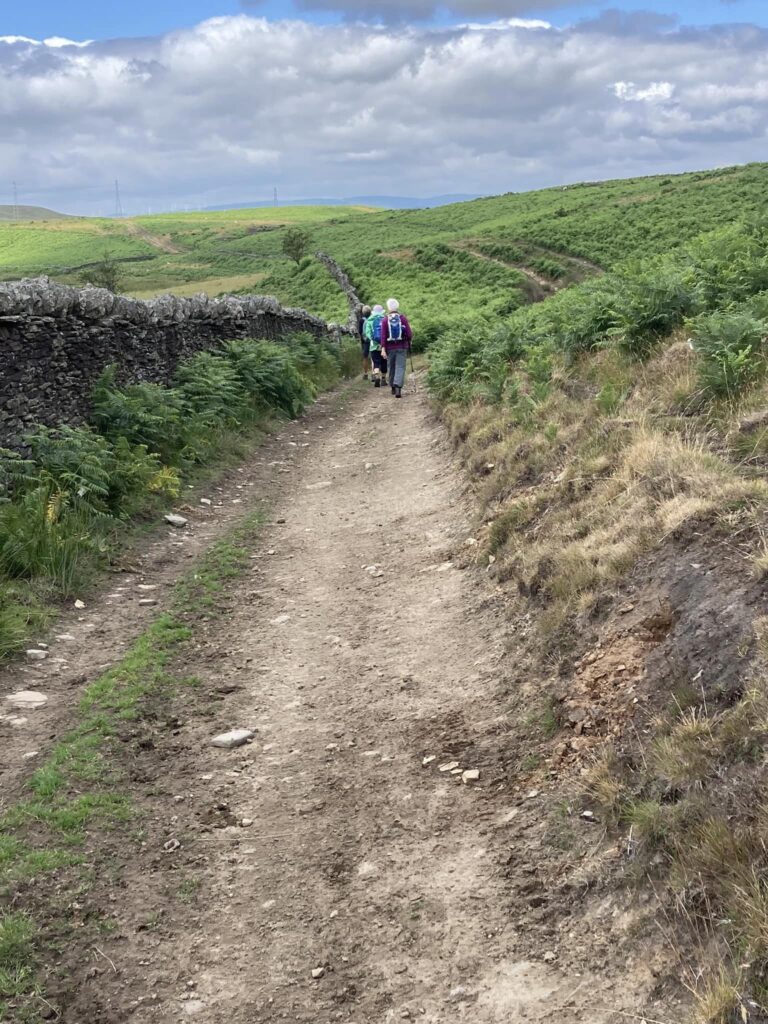
Crossing a busy road and heading through a park and nature reserve, they followed the old disused railway track, now a pedestrian and cycle path, back to their start.
You can follow the group here or on Facebook.
Joy Strangward
Read next:
- Barry man jailed following brutal attack
- Barry man jailed for threatening to kill woman
- Uninsured driver was trafficking drugs
- Welsh budget receives mixed response in Senedd chamber
- MS calls for action on car racing in Llantwit Major
⭐ All of our social media in one handy place – here

Barry man jailed following brutal attack
Barry man jailed for threatening to kill woman
Uninsured driver was trafficking drugs

Welsh budget receives mixed response in Senedd chamber
MS calls for action on car racing in Llantwit Major

Cardiff Airport lose out to Corries


