


Ramblers enjoy ‘blazing hot sunshine’ walk over Lavernock and Medieval Village
Penarth and District Ramblers

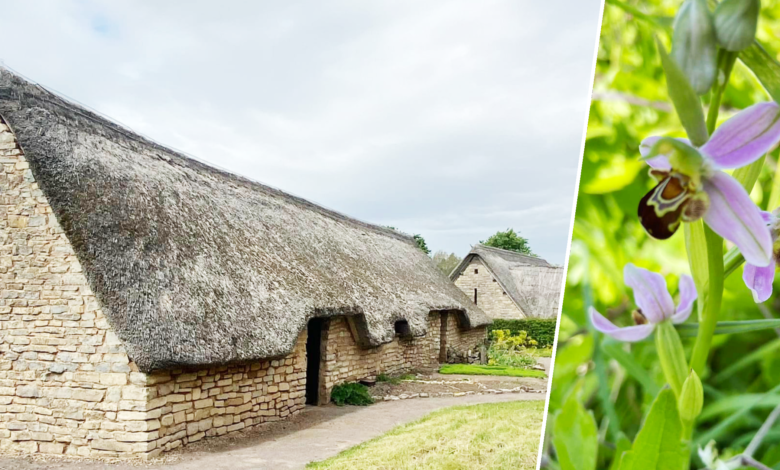


On a gorgeous sunny summer morning a group of 24 walkers joined Geraint and Louise from Penarth and District Ramblers who combined their knowledge of the local flora on their walk taking in Penarth clifftop, the Lavernock Nature Reserve and Cosmeston Medieval Village.

Setting off along the cliff top to Lavernock Point and heading along the quiet country lane they entered Lavernock Nature Reserve, which is owned by the Wildlife Trust of South and West Wales but lovingly cared for by volunteers. Two thirds of the reserve is designated as a Site of Special Scientific Interest and the area is home to a huge variety of wildflowers, butterflies and moths as well as birds.
Apparently the recorded number of wildflowers recently reached almost two hundred and the leaders were able to identify a number of them to the group who were interested in acquiring more knowledge on the subject.
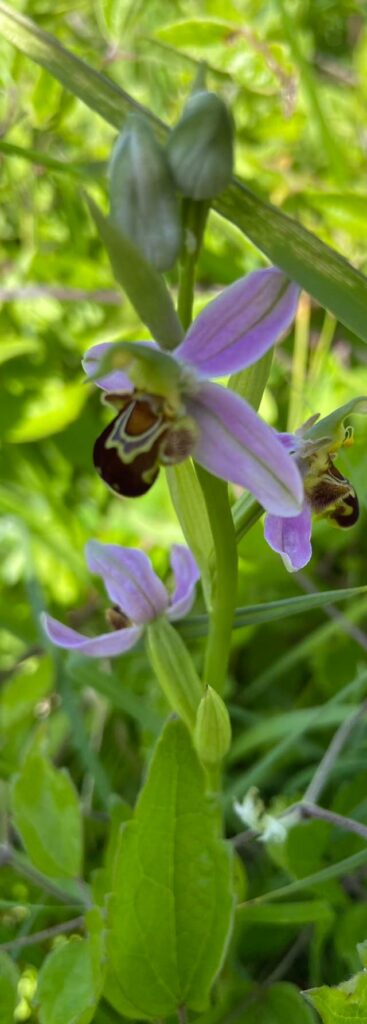
As they wandered through the reserve the wildflowers pointed out included teasel, agrimony, scarlet pimpernel, pale flax, bristly ox-tongue, dog rose, bee orchid, common spotted orchids, wild privet, meadowsweet, stinking iris, hedge bedstraw, twayblade, dyer’s greenweed, tufted vetch and fleabane, along with the common service tree which is actually quite rare!
Making their way to the western end of the reserve they enjoyed a short refreshment break whilst overlooking St Mary’s Well Bay and Sully Island before continuing their journey to reach Cosmeston Country Park.
Then it was time to wander around the medieval village whilst chatting to some of the volunteers who were hard at work. The remains of the original village of Cosmeston were found in the late 1970’s, when Cosmeston Country Park was being constructed and this was followed by an archaeological dig in the 1980’s by Cardiff University, the Glamorgan-Gwent Archaeological Trust and Wessex Archaeology, who worked in tandem with the local authority who owned the land.
Ancient artefacts were dated and preserved and a medieval village that was long buried suddenly sprang into life and many of the original buildings have been reconstructed in this village which is set in the year 1350. These include the Reeve’s byre, the Reeve’s barn, Swineherds cottage, Tithe Barn, peasant’s cottage, the Bakery along with the pig yard, the village oven, an alehouse, the Priest’s Garden, the pillory and the stocks. Outside each building is an information board detailing interesting facts such as people drank ale rather than water as it was safer, and the dinner table in medieval times had knives and spoons but no forks, so unwashed hands were used instead which led to much sickness; and that medieval people ate turnips, peas, barley, onions and marzipan!

As the temperature rose, the group continued their journey leaving the park and making their way along the old dismantled railway line in blazing hot sunshine to return to their start point and the leader’s thanks go to Sheila for back-marking.
You can follow the group at here or on Facebook.

• | Walkers enjoy urban trip around Penarth and Abergavenny – previous report

Pencoed tangled up by ‘Seaweeds’

Primary school’s former deputy head is banned from teaching

I make no apologies for calling Plaid Cymru ‘separatists’

‘The importance of participation and continued learning’

Opposition leaders clash with First Minister over independence rally

How Kevin saved a stranger’s life


