

TIMES PAST – Life in the Vale in December part 1
| By Betty Alden from Cowbridge History Society’s digital archive

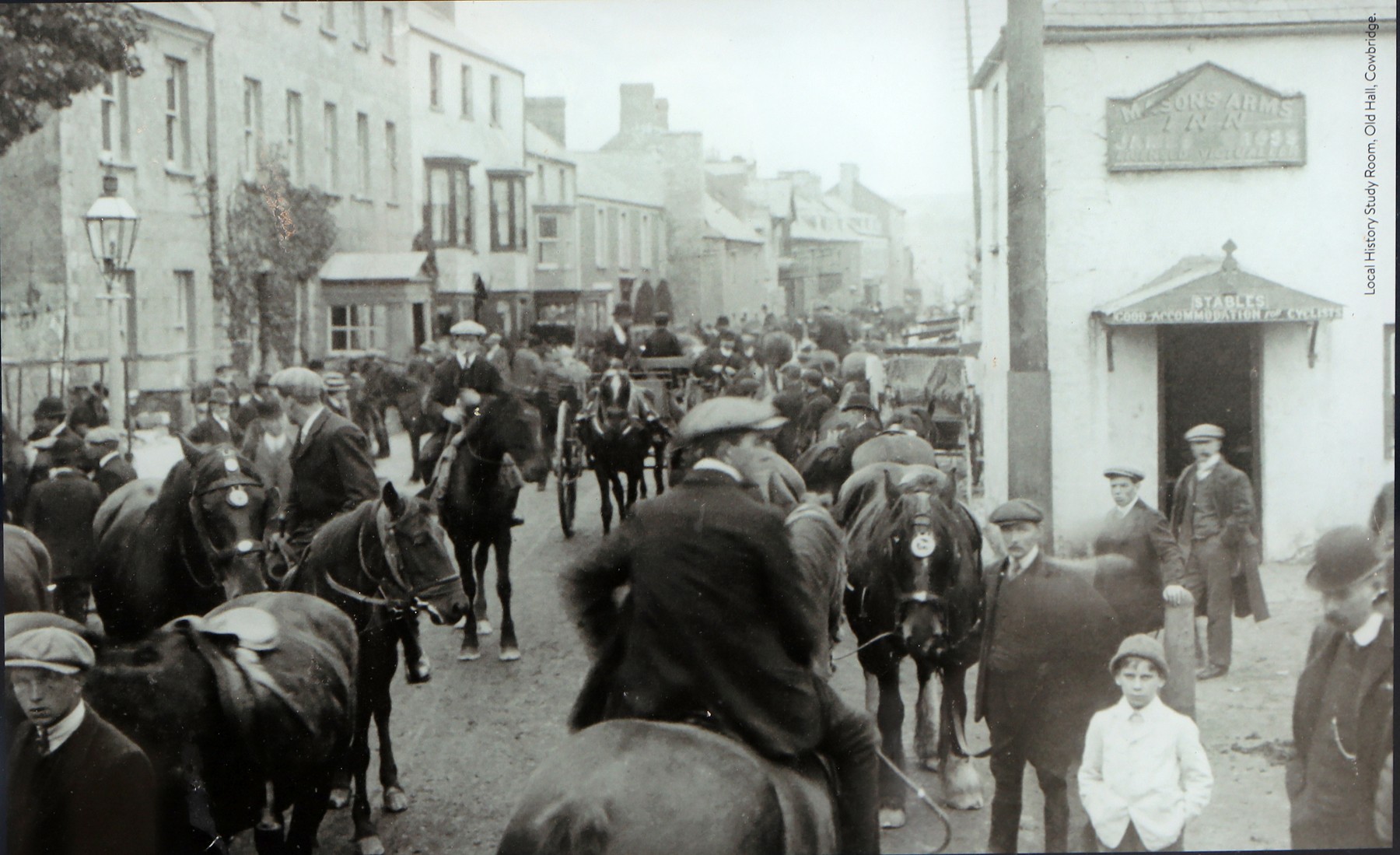
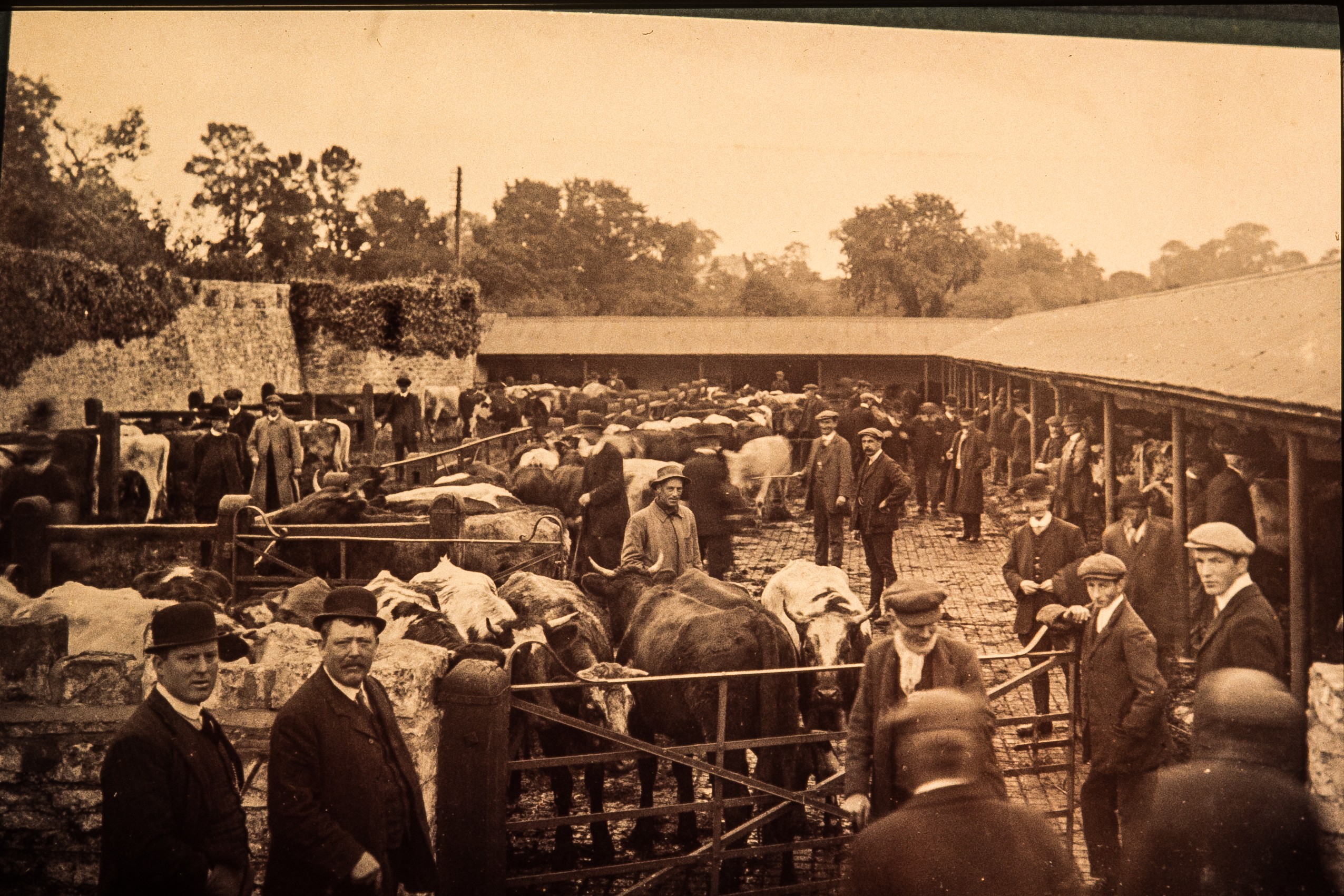
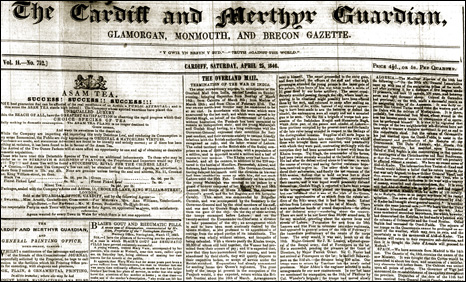
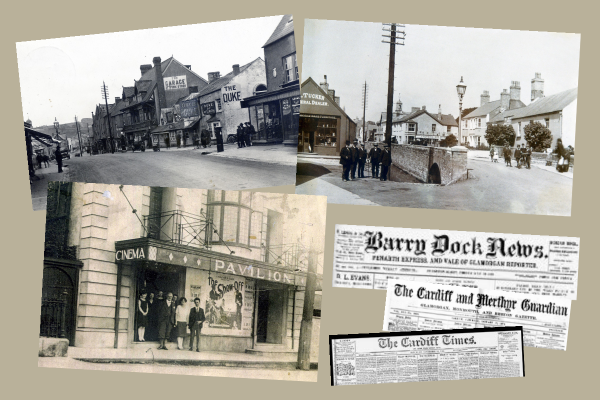
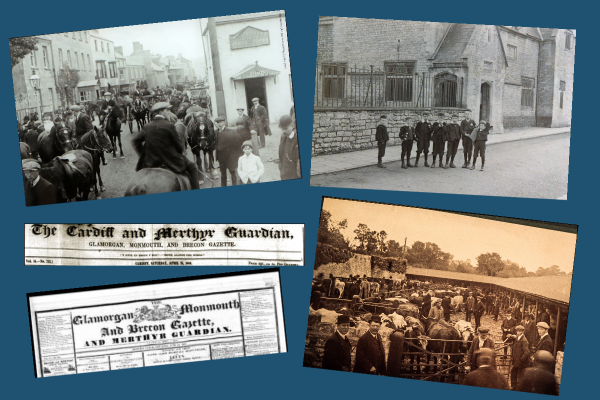
The Glamorgan Star is grateful to the Cowbridge Local History Society, who have made a digital archive, including these press clippings from Decembers in the past. Please note – this piece contains language in common usage at the time which may cause present day offence.
December in and around Cowbridge 1800s & 1900s
1810, 22nd December – To be sold by auction – an elegant, fashionable & valuable stock of household furniture at the premises, situate in the eastern village of Cowbridge, comprising a four-post mahogany bedstead & tent, & other bedsteads, with chintz & other furniture, prime feather beds, pier & dressing glasses, floor, bedside & stair carpeting, mahogany dining, card & dressing tables & other tables, mahogany chairs, sideboard & wardrobe, glass, china & earthenware, kitchen furniture etc. etc. The sale to commence each day at eleven.
Cambrian
Coal mine for sale
1817, 27th December – To be let – about 5 miles from the market & post-town of Cowbridge, in the parishes of Llanharry & Llanharan, two excellent collieries & several large veins of capital coal; may be worked by level at a small expense & may supply a greater part of the Vale of Glamorgan, there being no other coal so conveniently sited & capable of selling it at so low a price. Timber on the estate. Also, a good farm adjoining, called Torrigelly. Apply – John Deere, Attorney-at-Law, Cowbridge.
Cambrian
Biblical books
1821, 8th December – To be sold by auction by John Aubrey, at his auction rooms, Cowbridge – a valuable collection of books, the property of the late Rev Edward Jenkins DD, containing 644 volumes in excellent preservation, the greater part of which are elegantly bound, consisting of divinity, history, classics etc and a few French works.
Cambrian
Out of wedlock punishment
1821, 21st December – Anne Richards of Cardiff, spinster, was last week committed to the House of Correction at Cowbridge, by the Bailiffs of Cardiff, for 6 calendar months, for having been delivered of a bastard child now living & chargeable to the town.
Carmarthen Journal
Turnips and fox hounds
1824, 4th December – To gentlemen, farmers & others – to be let by the year, or for a term, a very neat cottage ornee, containing nine or ten rooms, with convenient domestic & farming offices, with from 35 to 70 acres of land, well adapted to the turnip husbandry. The cottage is situated in dry healthy country halfway between Cowbridge & Cardiff, & within a quarter of a mile of the turnpike road, where the mail & other coaches pass daily. There is no accommodation for shooting, but three packs of hounds are kept within easy distance. For every particular apply (if by letter post-paid) to Edward Bradley, Cowbridge, Glamorganshire. (Bonvilston or St Nicholas)
Cambrian
Counterfeit half crowns
1826, 16th December – Two persons calling themselves John Davies & Mary Wilson were committed to the House of Correction at Cowbridge for ‘uttering counterfeit half-crowns & shillings at Llangefelach’. It is strongly suspected that the above persons, being old offenders, are connected with a gang dealing extensively in counterfeit coin.
Cambrian
Giant ox?
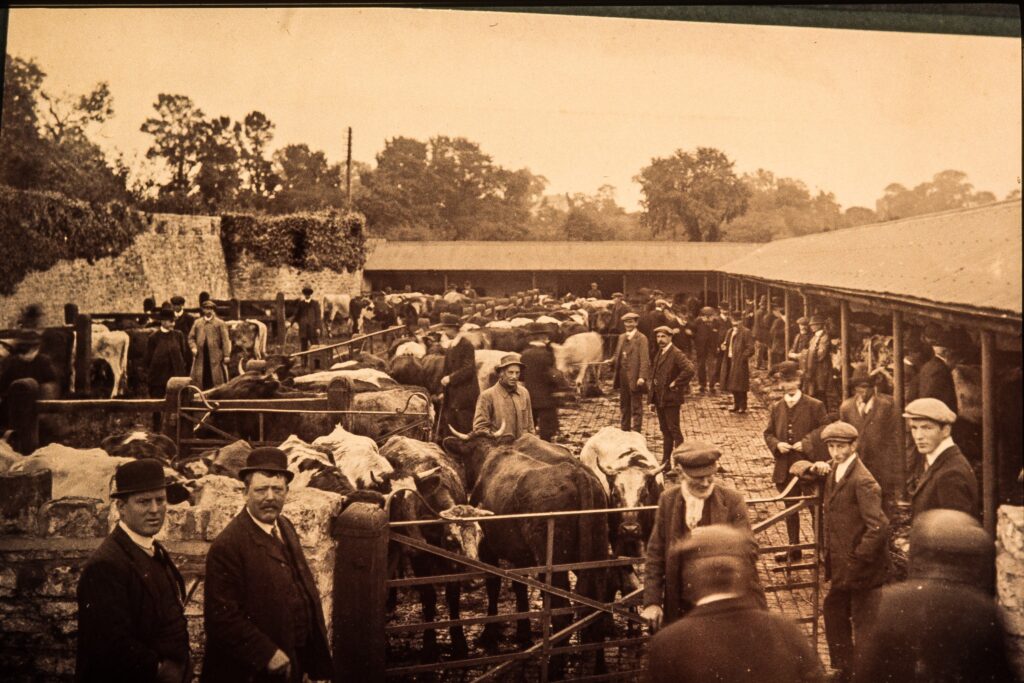
1834, 27th December – Mention of an article in the ‘Gloucester Journal’ of 1762 about an ox red & slaughtered at Cowbridge which cost £20, and measured length from head to tail 17 ft 7 inches, height 6 ft 3 inches, his tallow weighing 158 lbs, his hide 161 lbs etc. It was compared in size to an elephant.
Cambrian
By boat to Bristol
1836, 10th December – A coach from Cowbridge daily meets the ‘Nautilus’ on arrival & departure. The Nautilus is ‘a new & swift going steam packet, 60 horse power’, sailing between Cardiff & Bristol. Fares in after cabin 5s., in fore cabin 3s. Children under 12 half price, dogs 1s. Refreshments may be had on board. A female steward attends the ladies’ cabin. Four wheel carriages 21s., if drawn by one horse 15s., two wheel carriage 10s 6d., horses 6s each, horse & rider in after cabin 9s., in fore cabin 7s.6d. Goods forwarded to Cowbridge (& other places) in lock-up canal boats & waggons immediately on arrival, unless ordered by any particular conveyance. Freight to be paid on delivery.
Glamorgan, Brecon & Monmouthshire Guardian
Cutting edge of false teeth technology
1840, 19th December – On Mondays, Mr L Mosely, surgeon dentist (of Oxford St., London) will come to the Bear Inn, Cowbridge. At home from ten to five. ‘He solicits early calls as his engagements in town will preclude a long stay’. His method of fixing artificial teeth ‘embraces all the modern French & English improvements, both in the material used for the teeth, which is entirely incorrodible & never changes colour from ill health or medicine & are fixed from one on complete sets without wires or ligatures, & answer all purposes of mastication & articulation’. … A vacancy for a pupil. Cambrian
‘Turnpike toll was unfair’
1844, 7th December – Letter from D Prichard of Cowbridge regarding turnpike tolls – ‘By the 1st & 2nd William the Fourth, it is enacted: “That no toll shall be demanded or taken for…any horse, ass, sheep, swine or other beasts…going to or from water or pasture, or to or from being shod or farried, & passing on the turnpike road, provided…do not pass more than…two miles to or returning…”. I live in the town, and my stable is in the town, my pasture land about forty yards beyond the toll gate. The present toll collector, having twice prevented my servant boy taking my horse to pasture, & since from bringing it from pasture to my stable, I complained to Mr W. Edmondes, Clerk to the Turnpike Trust & likewise Town Clerk. Mr Edmondes recommended me first to pay, then to summon the collector, which was done, & the case proved before the bailiff & acknowledged by the collector. The latter pleaded in defence that my boy had said the horse was to be sold, but it was proved on oath not so. The bailiff decided the collector was justified in taking the toll & that I was liable to pay eleven shillings & ninepence! I now publicly ask – can this be justice?’
Cambrian
A whinge about Cowbridge
1848, 9th December – Letter bemoaning the fact that Cowbridge, ‘a collegiate town’, does not have a Mechanics Institution, a Literary Institution or an Improvement Society, for example, in line with Bridgend & other places between Newport & Swansea (even St Nicholas with its Reading Room).
Cardiff & Merthyr Guardian
Incident on Stalling Down
1851, 27th December – As two respectable inhabitants of Cowbridge were passing over Stalling Down a few nights since, they were attacked by a party of men, supposed to be gypsies, and owed their escape to the fleetness of their horses. The object of the marauders appeared to be plunder.
Cardiff & Merthyr Guardian

Landed gentry poisoned at ball
1853, 2nd December – ‘The Rev. George Traherne of St Hilary died … of a fever taken at a race ball held at the Bear Inn, Cowbridge. The fever raged for many weeks amongst those who attended the ball, & very many deaths took place amongst the county families. It was noticed at the time that the disease fastened itself on those who had been most abstemious in their eating & drinking. Generally the remark was that the victims had taken only a cup of tea, & various wild theories were started to account for the infection. It was only after several other deaths had occurred at the Bear that it was found the well whence the house was supplied with water was contaminated with sewage, & a remedy applied. No county ball has taken place at the Bear Inn since.’
Cardiff Times, 4th December 1897
Cut off Cowbridge
1855, 15th December – ‘There are few places more difficult of access than the quiet but important market town of Cowbridge. There is no public mode of conveyance that approaches it nearer than 5 miles, where there is a second-class station of the South Wales Railway. Arrived at that point, by slow train, the traveller must either hire a carriage at an exorbitant rate, or trudge on foot over not the best of roads…’
Star of Gwent
Town gets first library
1860, 29th December – A reading room and library is about to be established in Cowbridge under the most favourable auspices. Arrangements will be made with Mudie, so that a never-failing current of popular literature will be always at the command of the subscribers, and the books will be distributed to members in fixed individual proportion. The reading room will be well supplied with London and local newspapers, periodicals, reviews etc; the only attaching obligation, in order to participate in so many advantages, will be a small annual payment, as the subscription has been fixed on the most reasonable terms. The members of the committee consist principally of the leading tradesmen of the town, and the Rev. Mr Beever, master of the Free-school, has been appointed president.
Cardiff & Merthyr Guardian
| Betty Alden (from Cowbridge History Society’s digital archive)
#GlamorganStar #TrustedNews #Free #ValeOfGlamorgan
• | TIMES PAST Life in the Vale – part 2