




THE fascinating story of how a Barry woman met her GI husband during World War Two and went on to build a life in Texas has just been told by her grandson.
David Johnson, who lives in Irving, Texas, told the Glamorgan Star: “I am the official family historian and, as my paternal grandmother was from Wales, I always wanted to know more about her life, her ancestry, and Great Britain and the UK in general. When I was old enough to understand that grandpa had served in the war and met her during that time, my interest grew. Now some 40-plus years later, I have been blessed with being able to obtain so much information.”
David contacted Glenn Booker of Barry War Museum, who was able to help him find out more about his grandmother, Florence Rowe. However, the story starts in Texas, with her husband-to-be Paul Larkin Johnson (1921 to 2007).
My grandparents – by David Johnson.
Paul Johnson was born in Dallas, Texas, the third of six children of Paul Snr, and Bessie McGowan Johnson, who were from Hopkins County, Texas. He was survived by three children, 10 grandchildren, and 22 great-grandchildren, two siblings, and numerous nieces and nephews.
Paul’s three brothers all served in the US military. One of his brothers was a bombardier in a B17 Flying Fortress during the Battle of the Bulge.
Larkin, as he was called by family and friends, graduated from Woodrow Wilson High School, Dallas, Texas in June 1939. He was on the football team and in the JROTC Corp of Cadets. After graduating, he had a football scholarship to Texas A&M University; however, due to a knee injury, he had to stop playing football.
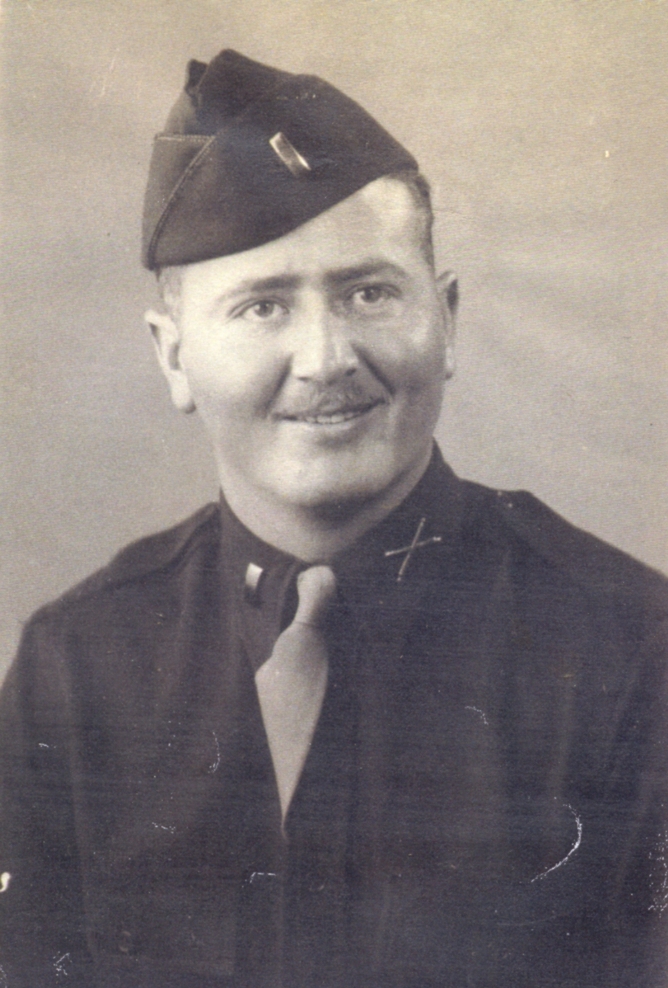
With the war on the horizon, he attended Allen Military Academy in Bryan, Texas beginning in 1939, and was drafted at age 21 in February 1942. In March 1943 he was commissioned a 2nd Lieutenant in the US Army. His first assignment was at Ft Leonard Wood, Missouri.
In the fall of 1943, he was sent to England to help prepare for the invasion of Normandy. He arrived in Southampton and was transported to Barry. His unit set up camp at the Brynhill golf course.
While in Barry, he met Florence Olwen Rowe. She was the daughter of Alfred John Rowe, the proprietor of Rowe’s Café on Barry Island. They met while attending meetings with the local Plymouth Brethren. The story, as told by Paul, was that on the first Sunday he was in Barry, he searched for the local Plymouth Brethren church. He found a Salvation Army building and heard singing inside.
He stopped and knocked on the door; the singing stopped, and someone answered. He explained that he was searching for the local Plymouth Brethren church and was told he could find them across the causeway at Rowe’s Café. He was welcomed into that church and it was there that he first saw Florence. During WW2, Florence was an ambulance driver for the British Army in Cardiff.

In the spring of 1944, Paul was moved to the 1st Infantry Division area in St Audries Bay near Taunton to prepare for D-Day, but he and Florence stayed in touch. Indeed, in early May 1944, Paul and Florence became engaged; they knew that a wedding would not be possible until later due to the impending invasion and Paul’s uncertain future.
In the first week of June 1944, Paul landed on Omaha Beach sometime after the initial landing, around Easy Red Sector near Colleville-sur-Mer, France.
In September 1944, Paul was awarded the Bronze Star for Valor. He was directing artillery fire resulting in the elimination of several German tanks during the Battle of the Falaise Pocket in France. For the next 10 months, he was an artillery forward observer. Action included the Battle of the Bulge in December 1944 through January 1945. In November 1944, Paul was promoted to 1st Lieutenant.
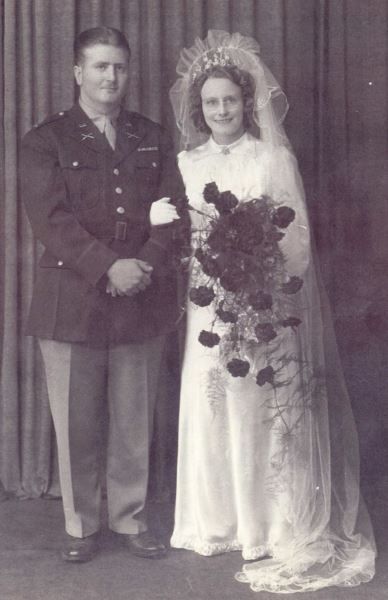
As the war ended, his unit was around Pilsen, Czechoslovakia, where the US and the Russians met for the first time. In May 1945, Germany surrendered, and the war was over. He requested and was given leave to return to Wales to marry Florence. Since he had no way of giving them advanced notice, he arrived in Southampton and called her about arranging a wedding.
Her father was not very happy with this as he wanted a wedding service at the church; however, in the end due to the limited time, they were married on 13th June, 1945, in Barry and went to Cornwall for their honeymoon. He only had a week’s leave and had to return to his unit in Czechoslovakia after his honeymoon.
Since he had over three years of overseas service, he was given priority and scheduled to return to the US shortly after the Japanese surrendered in September 1945. However, since civilians were restricted from traveling to the USA, Florence might have had to wait a year or more to join him. He was able to make a deal with the US Army to stay in England until Florence had clearance to travel to the US.
In September 1945 he was transferred from the artillery to administration where he was sent to London in charge of US serviceman attending schools. He and Florence were billeted at the Russell Hotel where they had a suite all to themselves! In May 1946, Paul received an assignment in Salisbury to oversee putting British wives of US servicemen on ships heading to the US. This process enabled Florence to be able to return to the US with Paul on the same ship. They arrived in New York City on 29th June, 1946.
They then went home to Dallas, Texas. Paul was relieved from active duty 14 on September, 1946; this was four years, four months, and 13 days after having begun basic training.
After WW2, Paul and Florence returned to Dallas. In mid-1947, Paul attended Dallas Theological Seminary and Southern Methodist University in Dallas. In 1948 Paul and Florence returned to south Wales and he began studies at the University College of South Wales & Monmouthshire. The course lasted nine months and they stayed with Florence’s parents in Barry Island.
During this time, he learned to speak several languages include Hebrew, Latin, German, and Spanish. Paul and Florence eventually moved to Denton, Texas where he was a home builder, include building homes for all his children, friends, and others, and was a pastor in the local Brethren church.
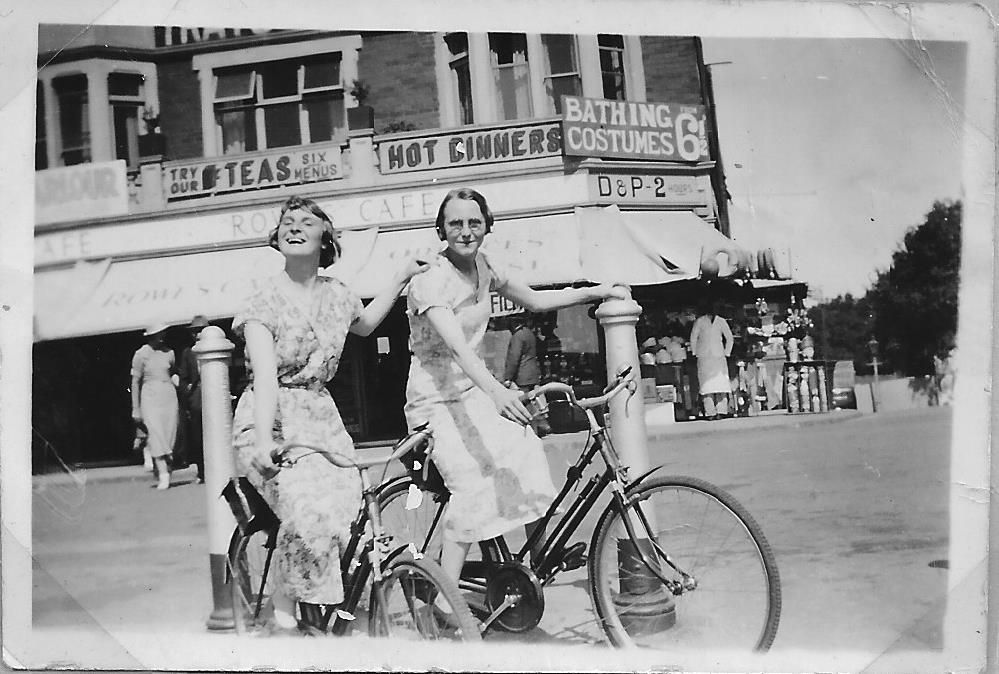
Paul and Florence continued many English traditions, including daily tea at 4pm and roast leg of lamb for Sunday lunch with the entire family. Florence continued the tradition of keeping a vegetable and flower garden at each home they lived in. They loved travel, singing Gospel hymns, and were proud grandparents, having been very positive role models in the lives of those they raised.
In 54 years of marriage, they raised three children and were wonderful grand-parents and great-grand-parents. Today, their three children still believe that Florence was the perfect mom. Paul Larkin Johnson, Jr., and Florence Rowe Johnson, like many of their time, were members of the Greatest Generation and the memories of them will live with those who cherished the time together.
Find out more about the American Presence in Barry and the 60-plus GI Brides from this area from Glenn Booker at the Barry War Museum & Heritage Centre
By Philip Irwin – Senior Reporter
- Joe is 100 not out and celebrates with friends in Barry

- For whom the (10) bells toll

- The Vale’s (former) power station is being broken up

⭐ All of our social media in one handy place – here

Pencoed tangled up by ‘Seaweeds’
Primary school’s former deputy head is banned from teaching
I make no apologies for calling Plaid Cymru ‘separatists’
‘The importance of participation and continued learning’

Opposition leaders clash with First Minister over independence rally

How Kevin saved a stranger’s life


