





THE unpleasant weather forecast, which included thunder and heavy rain, most likely put people off, but Josie and Sue D were lured out to join Jan and John from Penarth and District Ramblers for a walk in the Llantrisant area.
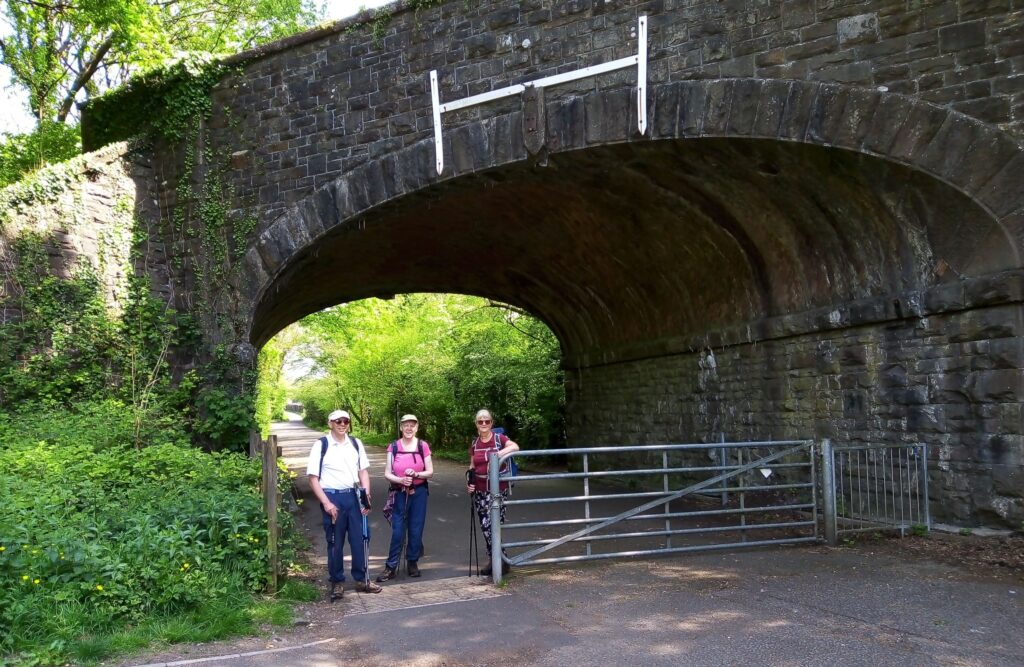
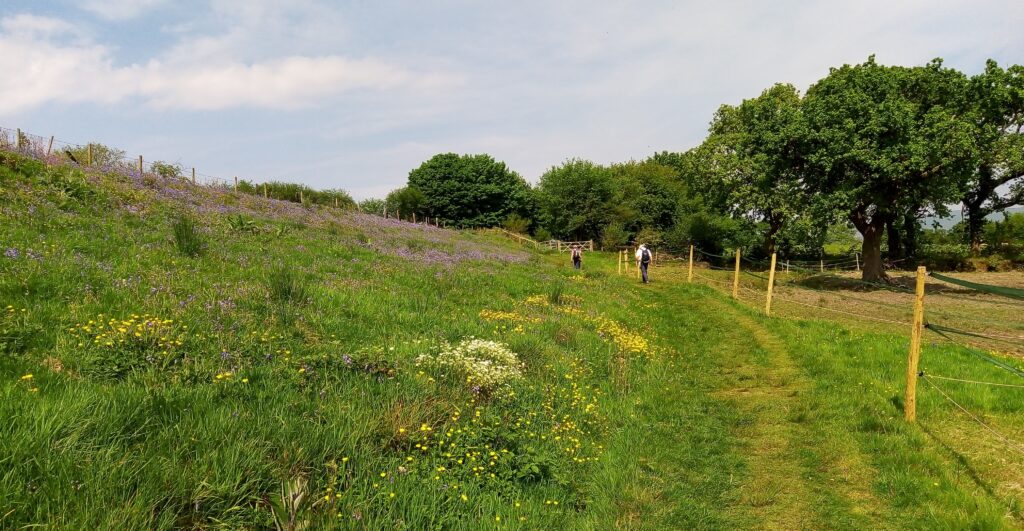
They left Groes Faen in pleasant weather and headed across fields laden with buttercups, passing placid horses before a climb past a pond that contained geese led them to a lovely sunken path lined with delicate spring flowers. They crossed both the River Clun and Rhiwsaeson Road with care and diverted to view some bee boles set in the wall of a nearby house, before continuing to Cross Inn and diverting near the unusual skewed elliptical arch, much appreciated by railway buffs!
They climbed in gorgeous warm sunshine and made their way into Llantrisant and onto the castle green for their lunch break. Llantrisant was one of the most important Norman strongholds because of its high position between the Vale and the mountains to the north where the Welsh warriors gathered and so it became a fortress town after the building of a castle.
Many uprisings and battles followed, and it was allegedly used as an overnight prison to house King Edward II, who was captured in November 1326. Most likely, the castle decayed during or after the Owain Glyndwr skirmishes.
Alongside the green is the restored Grade II listed 14th Century Guildhall, which contains a rare 17th Century silver mace that survived the English Civil War and is older than the one contained in the House of Commons. The central square is known as the Bullring because until 1827 the area was used for bull baiting, and it also contains the statue of Dr William Price. Only 5ft 5ins tall he was flamboyant, a brilliant scholar, Chartist, surgeon, social reformer and very eccentric, but is famed as the pioneer of cremation in Wales.
As the weather had become very humid, they heeded the forecast, and all agreed that they would forgo the planned visit to the famous tower of Yr Hen Felin Wynt which is commonly referred to as the ‘Billy Wynt’ that stands on the hilltop at Y Graig, allegedly a 14th century windmill, a fact which is disputed by some historians.
Their return journey was along a pathway which travelled around the hill to Cross Inn and they headed towards the perimeter of the Pengawsi Estate, below the A473 and through fields, joining a path that led them past the fishing lakes and, having crossed more fields, they returned to their start and arrived home in plenty of time before the storm began.
You can follow the group online here or on Facebook.
Joy Strangward
- Penarth ramblers enjoy their weekend in Sussex
- Ramblers explore Sully Island
- Ramblers celebrate with a picnic in the park

⭐ All of our social media in one handy place – here


Pencoed tangled up by ‘Seaweeds’

Primary school’s former deputy head is banned from teaching
I make no apologies for calling Plaid Cymru ‘separatists’

‘The importance of participation and continued learning’

Opposition leaders clash with First Minister over independence rally

How Kevin saved a stranger’s life


