
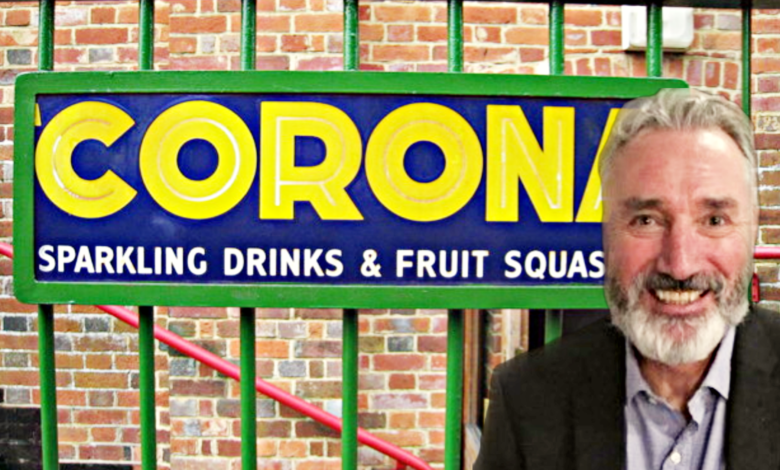


Protecting our planet.
By Brian Mayne.
Could we be returning to the days of the ‘Corona pop’ bottle deposit?
This month’s column by local environmentalist Brian Mayne looks at how an old idea can be adapted to the modern-day and bring with it major environmental benefits. Brian is a fellow of the Royal Society of Arts, as well as the Chartered Institution of Wastes Management, Chartered Environmentalist, and is recognised by the International Solid Waste Association as an International Waste Manager.
—⁘—
Last month’s article, which looked at recycling led to several comments from people of my generation reminding me that when we were young, we were financially incentivised to recycle our glass pop bottles. For younger readers, hundreds of children, like me, would collect empty fizzy drink bottles to give back to the Corona Pop Man (other brands were available and there may have been Pop Women too). These bottles would then be returned at which stage we would be rewarded with a few pence for our endeavours.
The Welsh Government, which aims to become the best recycling nation in the world, has resurrected the concept and is now following consultation intending to introduce a Deposit Return Scheme (DRS) by 2024. A DRS is a system that encourages consumers to recycle an item by charging a monetary deposit (eg 20p) at the point of purchase. This deposit is refunded when the item is returned for recycling/ reuse. The scheme currently is not only for glass bottles, but plastic bottles, as well as steel and aluminium drink cans. The intention is that apart from increasing recycling it should also reduce littering and improve the quality of the material collected for recycling.
There has already been a trial held in north Wales last year of a Digital Deposit Return Scheme which used technology to enable consumers to redeem the deposit when recycling containers at home. The pilot scheme revealed that high levels of people were willing to participate in the project. We will also see the introduction of reverse vending machines being placed in shops. A reverse vending machine is a machine where people can return empty beverage containers like bottles and cans for recycling. The machine typically gives back a deposit or refund amount to the end-user. The reverse of putting money into a machine and getting a can of pop.
DRS schemes are being introduced by all UK nations, Scotland plans to do so next year. They are expected to have a significant impact on the estimated 14 billion plastic drinks bottles, 9 billion drinks cans, and 5 billion glass bottles a year that are consumed across the UK, especially as recycling levels have reached over 90% in other parts of the world where DRS schemes have been introduced.
More and more ideas such as DRS are being revisited and revised to benefit the environment. This one could also end up supplementing the pocket money of future generations as well.
—⁘—
- The views expressed by columnists of this newspaper do not necessarily reflect the views of the Glamorgan Star, its employees or its proprietors.
🌟 This article first appeared in the printed edition of the Glamorgan Star on 16.06.22



• | Passing Comment – Luscious lights at Hood Road tunnel are a great idea


Pencoed tangled up by ‘Seaweeds’
Primary school’s former deputy head is banned from teaching
I make no apologies for calling Plaid Cymru ‘separatists’

‘The importance of participation and continued learning’

Opposition leaders clash with First Minister over independence rally

How Kevin saved a stranger’s life