






Ramblers given history of the Vale
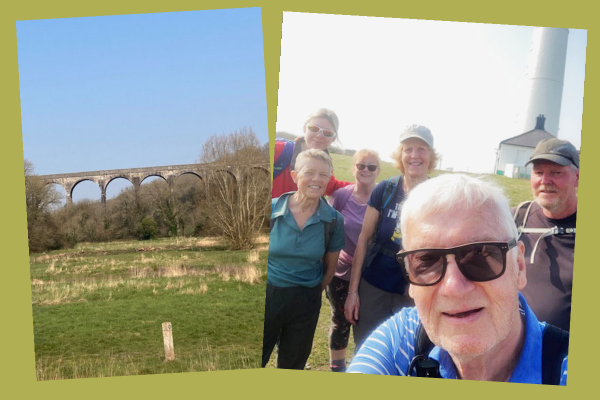
On an overcast and breezy morning, a group of eleven walkers met up with Sheila from Penarth and District Ramblers in the village of St Mary Church and following the road past the Old Rectory they entered fields. Surrounding views were somewhat misty as they headed downhill and through Coed yr Arglwydd where tree trunks were coated in lush green moss and joining a quiet road they arrived at Howe Mill.
A stone stile brought them into lush green meadows at Llanfair beside the River Thaw for the short journey to the ruins of Old Beaupre Castle (or Bewpre Castle) and the name meaning ‘beautiful meadow’ originated in France and came to Britain during the Norman Conquest. Dating to the 1300’s and situated on slightly higher ground beside the river this lovely manor house was greatly altered and enlarged in the 1600’s, firstly by Sir Rice Mansel who married Eleanor Bassett and then by William Bassett and his son Richard. The Bassett family motto which is carved on the outer gatehouse translates as ‘Rather Death than Dishonour’ and after the English Civil War the Bassett’s fortunes declined because of their support for the King and they moved to nearby Fishweir.

Retracing their steps back to the road and making their way through Littlebrook past smoking piles of wood chippings and free running chickens and geese, they journeyed across four large fields before crossing a stone stile with steep steps leading onto a country lane. Following the narrow path at Coed y Pentre where the woodland floor was carpeted with wood anemones, a climb led them into Llandough and morning break in the churchyard at St Dochdwy‘s where the noisy rooks had built their nests high in the surrounding trees. The roof beams of the porch date to the 14th century but the building was heavily restored in the 19th century and inside is a memorial to Wenllian Walsche who died on Christmas Day 1427.
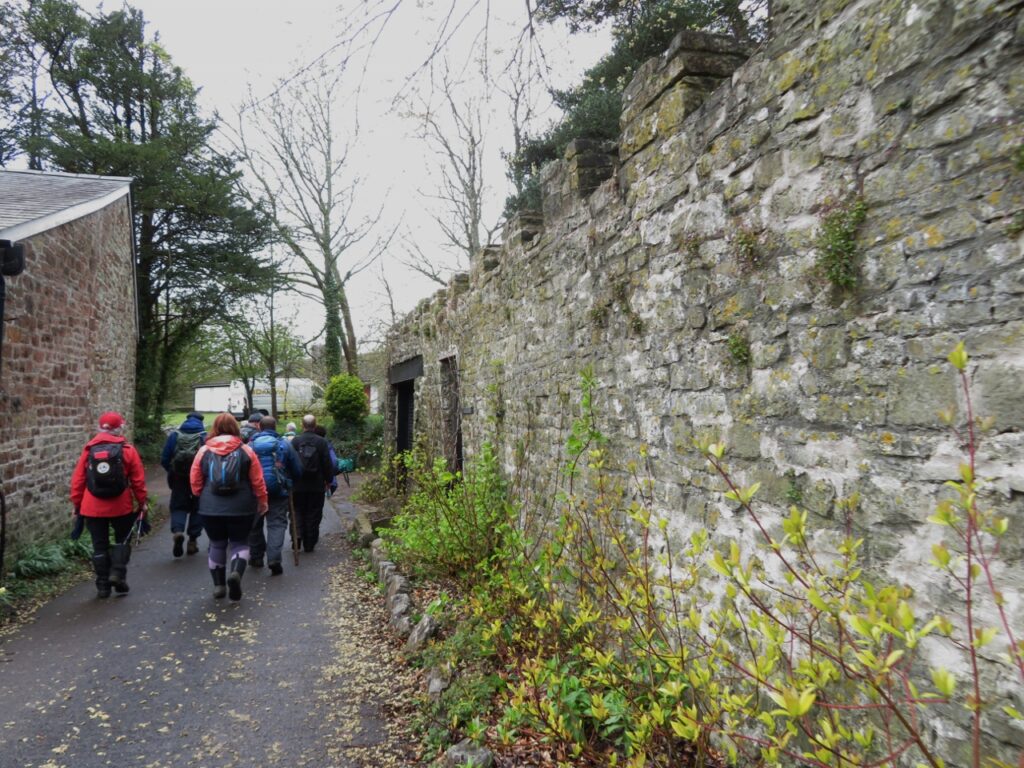
Then on to Llandough Castle, which was owned by the Walsche family from the 12th to the 15th century built on land gifted to the family by the Lord of Glamorgan Robert Fitzhamon. The castle then passed through the hands of various owners and in 1940 was requisitioned by the Government and the Canadian Airforce Headquarters was based there.
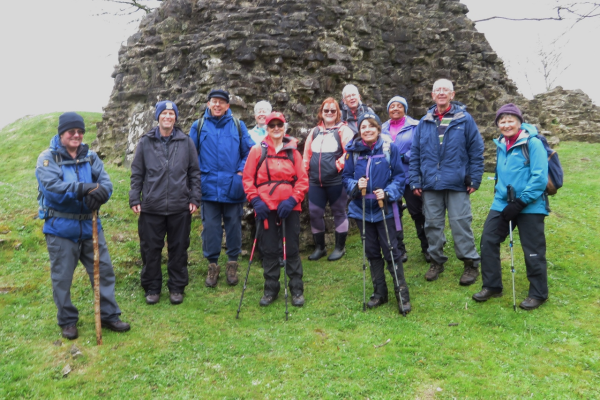
A rough track led back into fields containing sturdy growing lambs with lovely views towards Llanblethian and descending into the village Bridge Road led them to Castle Hill for the climb up to the ruined St Quentin’s Castle for lunch break. The castle with its enormous gatehouse that was built during the 14th century by Gilbert de Clare and which had two portcullises was founded in 1102, on land gifted to the St Quintin family by Robert Fitzhamon and the oldest part of the castle is the ruinous Keep at its centre.
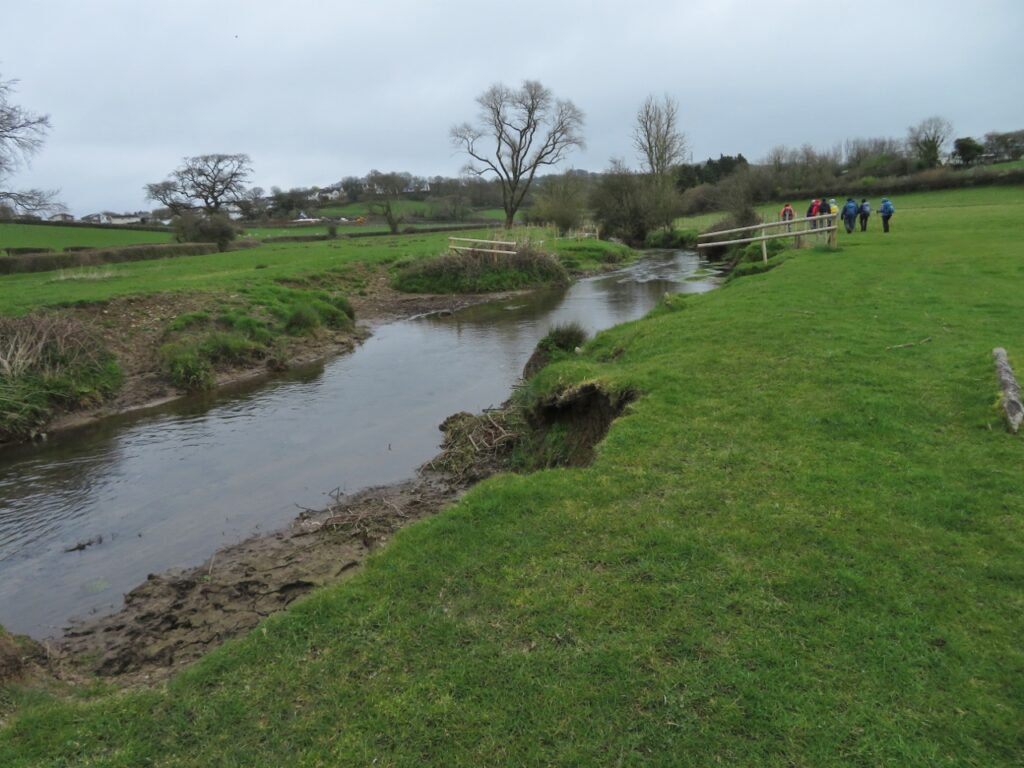
Returning downhill and deviating from Bridge Road along a track beside the pretty River Thaw making its way southwards to the coast, a footbridge led them over the river, across the dismantled railway line and into woodland adjacent to New Beaupre. The house was built in the 1820’s for Daniel Jones who was a wealthy solicitor who endowed the Cardiff Royal Infirmary and upon his death he left the property to Richard Bassett.
On by road to St Hilary, past the Bush Inn and into the 14th century Church of St Hilary to view the lovely stained glass, the more modern sculpture of the Last Supper behind the altar and the effigy of Thomas Bassett. On through the churchyard past the tomb of the Bassett family and the preaching cross to follow the road to The Old Vicarage, where a stony sunken pathway with deep ditches eventually led them to terra firma on the road which they followed to re-enter fields.
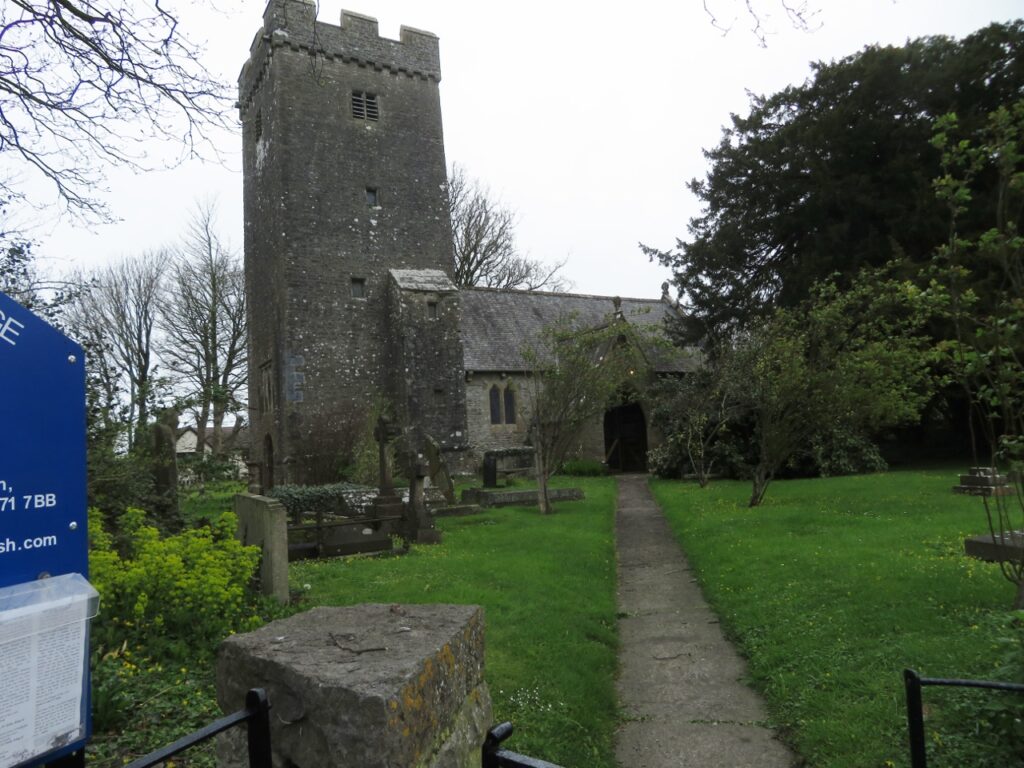
Arriving at Fishweir with its 16th century very tall barn and beautiful peacocks including a stunning white one perched in a tree, they crossed fields with two friendly horses and some inquisitive sheep, before heading by road back to the Church of St Mary, to view the interior of the 13th century church where the renowned Edward Williams, better known by his Bardic name of Iolo Morgannwg married Margaret Roberts in 1781.
You can follow the group’s exploits here or on Facebook


| Scroll down to comment on this article
• | Long linear walk enjoyed by ramblers Penarth and District Ramblers
Pencoed tangled up by ‘Seaweeds’
Primary school’s former deputy head is banned from teaching
I make no apologies for calling Plaid Cymru ‘separatists’
‘The importance of participation and continued learning’

Opposition leaders clash with First Minister over independence rally

How Kevin saved a stranger’s life

| Scroll down to comment on this article


