Steam cleaning the hive to keep bees healthy
News from the Fonmon Apiary with Harold Williams




ALTHOUGH variable weather is the order of the day, all of the colonies are still foraging.
There are two distinct pollen types being exploited by the foragers, one is Ivy and the other is Charlock. As ever, Oilseed Rape has been sown in my locale and the Charlock is abundant in the now emerging Rape fields. The nectar being collected from the Ivy is a valuable resource for the colonies but it can crystallise and become difficult for the over-wintering bees to use.
However, these milder winter months are keeping our bees much more active than is the norm, which means that winter stores are consumed at a much faster rate.
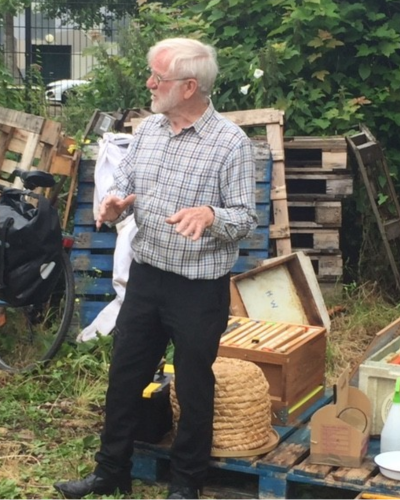
All colonies have now had their queen excluders and unused empty drawn combs removed. I am feeding two colonies with syrup (liquid sugar). These two are this year’s swarms that made use of my onsite spare hive units.
The wooden frames that make up the interior of our hives start life filled with very thin sheets of honeycomb pattern beeswax. This foundation – as it is known – is then drawn out by the bees and made into cells that serve as storage for nectar or pollen – and even eggs that will eventually become new colony members.
These drawn combs will serve well for some years but do become brittle and dirty over time, rendering them unsuitable for further use within the hive. The wax is cut out of them and recycled and the wooden frames are steam cleaned ready for fresh foundation to be inserted. My steam cleaning unit is all homemade! The container that will receive the wooden frames that are devoid of wax is a tea-urn that failed the safety test.
To generate steam I use a readily available wallpaper stripping device. I can clean six frames at a time. The ease of use and the cleanliness of the frames is a definite bonus not to be missed. Along with the frame cleaning, I have another failed tea-urn that is used for melting the cut out bees wax and the wax cappings that are accumulated when our honey harvest is being undertaken.
Along with the cleanliness, the health of the bees is a major concern, and to this end I constantly monitor for Varroa Mite population. A visual inspection of the frames within the hives is always done, a mesh floor with an underneath draw also collects many mites that fall from the bees. Mite numbers must be assessed and then control methods applied.
Harold Williams
Other items to read:
- Penarth ramblers enjoy their weekend in Sussex
- Ramblers explore Sully Island
- Pause for Thought – The First Christianity
- Ramblers celebrate with a picnic in the park
⭐ All of our social media in one handy place – here


Pencoed tangled up by ‘Seaweeds’

Primary school’s former deputy head is banned from teaching

I make no apologies for calling Plaid Cymru ‘separatists’

‘The importance of participation and continued learning’

Opposition leaders clash with First Minister over independence rally

How Kevin saved a stranger’s life