




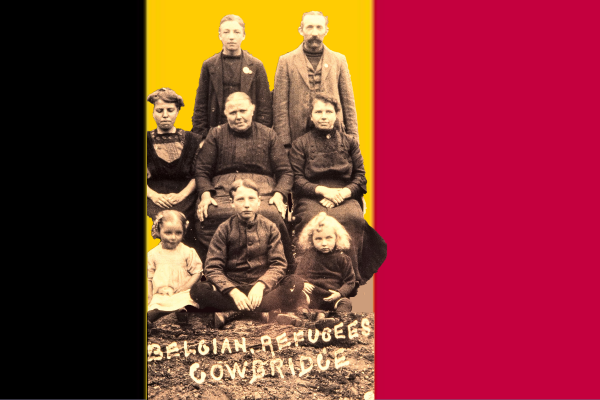


How Cowbridge has offered refuge in the past
Apparently, more than 4,500 Belgians arrived in Wales in 1914, fleeing the German invasion of their country, and were given shelter all over the principality before returning in 1919.
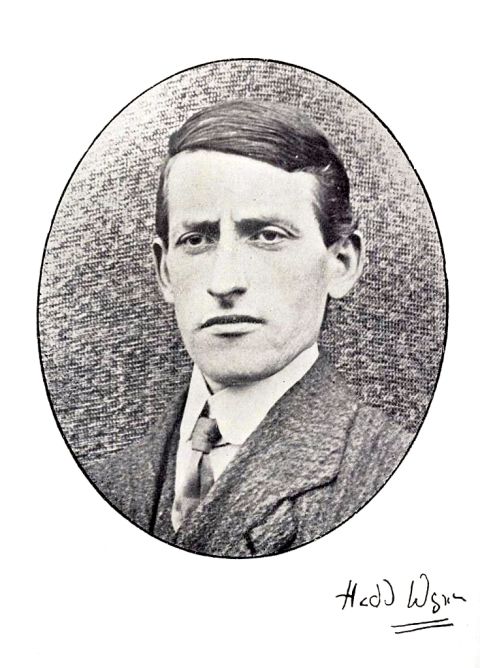
Their legacy in Wales included the beautifully carved ‘Black Chair’ of the 1917 National Eisteddfod, which was awarded posthumously to ‘Hedd Wyn’ (Ellis Evans), the Welsh poet from Snowdonia, who died at the Battle of Passchendale.
Several families were given homes in the villages of Llysworney, Llandough and Colwinston, and some within Cowbridge town. In September 1914, local newspapers reported on refugees in Cowbridge being found a ‘comfortable cottage’, with ‘useful articles of furniture’ put in by many anxious to help.
‘Good beds were provided and the walls adorned with pictures, and the pantry crammed with substantial food – rabbits, bacon, home-made jam, vegetables and fruit. Among the things provided were needles, cotton, wool and even a couple of thimbles.’
Mr AS Evans had brought these families from Cardiff in two of his motor cars (he was living at the time in Eastfield House on Cardiff Road and had developed a motor business in Cowbridge).
FW Edmondes wrote in his diary of October 15th 1914, that he had gone to a town meeting, chaired by SH Stockwood, about housing Belgian refugees. “People were eager to help, but many independent plans have started already”. In November, he wrote: “A police sergeant here enquiring about arms. I told him I have a revolver and would fight if the Germans landed here. My double-barrelled gun is at William’s house and will be put down for him”.
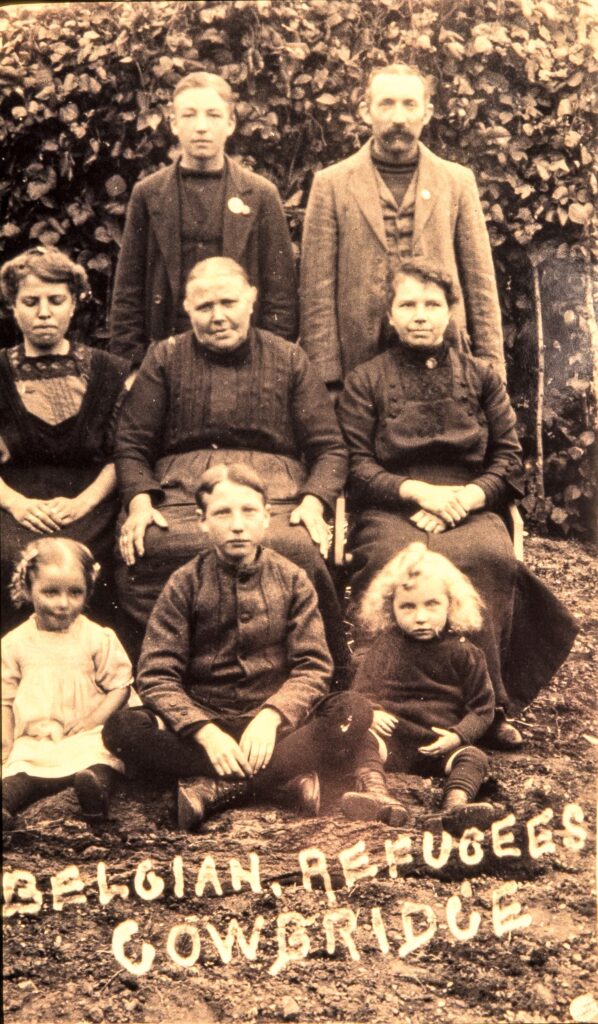
Another newspaper report, in October, said that the Cardiff Belgian Refugees Committee had allocated 16 refugees to Cowbridge. A weekly bulletin was to be issued in French and Flemish, and ‘other questions needed to be considered such as the education of the children and providing employment for artisans and unskilled labour, and domestic employment for women and girls. Distribution of clothing was needed too.’
William Aaron James, the builder of many Cowbridge properties around this time, offered his home in Westgate, Stafford House, and went into Cardiff to collect four refugees. However, on hearing there was a family of eight, he took them all. They had come from the city of Malines (Mechelin), between Brussels and Antwerp, and their language was Flemish, which neither Mr nor Mrs James could understand.
WA James sought help with this difficulty from the press and a Belgian correspondent at Port Talbot managed to get a lift on a motor-bike to come into Cowbridge to meet them.
They gathered in Stafford House back garden, including four children and ‘a granny with snow white hair, leaning on a stick’. The Belgians were anxious for news of their home, and they expressed their gratitude to the James family for their hospitality. The eldest child asked to be taught a few English sentences in order to say this.
They also reported that they were ashamed to be getting through two loaves of bread each day. When Mr James said they could have four loaves a day, ‘it brought tears to the grandmother’s eyes.’ The correspondent promised to return, bringing the children some toys. WA James said that money he was receiving from well-wishers was being banked, so that when the family returned to Belgium they would have ‘a tidy sum’.
During the American Revolutionary War, several Loyalist American families came to live in the area as exiles. William Browne, for example, rented part of Old Hall, Cowbridge, around 1778. His daughter was baptised in the town in 1780.
During World War II, many child evacuees from the Medway district of Kent came to live in Cowbridge, Llanblethian and surrounding villages, attending the local schools and forming long-term friendships with people here that survive to this day.
By Betty Alden, Cowbridge History Society


| Scroll down to comment on this article

Pencoed tangled up by ‘Seaweeds’
Primary school’s former deputy head is banned from teaching
I make no apologies for calling Plaid Cymru ‘separatists’

‘The importance of participation and continued learning’

Opposition leaders clash with First Minister over independence rally

How Kevin saved a stranger’s life

| Scroll down to comment on this article


