


The stories of five names on Barry’s Roll of Honour



Dr Jonathan Hicks recently complied the Royal British Legion’s definitive Barry Roll of Honour book for the Second World War, which was dedicated on 6th September this year. Here he pays tribute to the Barrians who lost their lives during that terrible conflict.
The Second World War lasted for over six years and millions of people perished in the fighting which took place across the globe. Even today, 85 years after it began, it still casts its long shadow over this island.
I was honoured when the Royal British Legion branch asked me to shape my research into a definitive list of Barry casualties of the Second World War. But this presented a number of challenges.
If you picture the names of the fallen, so magnificently and reverentially displayed in the Hall of Memory in Barry Memorial Hall, there is a surname and an initial or two. Nothing else.
Defining a casualty’s link with Barry was also problematic. Should it be limited to those born in Barry, or should those who lived in Barry but who were born elsewhere be included? Looking at other rolls of honour in this town and others, it appears that there are no universal criteria. This is also true of the Roll of Honour in the Memorial Hall.
In the cases of men of the Merchant Navy who were lost at sea but not as the result of proven enemy action, there is no national memorial to these men, (which is shameful), and they have been included as it is right and proper to do so because they too were serving their country in a time of war.
Notwithstanding these difficulties, I have endeavoured to compile a more comprehensive list of the casualties that Barry suffered during the Second World War by using the Roll of Honour as a starting point, augmenting it with the Roll of Honour Book for the Merchant Navy in the Hall of Memory, and adding to it those casualties whom I have identified since both of these were compiled.
A work like this cannot be completed alone though and I am very grateful to my wife Wendy for her invaluable assistance in my research, and to Byron Jones of the Merchant Navy Association who has helped me so much in expanding the list of Merchant Marine men, and also my friend Alun Robertson for so generously sharing his research with me.
The end result of all this work is a tome which attempts to pay homage to the Barrians who fell during the Second World War and those who died after the war ended as a result of their wounds. Lives all shortened and unfulfilled as the result of war. What strikes one is the sheer number of names in this book; men who were part of the greatest conflict the world had yet seen. Each one of them was someone’s husband, son, brother, father or friend.
But names represent people; human stories of triumph and tragedy. And to illuminate the words in the Book of Remembrance I should like to highlight five of the people commemorated in the book.
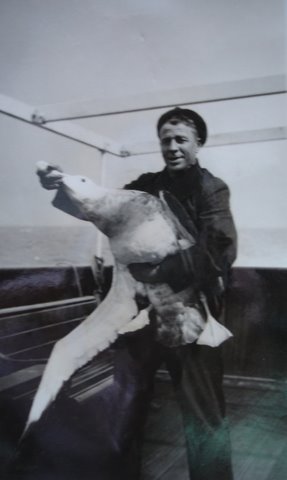
Merchant Navy.
Chief Officer James Edward Luen (Merchant Navy) was part of a well-known Barry family. He attended High Street School before going to sea in 1910. Apparently, he walked out of school one day and was not heard of for two years until his ship berthed in Cardiff. Like so many, he had made what was known as a ‘Pier Head Jump’.
James served in the Royal Naval Reserve throughout WW1 on the Dover Patrol and also spent some time as a sheep farmer in Australia. He and family used to live in Woy Woy, a bungalow at the bottom of Cold Knap Way. Many people remarked on the strange name, but James and his wife Violet married in the town of Woy Woy in Australia.
A keen artist, during 1937-1938 James held an exhibition of his work in the county hall in London. He was also the author of several books. At one time James cared for an albatross that landed on deck suffering from exhaustion. The seabird recovered. During the previous voyage, he had saved the lives of two people by performing an operation, following the wireless instructions from a doctor on another ship.
He died aged 43 on 25th November 1939 off the coast of Newfoundland / Nova Scotia when a wave crashed into the ship and he was washed overboard.
Able Seaman Herbert Edward Bardsley (Royal Navy) was serving aboard the light cruiser HMS Galatea in the Mediterranean on the night of 14th December 1941. The Galatea came under attack by German Stuka dive-bombers. The attacks continued for over seven hours.
Before midnight she was also spotted by the German U-boat U-557, which fired two torpedoes at her. Both were hits and the Galatea turned over and sank in less than three minutes. The Captain, 22 officers and 447 men were killed.
Herbert was 29 years of age and the son of James and Hannah Bardsley. His body was never found and he is commemorated on the Plymouth Naval Memorial.
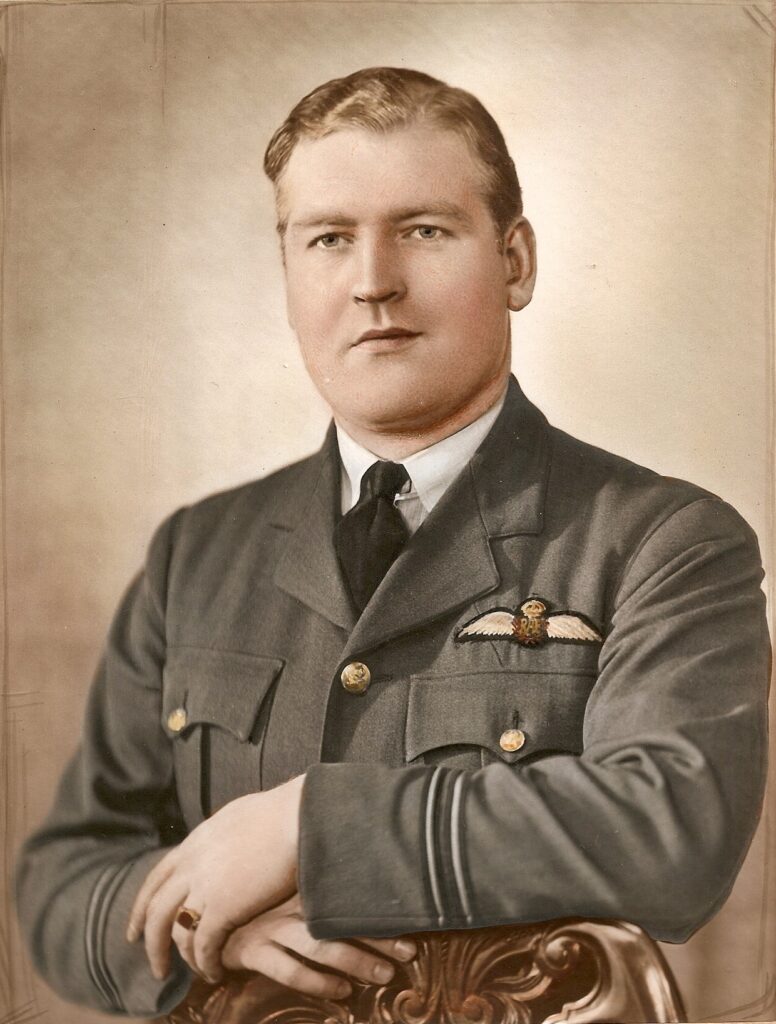
Squadron Leader Haydn Goule (RAF) had been awarded the Distinguished Flying Cross on 7th December 1943.
On 27th January 1944 his Lancaster took off from Wickenby airfield at 5.27pm on yet another bombing raid on Berlin. It was attacked by a German night-fighter and before any order could be given, the bomber exploded, scattering debris near Ehren. This was Haydn’s second tour of duty as he had flown 48 previous missions. A few weeks earlier, he had told his uncle that he had had a premonition that his life was coming to an end.
Sergeant John Langworthy (Royal Tank Regiment, Royal Armoured Corps), won the Military Medal whilst serving in the Western Desert in 1942. In one of five tanks engaged against the enemy, he called for volunteers and went to the assistance of the crews of two damaged tanks. His own tank was then hit and a track blown off. Under continuous fire he repaired the track and attached a tow to another tank.
He was killed, aged 26, in February 1945 during the Battle of the Reichswald Forest on the border between Holland and Germany when three tanks of the leading troop were destroyed by fire from a German Jagdpanther tank destroyer which was camouflaged on high ground. John was one of 15,600 Allied casualties during the battle.
Besides the names of the fallen from the four services I have mentioned, Barry lost a number of its civilians too. On the night of 30th April 1941, a number of high explosive and incendiary bombs were dropped on the Romilly Park area by German bombers. Five civilians were killed and more were injured.
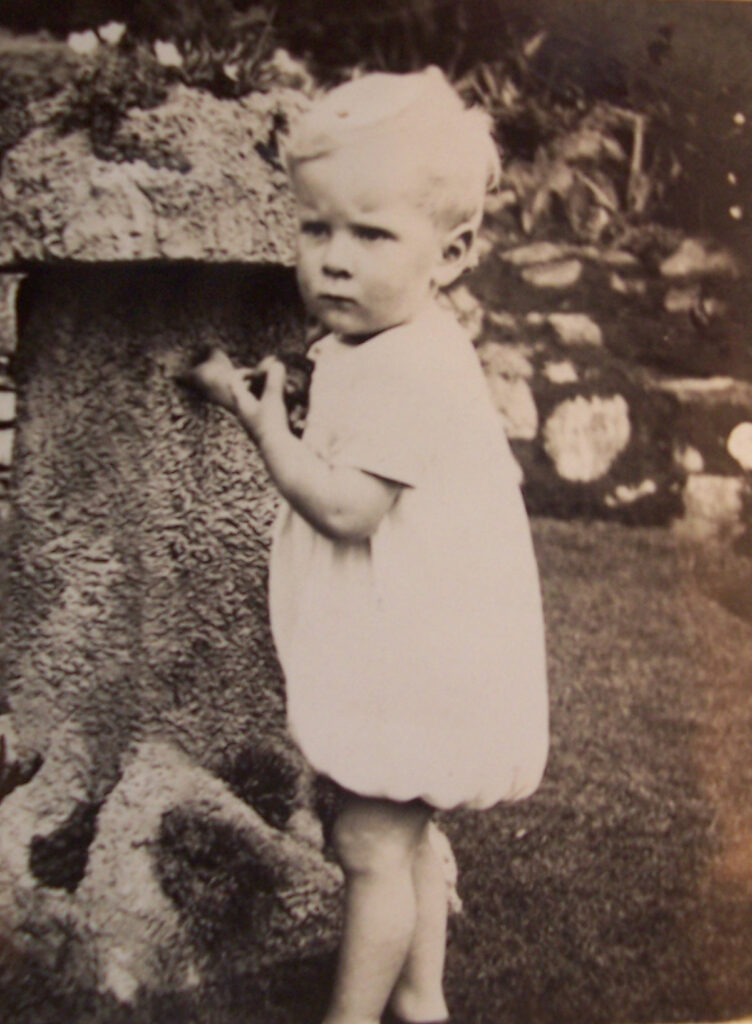
died in an air raid.
Melville Gibbs, named after an uncle who had died in the Great War, was killed when his house at Romilly Park was struck. Melville was the son of the dentist George Gibbs and was only four years of age. There is a window to his memory in All Saints’ Church. His mother had removed him from his cot in an upstairs bedroom when the siren sounded and taken him downstairs. He was killed and she suffered leg injuries. The bedroom and cot were untouched.
Another example of the tragedy of war that sadly continues even today, as we are all aware.
We will remember them.
By: Dr Jonathan Hicks
Send us your News, Sport, Events, Letters and Advertising here.
- Joe is 100 not out and celebrates with friends in Barry

- For whom the (10) bells toll

- The Vale’s (former) power station is being broken up

- Aberthaw power station turbine gifted to local Aviation museum

⭐ All of our social media in one handy place – here

Pencoed tangled up by ‘Seaweeds’
Primary school’s former deputy head is banned from teaching
I make no apologies for calling Plaid Cymru ‘separatists’

‘The importance of participation and continued learning’

Opposition leaders clash with First Minister over independence rally

How Kevin saved a stranger’s life


