Barry farming couple open up about mental health in the rural Vale
'Unless you have suffered from it or know someone who has, you will never truly understand'




Barry farming couple open up about mental health in the rural Vale
A farming couple from Barry have chosen to talk about the stresses in the business and the effect it has on their mental health.
Farming is known for its challenging working conditions, including isolation and long hours, and the results of a recent survey by the Royal Agricultural Benevolent Institution (RABI) Big Farming Survey have highlighted that more than one farmer a week takes their own life.
The survey also pointed to high rates of mental ill-health and poor quality of life. As farmers have to manage their working conditions, many are also put under immense pressure as uncertainty about the future casts a long shadow over their farmyard.
Richard Walker and Rachel Edwards-Walker run Flaxland Farm – a 120 acre beef and sheep holding just outside Barry.
Richard was diagnosed with depression and suicidal thoughts over 20 years ago in 2001 and was placed on strong antidepressants. He also saw a psychiatrist, with treatment lasting for almost two years.
He said: “I didn’t really know I needed help. You don’t know until you’re told that you do. It needs someone outside to look in and say there’s something wrong with you. But the weird thing is that you are still the one who has to decide to go and get that help. You can’t be forced into it.”
The first to realise that Richard needed help was his mum. He said: “She knew there was something wrong and that I needed help. I suppose now it would be my wife to spot that. My mother noticed a change in my personality. Mood swings, less chatty.”
Figures released by the RABI point towards a problem that runs deep in the farming community with almost half of those surveyed stating that they are experiencing some form of anxiety, with a smaller group (12% and 16% respectively) experiencing either moderate or severe anxiety.
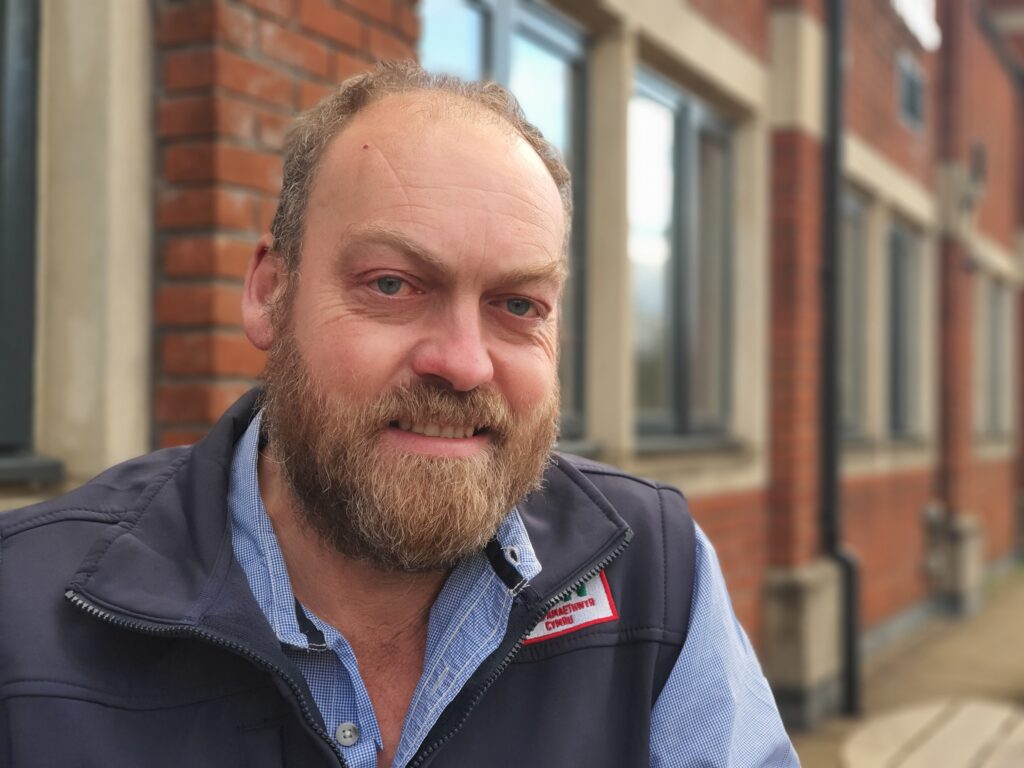
Recalling the early stages of his poor mental health, Richard says: “It was a very dark time. I didn’t want to get up in the morning. Being on a farm you have to. You have to feed the livestock, it’s a case of suck it up and get on with it. It was very dark.
“People say reach out when you feel down, but that’s the last thing you want to do. When you’re that low, going to talk to someone is the last thing you want. You can’t ask for help. You just don’t do it. That’s where seeing a psychiatrist helped. It was a complete stranger and you sit in a room and talk. They don’t judge you.
“Unless you have suffered from it or know someone who has, you will never truly understand but how do you explain that to someone who has never had to deal with it? It’s a disease that’s so underestimated. It’s not the same for every person. You can’t see it, and yet it is so dangerous.”
Whilst farming isn’t the only cause for Richard’s poor mental health, research has highlighted that there is a link between poor mental health and a specific farming sector, especially for those in the grazing livestock and lowland grazing livestock sectors.
“If you’ve got livestock and the farm, you have to keep going. The animals don’t understand if you’re having a bad day, they’ll just know they haven’t been fed.”
Wife Rachel adds: “It is very difficult because you are never cured from poor mental health. On a daily basis, you are watching that person. Richard does his best to cover his feelings and he doesn’t always talk. The more he won’t talk the more I realise that there is something wrong.
“When he’s worried about something he shuts down. It could be something like an animal falling ill, a bit of machinery breaking down – they are triggers for him. It could be a gate or a door left open and that whole day is then not a good day anymore because of one thing.”
Richard said: “Even today I can hide how I feel, I could be having a really bad day and you wouldn’t know it. My wife will know. She can see if there is something wrong and I’m not having a good day.”
Whilst talking therapy is an essential element in dealing with poor mental health, medication is also often relied upon. No stranger to prescription drugs to help him deal with his poor mental health, Richard said: “The drugs are not nice. My wife knows how they affected me. I can’t deal with emotions very well and sometimes it gets extreme.”
Rachel said: “When I first met Richard he was on antidepressants. He wasn’t able to show any feelings or emotions, that’s how the drugs affected him. He struggled to talk, he still does to a degree.
“When we found out we were expecting our first child Rhydian, we made a joint decision and he spoke to the doctors and they were happy for him to come off the medication. He has now been off the medication for over seven years and I know it’s hard for him sometimes but he is more present than he is on the drugs.”
Richard added: “I’m not sure how I cope now with the everyday. I’ve got two young kids, a wife; they give me a reason to be here. If I’m not feeling great I try to think what it would be like for them if I wasn’t around. What’s the alternative?
“I don’t think I want to go back on the drugs. I know they will just knock everything out again. I didn’t have emotions, I was there but only in body. I’m not sure if the medication is always what you need, talking is a good start if you can bring yourself to do it.”
It is not only Richard who struggles to put on a brave face. Rachel, who supports her husband, works part time off the farm as well as helping with the home farm, also has primary responsibility for looking after the children and running the household. Finding time to look after herself can be a challenge.
The Big Farming Survey, carried out by the RABI, showed that women are more likely than men to experience poor mental health and wellbeing and that especially in the farming community, these differences are stark.
Levels of mental wellbeing, the report showed, are lower, while levels of anxiety are higher. The data further suggests that 43% of women are possibly or probably depressed, compared with 33% of men. In addition, over one half of women (58%) experience mild, moderate or severe anxiety, compared to 44% of men.
Aware of the signs of poor mental health, Rachel knows how important it is to look after her own. She said: ““I’m very lucky that I’ve got good friends, so when I’m not having a good day I can call on them and have a joke and a laugh. Sometimes I just need a bit of normality.
“I have a job off the farm now, which is my escape and release and I enjoy it. I do also enjoy going for a coffee with friends, not that that was possible much over the last few years. If something is worrying me I write it out and make a list to manage my own stress.”
The future is something that Richard and Rachel have mixed feelings about. They’re not alone in foreseeing complex challenges though. Despite farming communities in general being quite optimistic about the future, uncertainty and change does play on their minds.
Rachel said: “We don’t know where farming will be in a few years, and that plays on our minds a lot. The ever-increasing costs of living, input costs on the farm and general uncertainty are serious cause for concern. We have some lovely days, we have some very dark days.
“I can’t make Richard better but on a grey day I will try to make him realise why he matters and why he’s important for us. The challenges farming throws at us, we will deal with them together, for richer, for poorer.”


| Scroll down to comment on this article
• | Owners warned to keep dogs under control

TV personality comes to Penarth
First Minister accused of ‘letting victims down’ over grooming gangs inquiry
What does my ‘Sentinel Apiary’ actually do?

Trio are sentenced over ‘drugs in prison’ plot
The bells, the bells – bringing a Time and Tide Bell to Barry

Penalty shoot out leads to Cup exit for Airport

| Scroll down to comment on this article