The life of Welsh darts player Alan Evans is being celebrated in a new TV documentary featuring tributes from his family and fellow players.
Evans, who died in 1999 at the age of just 49, spent the final years of his life in Barry, where his children Mark and Claire still live.
Fiery, temperamental and sometimes controversial, Evans, known at various times as ‘The Arrow’, ‘Rhondda Fats’ and latterly ‘The Rhondda Legend’ was one of the pioneers of televised darts during the first ‘golden age’ of the sport in the 1970s and 80s.

Born in the Rhondda in 1949, as a young man Evans showed promise in a number of sports. He dabbled in boxing, played table tennis to a good standard, and had ambitions to become a professional footballer – he had a trial with Cardiff City.
Evans started playing darts at the Ferndale Hotel, which was owned by his grandparents, and word quickly spread around the area that he was a talent.
One stroke of good fortune was in his timing. The News of the World Championship began in 1927, and each year there was a qualification process lasting nine months whereby entrants, which frequently exceeded 250,000, would be whittled down in pub competitions throughout the country to a final pool of players who would contest the latter stages in a large auditorium.
Evans’s run to the final in 1972 coincided with the first year ITV televised it.
The final, played over only best-of-three legs in front of a packed crowd in the Great Hall of Alexandra Palace, London (the modern-day PDC World Championship is played at the smaller West Hall in the same complex), saw Evans lose 2-0 to Brian Netherton, but with more than seven million people watching on TV, he became a household name overnight.
The following year, Evans’s stardom rose when he appeared on The Indoor League, an innovative series that showcased competitions in a variety of ‘pub games’, including bar billiards, shove ha’penny and table football, but the darts tournaments proved especially popular with the public.
The Indoor League was produced by Yorkshire Television and shown across the ITV network at lunchtimes. John Fairley, Yorkshire TV’s Head of Programmes at the time, remembers Evans fondly: “You have to remember that when we launched The Indoor League, darts was only ever seen on television once a year in the News of the World Championship.
“But, in no time, the great trio of presenter Fred Trueman, producer Sid Waddell, and the ebullient Alan Evans, somehow found for us by Sid, turned darts and The Indoor League programmes into ratings toppers,” he said.
Evans reached the final of the Indoor League in 1973, where he lost to Irishman Tommy O’Regan, and he finished runner-up again the following year, this time to his friend and fellow Welshman Leighton Rees.
On Boxing Day 1974, he finished an exhibition at Ferndale Labour Club by hitting 150 in three bulls. Sid Waddell, who became well-known as a maverick darts commentator, would refer to ‘the Alan Evans shot’ whenever a player was left with 150.
The profile of darts was rising rapidly, and in 1974 the World Masters was staged for the first time. The following year, Evans took the title with a 3-1 victory in sets over another Welshman, David Jones, watched by an audience of millions on ITV.
It was to be the high watermark of Evans’s career in terms of televised titles, and during the next few years, he chose to focus on exhibition darts.
As winner of the 1975 World Masters title, Evans took home £1,000 and a HiFi, yet he could make just as much money, if not more, in just one night on the lucrative exhibition circuit. It was quite a contrast with a few years earlier when he experienced long periods of unemployment, along with ad-hoc work as a brewery drayman.
Evans, his wife Jean and two children relocated to Stockport, Greater Manchester, which was in those days the most competitive area of the country in terms of darts, and it was also within easy travelling distance of Maine Road, where he would watch his beloved Manchester City.
He toured theatres, cinemas, bingo halls and workingmen’s clubs where he, along with his entourage, would entertain crowds with a well-produced exhibition.
It was around this time that the public first got to see the fiery side of Evans’s personality. In 1976, he appeared on The Tonight Show starring Johnny Carson, one of the biggest programmes on American TV, where he walked off after being asked to throw darts backwards through his legs using a mirror. “I’m a dart player, not a bloody clown,” he snapped.
Evans’s fame transcended darts. In July 1977, Evans faced Muhammad Ali in an exhibition match at Gypsy Green Stadium, South Shields. Under the handicap rules of the match, Evans would only score points for hitting trebles. Ali won the match by hitting a bullseye and declared himself darts champion of the world.
On another occasion, Evans was in a restaurant with George Best when he was recognised by Tom Jones, and the three of them went on to have dinner together.
Back on the oche, Evans and Leighton Rees met in an all-Welsh clash in the quarter-finals of the inaugural BDO World Championship in 1978, which produced the highest standard ever seen in a televised match at the time.
Evans began with an 180 and won the first leg in 13 darts, but Rees went on to win the match 6-3 in legs.
Much has been said over the years about Evans’s rivalry with the ‘Crafty Cockney’, Eric Bristow. Matters came to a head in 1979 when they met in the quarter-finals of the World Championship at Jollies, Stoke-on-Trent.
Bristow, then 21, was still smarting from a second-round defeat the previous year to a slow-paced American, Conrad Daniels. When Evans slowed his game down to frustrate Bristow, sparks, harsh language and gestures followed. It made for unmissable television. Evans won 3-1 in sets.
Claire recalls her father’s rivalry with Bristow: “There was one occasion when Eric was blowing smoke to put my dad off. He hated smoke anyway, and the fact he was blowing it to put my dad off wound him up.”
Evans’s son, Mark, claims in the documentary that Evans headbutted Bristow, but no official record exists of this incident.
The now-defunct British Darts Organisation (BDO), not known for its transparency, banned Evans from all tournaments for a year in May 1979 for an incident involving an official, the precise details of which have never been revealed.
When he returned to competitive darts, runs to the latter stages of tournaments were rare, as Bristow, John Lowe and Jocky Wilson became the most successful players of the 1980s.
In 1984, Evans appeared on the popular game show Bullseye, where he achieved the programme’s highest ever score in the charity round, scoring 401 with nine darts, which was doubled to £802 and given to the contestants’ chosen charity, the burns unit at Stoke Mandeville Hospital.
Three years later, he reached the semi-finals of the World Championship again, where he suffered a 5-0 whitewash against his old nemesis Bristow.
Evans began to have problems with his kidneys during a trip to Las Vegas later in 1987, and in June 1988, he made his final appearance in a televised tournament.
With Evans’s health failing, he decided to return to his roots, and the family relocated to Barry. “We all loved Stockport – that was our life and we made a lot of good friends up there, but our mum and dad’s roots were always in Wales,” Claire said.
Evans was not playing competitive darts during the difficult years of the early 1990s when most of the world’s best players acrimoniously broke away from the British Darts Organisation (BDO) to form the rival Professional Darts Corporation (PDC), but he was to appear on the big stage one last time.
In June 1997, Sky Sports staged a one-off match at the Circus Tavern, Purfleet which pitted Phil Taylor, the PDC world champion, against Welshman Richie Burnett, who won the BDO world title two years earlier and was probably the strongest player on that side of the divide at the time (Taylor won their clash 4-1 in sets).
The undercard that night saw Evans and Bristow renew their rivalry. By then, Evans hadn’t played on TV for nine years, and he had aged considerably due to illness. Bristow was still competitive in PDC professional darts, but he was not the force of old, largely due to dartitis, a psychological condition whereby players struggle to release the dart.
Behind the scenes, Bristow was as much a wind-up merchant as ever, but it was done with a smile on his face, and the two practiced together before they took to the stage.
During the match itself, the crowd and TV audience were treated to glimpses of Evans’s best as he hit two 180s, but Bristow went on to win 3-0 in sets.
After the match, it was as though the past rivalry had never existed as the two enjoyed a few pints together.
Evans died on 11th April 1999, hours after the Wales rugby team beat England by a single point in the Five Nations Championship, which he watched from his hospital bed with his family.
By MARCUS STEAD
‘Legends of Welsh Sport: Alan Evans’ aired on BBC One Wales on 23rd February 2022 and is available online here.
This article first appeared in the printed edition of the Glamorgan Star dated 10th March 2022.

Senedd rejects calls to ban phones in classrooms

Man jailed for a series of crimes across Barry
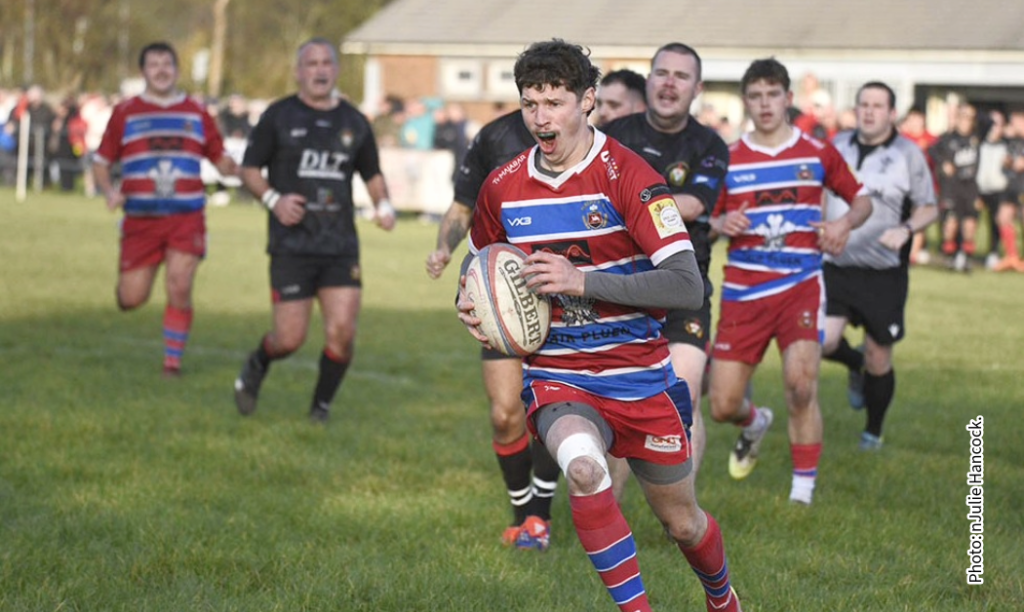
Powerful Pencoed steamroller the Quins

All Saints pupils are just mad about saffron…
Barry Youth aim to preserve 100% record

Goals galore in Cup and League action