


#GlamorganStar #TrustedNews #Free #ValeOfGlamorgan
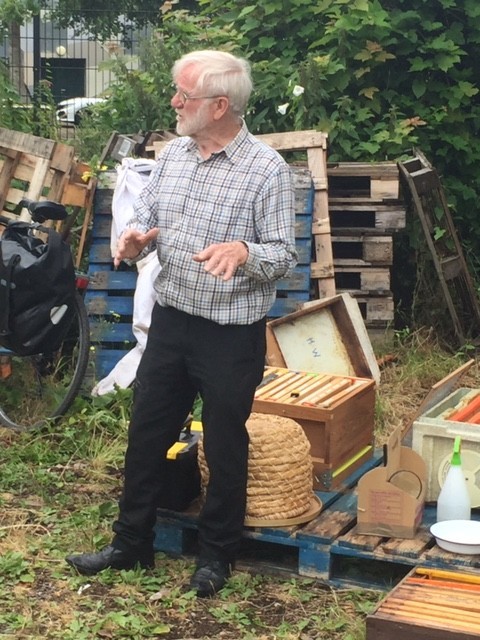
| Fonmon Apiary news withHarold Williams
The weatherman tells me it is winter!
But with the temperatures often in double figures all the colonies are very active. This should not be occurring, and it does mean that I must check the apiaries on a regular basis and monitor the weight of the hives.
Checking the colonies does not mean opening them up to see what is going on within. The information that I require comes from the contents of the under-floor trays. Although the bees are active, they are not as busy as a summer colony due to the lack of forage plants at this time of the year. Nonetheless there is pollen to be seen on the legs of those bees that make the most of the mild conditions and venture out.
What do I do with the contents of the trays? Well, each hive has a number. The tray debris goes into a container that is labelled with the name of the apiary and the date and the number of the hive that it came from. At my home I have a setup that allows me to inspect the debris very carefully.

What am I looking for? It is a tiny mite that goes by the name of Varroa Destructor and believe you me, it lives up to this very descriptive name. An adult is 2mm in size and dark brown in colour. Some mites do not reach adulthood and are very lightly coloured, making them very difficult to see, hence my magnifying set up.
I sort through the debris and count the individual mites using a calculator to register the brown ones and an abacus with white beads for the pale ones. Yes, it is very time consuming but necessary. In the summer they can number in their thousands and the various treatments to control them depends on the size of the infestation.
Most of the mites I find are dead. They have completed their breeding cycle and drop down through the mesh floor and into the tray, along with wax particles, pollen, bits of bees and many small flies and beetles that find the debris in the trays much to their liking. My next article will be the life cycle of the mite.
Harold William
• | How bees regulate heat inside the hive

Pencoed tangled up by ‘Seaweeds’
Primary school’s former deputy head is banned from teaching

I make no apologies for calling Plaid Cymru ‘separatists’

‘The importance of participation and continued learning’

Opposition leaders clash with First Minister over independence rally

How Kevin saved a stranger’s life