


‘All manner of things shall be well’ – words which have echoed down the centuries
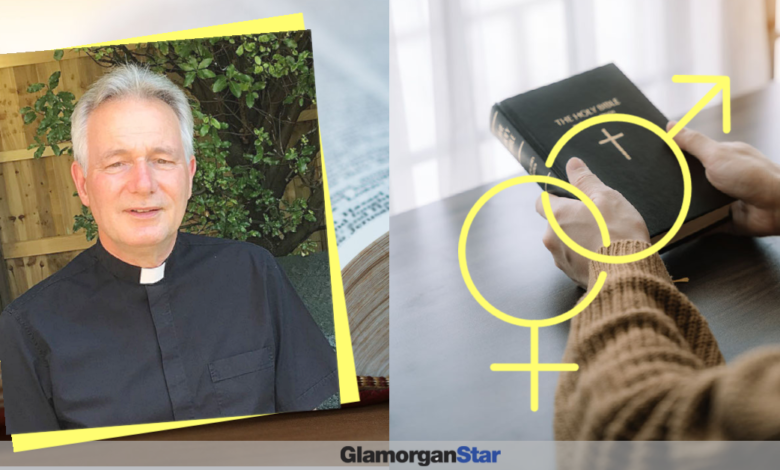
IN February, the Church of England’s General Synod (parliament) debated whether or not feminine images of God, drawn from the Bible, should be used in public prayers.
This was no big deal because Christians are agreed that God is not male or female. The Catholic Catechism says: ‘God is neither man nor woman. God is pure spirit in which there is no place for the difference between the sexes. But the respective perfections of man and woman reflect something of the infinite perfection of God: those of a mother and those of a father.’
So, all male or female imagery of God is just that, imagery. Nevertheless, some of our national newspapers were outraged. Those woke clergy were going to force churchgoers to pray ‘Our Mother who art in heaven!’. But no change to the words of the Lord’s Prayer were ever contemplated.
There is nothing new in praying to a motherly God. In the decidedly unwoke 11th Century, St Anselm of Canterbury prayed ‘Jesus, as a mother you gather your people to you, you are gentle with us as a mother with her children’ (See Luke 13 v34 and Isaiah 66 v13). In the still unwoke 14th Century Julian of Norwich wrote ‘Christ came in our poor flesh to share a mother’s care.’ Julian even compared holy communion to breast feeding!
Julian of Norwich is one of the most original thinkers in the history of Christianity. In 1373, at the age of 30, she became a hermit, literally walled up in a room within the church of St Julian in Norwich. (This is how she came to be called ‘Julian of Norwich’.) She voluntarily accepted incarceration within the church in response to a series of religious visions she had received.
Living in lifelong solitary confinement seems inhuman. But this way of life offered Julian the opportunity denied women at that time; time to think, read, and write. As the novelist Sarah Meyrick puts it: ‘her bodily imprisonment made intellectual freedom possible’. Julian’s ‘Revelations of Divine love’, detailing her visions, is the earliest surviving book in English written by a woman. This year marks the 650th anniversary of her writing the first version of the book.
Not only did Julian’s incarceration give her intellectual freedom, it helped preserve her life. For in 1348 bubonic plague (‘the black death’) had reached England and Wales, killing up to 60% of the population of 6 million within a year. It returned in waves throughout the 14th and 15th Centuries.
From her ‘lockdown’ Julian was able to offer words of comfort to those who passed by her window. For Julian rejected what seemed obvious to others, that the plague had been sent by a wrathful God as a punishment for sin. ‘I saw no anger of any kind in God’, she writes. Although she knew nothing of bacteria or viruses, she knew in her heart that God was not ‘a cosmic sadist, or spiteful imbecile’ (to use the words of CS Lewis).
God is above all a God of love. ‘The sweet eye of pity and of love never departs from us, and the working of mercy ceases not’, Julian wrote. God even enables our imperfections to become ‘not wounds but honours.’ In other words, we learn through our mistakes.
Julian would have been untroubled by modern debates over the scientific and historical reliability of the Bible. She wrote that God had revealed only as much of Himself as was necessary for our salvation, ‘part is completely hidden from us, for it deals with all those things which do not concern our salvation’.
And yet, although Julian knew nothing of modern science, there is a passage in her writings which I find intriguing. In a vision, she saw a tiny object, no larger than a hazelnut. She asked Jesus, ‘What can this be?’, and he replied ‘It is all that is made.’ Scientists tell us that our universe began with a tiny ball of matter, which exploded giving rise to atoms, molecules, stars and galaxies.
During the Second World War, Princess Elizabeth (later Queen Elizabeth II) gave a speech on the radio to bring comfort and hope to the nation’s children, in which she quoted some words of Julian of Norwich. King Charles had the words embroidered onto the canopy used at his coronation: ‘All shall be well, all shall be well, all manner of things shall be well.’
What is your view or opinion on this article by Rev’d Robert Parrish? Write to the next edition of Glamorgan Star’s printed Letters page and we’ll tell 33,000 other readers! Click here.
- The views expressed by columnists of this newspaper do not necessarily reflect the views of the Glamorgan Star, its employees or its proprietors
Read next:
- Let’s build something better for our communities
- Plaid Cymru is ignoring plight of Heath Hospital
- Vale Show highlights importance of the rural economy
- I’m proud that all parties agreed on children in care plan
- Royal Welsh highlights the role of the rural economy
⭐ All of our social media in one handy place – here


Tŷ Hafan’s appeal target is smashed – thanks to Welsh public

Japanese ‘capsule hotel’ is coming to Cardiff

Disabled people say they are being moved to a smaller day centre

Barry man jailed following brutal attack

Barry man jailed for threatening to kill woman

Uninsured driver was trafficking drugs