






By Joy Strangward.
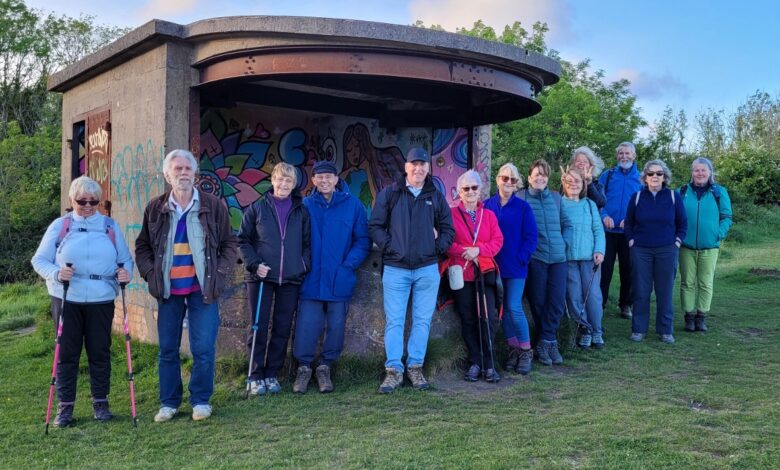
A group of 13 walkers joined Joy from Penarth and District Ramblers at Penarth clifftop at the start of a 5-mile evening ramble and setting off in sunny conditions but headlong into a blustery north-easterly breeze they tramped along the clifftop.
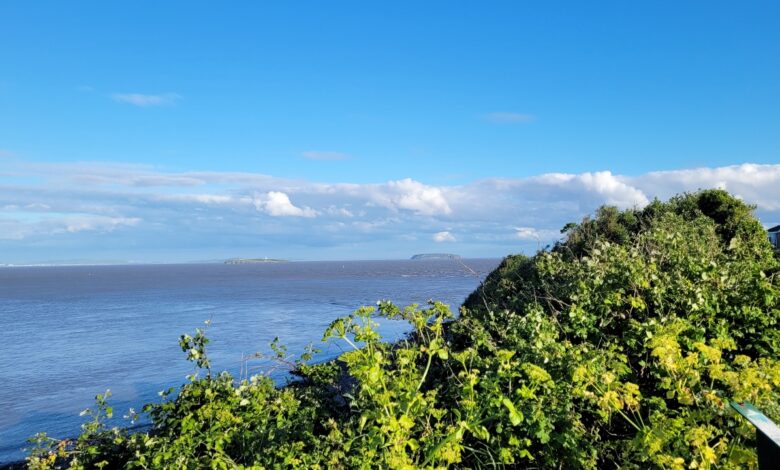
Following the Wales Coast Path they enjoyed views of Flat and Steep Holm, Brean Down and Weston-Super-Mare along with a mist covered Severn Bridge before arriving at Lavernock Point and the 12th century church dedicated to St Lawrence.
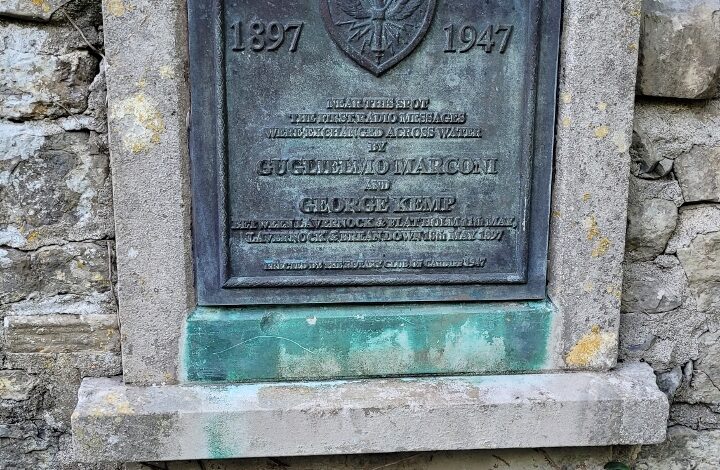
A plaque on its churchyard wall commemorates the experiment of Marconi who along with his friend George Kemp on 13th May 1897 sent the first wireless signals across open water from Lavernock to Flat Holm in Morse code. After several failed attempts but with a flash of inspiration the apparatus was carried down onto the beach below the cliff and with an aerial measuring 46m, a clear signal of ‘Can you hear me’ rang out only to be answered by Kemp who replied ‘Yes loud and clear.’ The recording slip for this first message is safely kept at the National Museum of Wales in Cardiff.
Some road walking led them into the Lavernock Nature Reserve which is managed by the Wildlife Trust of South and West Wales but cared for by volunteers and fortunately Sam W. a long standing volunteer had joined the walk, so was able to give the group an insight into their work. They learned in the south is an old hayfield that has been re-colonised by meadow species and bird life is also important to the reserve especially in autumn when swallow, redwing, fieldfare and finches can be seen. Classed as a Site of Special Scientific Interest the reserve is home to many butterflies and moths which can be seen during the summer along with about 170 different species of flowers.
A fort was constructed at Lavernock Point in 1866 to prevent invasion by the French along with Palmerston batteries being installed at Brean Down, Flat Holm, Steep Holm and Nells Point on Barry Island, but most of the original fort has been built over. Arriving at the two unit searchlight battery that was added during World War Two the gun emplacements are classed as an Ancient Monument.
Then following the clifftop path Sam pointed out the rare Wild Service Tree almost hidden behind a young oak tree and perched on the very edge of an unstable cliff. It earned its name from the Latin ‘cervisia’ because the Romans used its berries to flavour beer and it is also known as a chequers tree, because a chequerboard was the symbol for an inn or tavern in Roman times and the berries can be used to make jam, jellies, syrups and wine.
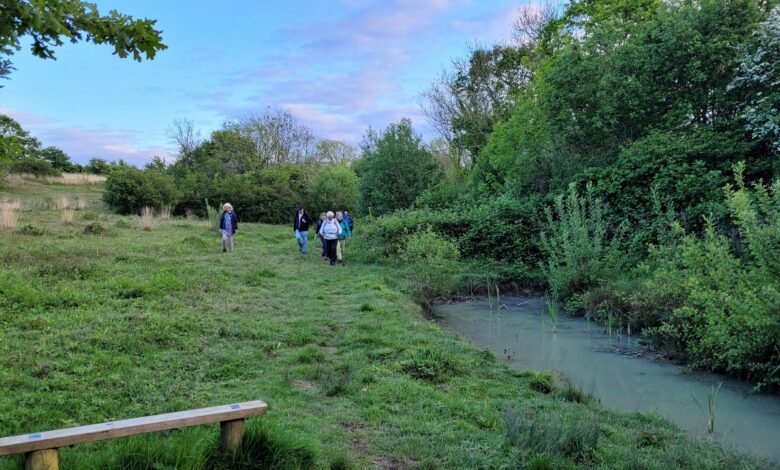
Heading through woodland where early purple orchids were spotted and past the man-made pond they exited onto Fort Road making their way inland to join Lavernock Road. Then pounding pavements to Searchlight Lane the pretty pathway led them uphill to fields with the familiar outline of St Augustines Church on the horizon, before a return along Penarth clifftop with views towards the seafront and Cardiff Docks.
You can follow the group here or on Facebook.
Joy Strangward


| Scroll down to comment on this article
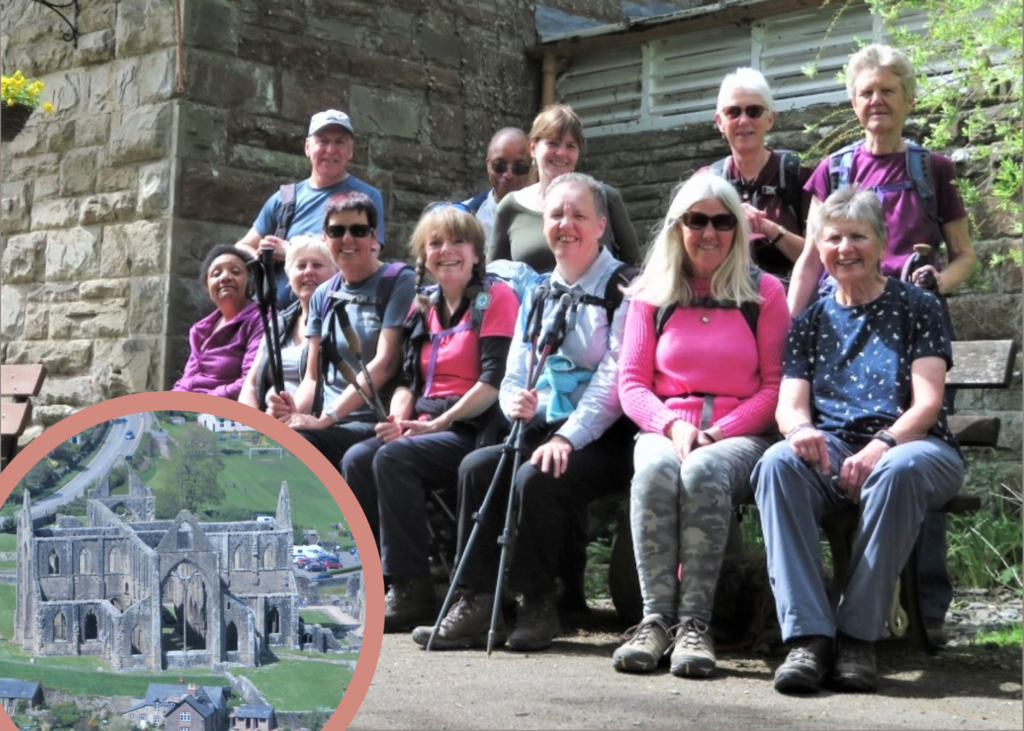
• | Dyke, Tintern and pub refreshments enjoyed by Ramblers

Pencoed tangled up by ‘Seaweeds’
Primary school’s former deputy head is banned from teaching

I make no apologies for calling Plaid Cymru ‘separatists’

‘The importance of participation and continued learning’

Opposition leaders clash with First Minister over independence rally

How Kevin saved a stranger’s life

| Scroll down to comment on this article


