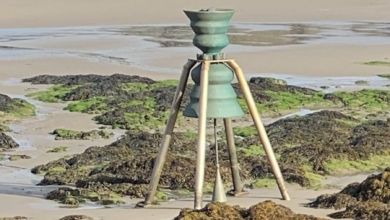


DETAILS OF restoration and habitat work in recent years at Welsh sand dunes, including Kenfig Nature Reserve and Merthyr Mawr Warren, have been revealed by Natural Resources Wales (NRW) – now that the work is ending.
The ‘Sands of LIFE’ project, funded by the EU and led by NRW, is ending after five years of recreating natural movement in dunes and revitalising habitats housing some of the country’s rarest wildlife.
A total of 35 of works have taken place, including habitat restoration, bare sand creation and new grazing areas, equating to 490 football pitches.
Work has taken place at sites including Tywyn Aberffraw, Newborough, Morfa Harlech, Morfa Dyffryn, Laugharne-Pendine Burrows, Whiteford Burrows, Pembrey Coast, Kenfig Burrows and Merthyr Mawr Warren.

In some areas, such as Kenfig Nature Reserve, locals have accused NRW of meddling with nature. NRW insists that the opposite is the case, because so many sand dune areas are vanishing as they are overgrown by invasive vegetation.
Other work done in the project includes the construction of 29 km of fencing and 23 artificial rabbit warrens, while four items of unexploded training ordnances dating from the Second World War have been disarmed.
Sand dunes are listed as the habitat most at risk in Europe and support more than 70 nationally rare or Red Data Book species. They are made up of a variety of unique habitats, including bare and mobile sand, wet dune slacks and fixed dune grassland, all of which are sensitive to climatic and human influences.
These habitats support a high diversity of rare and specialised plant and animal species, many of which are classified as threatened or vulnerable.

Kathryn Hewitt, Sands of LIFE Project Manager for NRW, said: “Sand dunes are some of the best locations for wildlife in Wales.
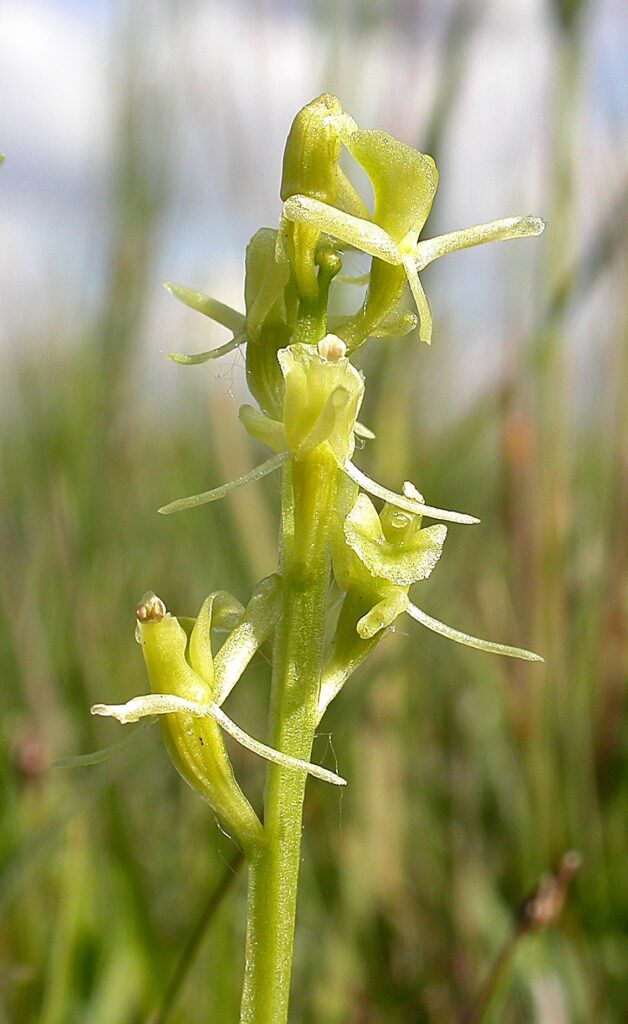
“They are hotspots of biodiversity, home to skylarks, carpets of orchids, helleborines and gentians, as well as a wealth of invertebrates such as butterflies, rare beetles and mining bees.
“Unfortunately, many sand dunes in Wales are in poor condition and species are under threat of extinction, due to climate change, air pollution and other human impacts, or simply a lack of sympathetic management.
“Just 8,000ha of sand dunes remain – 0.3 per cent of the land mass of Wales. Dunes cannot be re-created and their form and habitats are highly specialised. The funding by the LIFE programme and the Welsh Government has been invaluable, giving us the chance to tackle these issues on a large scale.
“We are immensely proud of the work that has taken place over the last five years. The project has created more than 30 hectares of new bare sand on the dunes which rejuvenates the habitat allowing the rarest species to recolonise.
“Conifer plantations, invasive scrub and alien species, like Sea Buckthorn and Cotoneaster, smother dune vegetation and have a negative effect on nutrient and water levels – so clearance of these restores open dune habitat.
“Fencing allows the dunes to be grazed by ponies, cattle or sheep to prevent overgrowth of vegetation.”
Approximately 30 per cent of the original sand dune area in Wales has been lost to development and erosion since 1900, and most of the remainder has become over-stabilized by vegetation in the past 50 years, resulting in a significant loss of biodiversity.
The Sands of LIFE project was recently featured on an episode of Great Coastal Railway Journeys with Michael Portillo. You can watch the episode on BBC iPlayer.
- Pencoed tangled up by ‘Seaweeds’

- Primary school’s former deputy head is banned from teaching

- I make no apologies for calling Plaid Cymru ‘separatists’
⭐ All of our social media in one handy place – here

Pencoed tangled up by ‘Seaweeds’
Primary school’s former deputy head is banned from teaching
I make no apologies for calling Plaid Cymru ‘separatists’

‘The importance of participation and continued learning’

Opposition leaders clash with First Minister over independence rally

How Kevin saved a stranger’s life