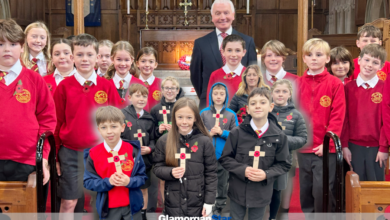



RBL’s poppy has evolved from silk and lawn cloth to plastic free
Since emerging as a symbol of remembrance after the First World War, poppies worn during the Poppy Appeal have come in a range of shapes and sizes.
From handmade silk and cotton poppies to the new plastic-free poppy made entirely from paper, discover how the poppy has evolved over the last century.
The first poppies

In the 1930s poppies made from two layers of different fabric were introduced. The under layer was made from lawn cloth, with an upper layer of silk. There was also a green fabric leaf, faux stamens and a metal centre.
Wartime poppies

During the Second World War, shortages in materials meant the number of designs dropped from four to two. Silk poppies were made in much smaller numbers, and a second poppy made entirely from card was introduced.
Wire stem returns

Wire stems were reintroduced in the 1950s to replace the cardboard used as a result of wartime shortages, with red felt used to create the poppy petals.
A new look in 1967

A new look design emerged in 1967 with bitumen centre and wire stem replaced by plastic, along with the introduction of a one-piece petal.
Green leaf returns in 1987
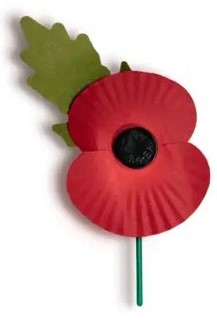
In 1987 the poppy regained its leaf after it emerged that the public preferred the feature.
2023 – the plastic-free poppy
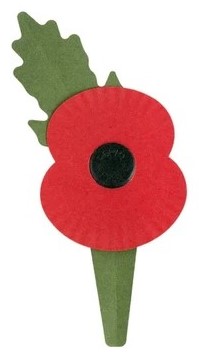
2023 sees the biggest change in the poppy’s design for a generation.
After more than three years of development, the Royal British Legion has produced a plastic-free poppy made entirely from paper that is completely recyclable at home.
With paper created from renewable fibres from renewable sources, including offcuts from coffee cups, the innovative new poppy design features a traditional poppy shape with a black centre embossed with Poppy Appeal and a leaf with a crease.
It can be fastened with a pin in the stem or worn in a buttonhole.
Photos by The Royal British Legion.
In 2023 the RBL will be remembering and honouring Service
By the Royal British Legion
Service, the act of defending and protecting the nation’s democratic freedoms and way of life, is rarely without cost to those who serve. Physical, mental or emotional injury or trauma; the absence of time with loved ones; or the pressures that come from serving, highlight why the Remembrance of service is so important.
This year we mark significant anniversaries united by the theme of ‘Service’. On the 70th anniversary of the armistice which ended the fighting of the Korean War, we pay tribute to the British and Commonwealth forces who served in almost unimaginable conditions. We also honour the contribution of the generation in uniform who undertook National Service, 60 years after the last serviceman was demobbed.
On the 75th anniversary of the arrival of settlers from the Caribbean on the Empire Windrush, we explore the connections between the Armed Forces and the Windrush Generation, and mark their service and the part they played in rebuilding post war Britain.
We further explore and remember the contribution of personnel of Commonwealth heritage with our support of South Asian Heritage Month and Black History Month where personal stories bring to life the experiences of those who served.
Local supporters of the Poppy Appeal 2023







Other items to read:
- A Penarth Victoria Cross Hero
- Remembrance events on Saturday and Sunday in Bridgend
- Bridgend-born centenarian remembers VJ Day
- How All Saints pupils Remembered
- The stories of five names on Barry’s Roll of Honour
⭐ All of our social media in one handy place – here


Pencoed tangled up by ‘Seaweeds’

Primary school’s former deputy head is banned from teaching
I make no apologies for calling Plaid Cymru ‘separatists’

‘The importance of participation and continued learning’

Opposition leaders clash with First Minister over independence rally

How Kevin saved a stranger’s life