How to manage a hive of swarming bees
News from the Fonmon Apiary – with Harold Williams



THE ‘hands on’ sessions for beginners have gone very well. On each occasion, the weather was suitable – dry, sunny and very little wind. This allowed for in depth inspection of several colonies.
In early April I was able to look into all of my colonies. They are looking much improved now. Dry days have enabled the foragers to sally forth and they are now bringing in pollen and nectar from the oil seed rape that is on their doorstep.
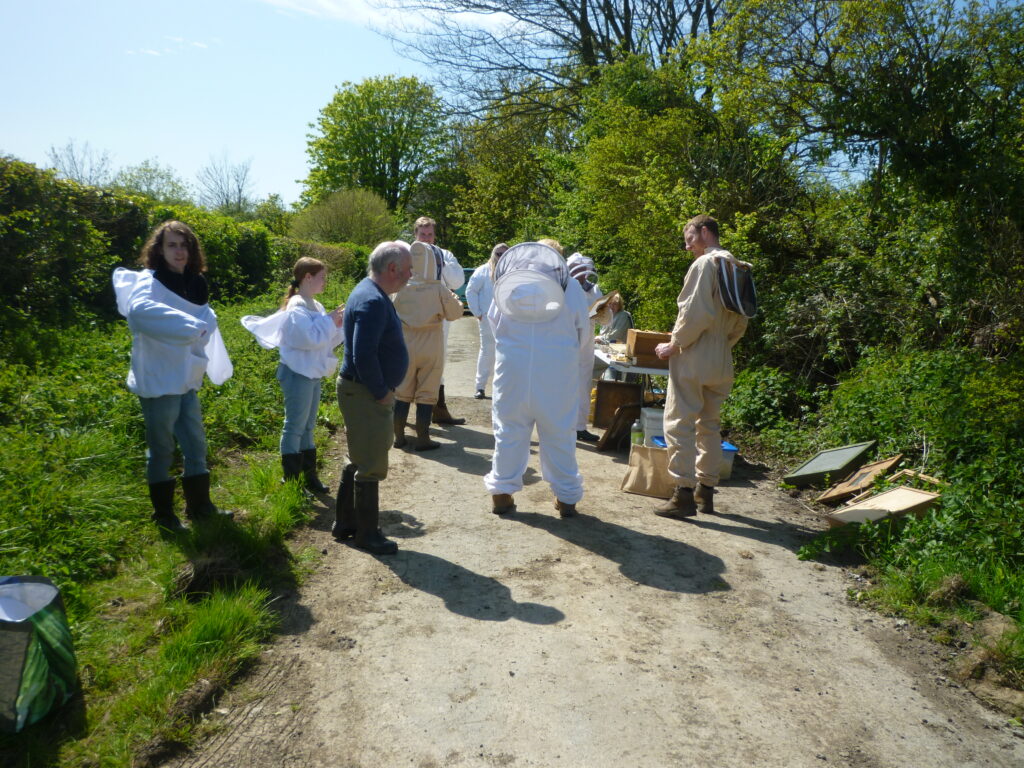
The Queens are laying well. Lots of eggs were observed, along with larvae in all stages of development. Drones (male bees) are also to be seen now and this indicates that the colonies may well decide to swarm at some later date.
If the fair weather continues, numbers in each of the colonies should increase; this is in line with the availability of much-needed pollen and nectar. By the end of this month, I expect to see around 40,000/50,000 inhabitants in each colony. This will also bring about the likelihood of swarming preparations getting underway.
If on one of my inspection sessions I see Queen Cells being formed, swarming is definitely on the cards! Here is my opportunity to make an increase in the hive numbers. How is this to be brought about? Although a colony only requires one Queen, when swarming is going to occur many Queen Cells will be formed. The bees like plenty of back-up; something might not go as planned.
So, I have colonies that are going to swarm but I do not want to lose bees due to this swarming impulse. Therefore, action on my part is essential. For a start I could remove a frame with a Queen Cell on it, plus bees, and put this in a small box called a nucleus box. To this frame will be added others (from the same hive) containing pollen and honey and more bees. Any adult/foragers will fly back to their own colony leaving nurse/house bees behind who will look to the care of the Queen Cell.
With a new Queen in the offing the drones will be of some use now. A new Queen must be mated if she is to be fully functional. With a mated Queen, the nuc will expand rapidly and will eventually be transferred to a full-size hive. The original colony is still in swarming mode. It will require attention! Splitting a colony that intends to swarm can be another option. This will require finding the Queen and removing her on a frame into another separate box containing empty frames. The original hive is moved to one side.
The Queen in her box is put in its place, all flying bees from the moved aside box will return to their Queen and will think that they have swarmed (hopefully). Food or feeding must be added to complete the task. Now our other hive with Queen Cells, eggs and larvae can be left to its own devices and eventually a new Queen will emerge and we now have another functioning colony, or we could split this lot further into more nucs.
Will it work? I will let you know how I get on.
- What does my ‘Sentinel Apiary’ actually do?
- The bees are clustering to survive the northern winds

- Protecting our planet – by Brian Mayne

⭐ All of our social media in one handy place – here


Pencoed tangled up by ‘Seaweeds’

Primary school’s former deputy head is banned from teaching

I make no apologies for calling Plaid Cymru ‘separatists’

‘The importance of participation and continued learning’

Opposition leaders clash with First Minister over independence rally

How Kevin saved a stranger’s life