


What does my ‘Sentinel Apiary’ actually do?
News from the Fonmon Apiary with Harold Williams



FIVE colonies are now on site here.
They are made up as follows. Three are swarms. One is the colony that I retrieved from the abandoned East Aberthaw Power station and the fifth is a split that was made from the power station colony.
Of these colonies, the power station split is not developing as I hoped it would. Things don’t always go to plan! And its survival through the winter may well be in doubt.
There will be no honey crop this year and I can live with that, the survival of the bees is the important factor here. I am still a ‘Sentinel Apiary’, and as such I send regular under floor debris samples off to the National Bee Unit for their perusal. They in their turn will inform me of any untoward findings.
The debris that I collect and send off is made up of bee antennae; bits of legs, wings, and wax particles and of course dead and alive Varroa Mites! The collecting of this debris is made possible by way of the mesh floors that make up the base of the colony units, plus a drawer that is beneath each of them.
Why am I a Sentinel Apiary?
Well, the Varroa mite is one reason but there are other creatures that can and do assail honeybee colonies. I have an Asian Hornet trap on site but as yet, no Asian Hornets have appeared. The hornet is in this country and it will eventually reach my apiary.
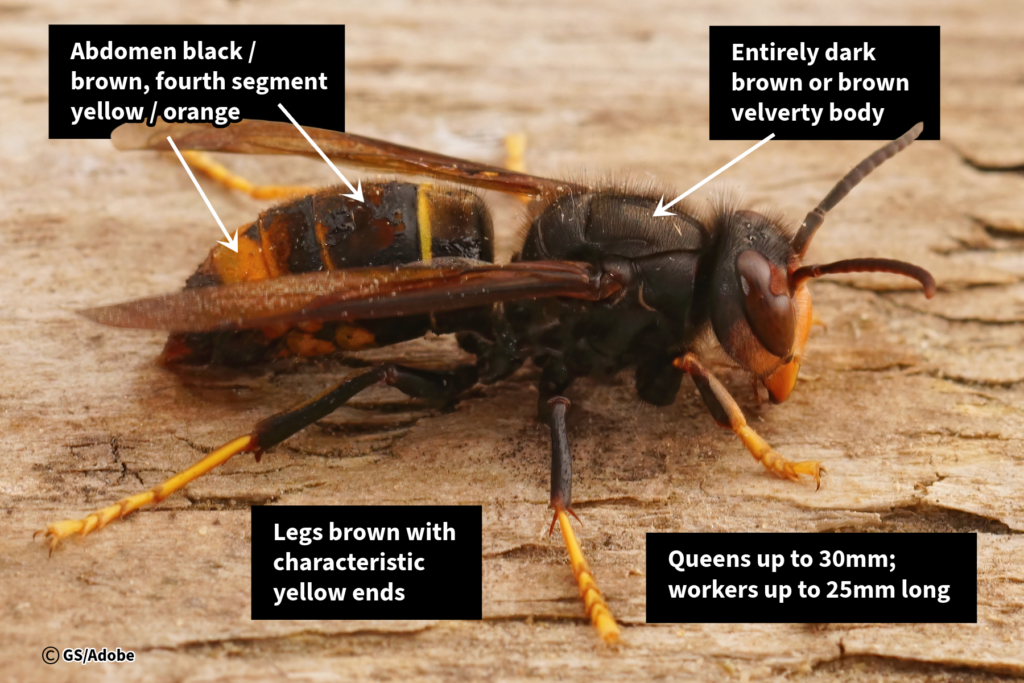
Asian Hornets do catch and devour other insects but a Honeybee colony is a burger bar just waiting to be pillaged! Yet another threat that I am on the alert for is the Small Hive Beetle. No reports of this beetle have transpired yet but it will put in an appearance, that’s for sure.
The beetle originates from South Africa. What does it consume to stay alive? Well fruit is one source of sustenance and as fruit is exported around the world, so is the beetle. Now the larvae that develop from the beetle’s eggs begin to devour honeybee larvae, plus eggs, and who knows what else. At the same time, they leave what is politely known as Frass (Poo) wherever they go. Some 800 eggs can be laid by the adult beetle so any colony that receives a visit is doomed. The beetle larvae will leave the devastated colony and proceed to pupate underground and will in their turn emerge as an adult beetle – all set to carry on the carnage.
By Harold Williams.
- What does my ‘Sentinel Apiary’ actually do?
- The bees are clustering to survive the northern winds
- Protecting our planet – by Brian Mayne
News, Letters, Sport and advertising are welcomed by the Glamorgan Star – the largest newspaper or magazine in the Vale of Glamorgan. Contact us today here.

First Minister accused of ‘letting victims down’ over grooming gangs inquiry

Trio are sentenced over ‘drugs in prison’ plot

The bells, the bells – bringing a Time and Tide Bell to Barry

Penalty shoot out leads to Cup exit for Airport

Ring rusty Barry RFC make a promising start

King Billy go top of League One after 10-goal thriller


j


⭐ All of our social media in one handy place – here


