When a Barry hotel said ‘Americans only’
Bert (101) remembers how that snub helped him find the love of his life

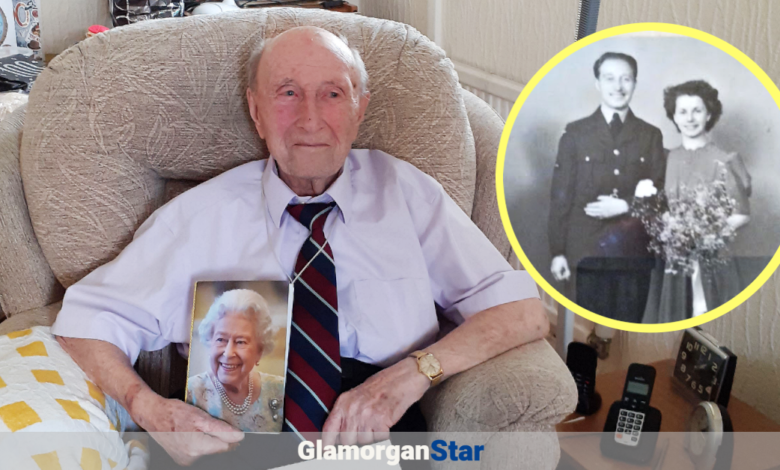



AN RAF Veteran from Barry who saw active service during World War II has been reflecting on his long life ahead of his 102nd birthday in July.
Bert Durman was born in Barry on 29th July, 1921, and his father was a train driver based in the town.
As a youngster, his father would smuggle him aboard the footplate of his train for overnight trips to London and he learnt to lay low at stations to avoid detection.
Upon leaving school, Bert took a job with British Gas as a junior clerk, and as a young man he enjoyed going to dances many evenings per week, but when war was declared in 1939, his life was to change forever.
Bert uses a walking frame and is a little hard of hearing, but he is mentally very alert and his recall of the details of his long life remains crystal clear.
Sunday, 3rd September 1939 is a day that Bert remembers very clearly, as the nation gathered around their wireless sets to hear Prime Minister Neville Chamberlain declare war on Germany: “War was declared at 11am on that Sunday, and we were living in Charlotte Place at the time.
“When war was declared, all us youth went down the Drill Hall to see what was happening, and when I got down there, they didn’t want to know me, they said I was too young, even though I was 18, and they said to come back when you’re 19 – there was no shortage of people at the time.
“Nobody’s mentioned this before, but it’s worth mentioning now at this time when the nurses are on strike – I went and joined the ARP (Air Raid Precautions), and the depot was in the hospital in Wyndham Street.
“The matron didn’t really want us to stay there, so they put us in the basement of the hospital, and it was very basic in there, and my job was as a messenger and a stretcher-bearer,” he said.
One day, Bert and three of his friends went into Cardiff seeking to join the Royal Navy, but was told that there were no vacancies, apart from stokers (who specialised in engine room duties). His father, who had served in the navy, had warned his son not to accept a role as a stoker, describing it as a ‘death sentence’.
Undeterred, Bert and his friends headed to the Angel Hotel to discuss their next move over a drink. He said: “One of us said, ‘let’s see about the RAF’, so we went to their joining desk, and we were given the chance to join the RAF Volunteer Reserve, and they said ‘we’ll let you know’.”
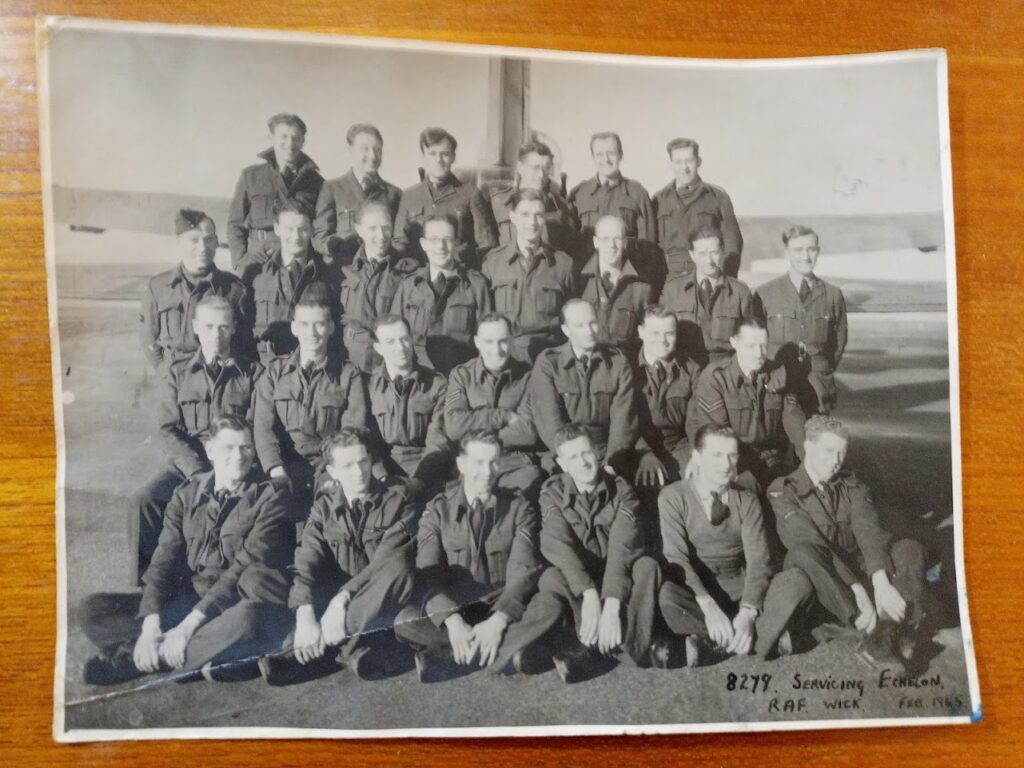
In January 1940, Bert received notification that he was to report to RAF Colerne in Wiltshire, but he was soon transferred to Blackpool, where he was given a uniform and he began his training, and upon passing out, he was moved to RAF Charmy Down near Bath.
Bert became an aircraft mechanic and he was with Bomber Command and a training squadron before ending up in 280 Squadron Coastal Command, operating from Wick in Scotland covering the convoys.
They flew Warwick aircraft which were converted bombers, and they would drop large wooden lifeboats by parachute to shipwrecked sailors in the North Atlantic, including the Russian convoys.
Bert was given leave at Christmas 1944 and he returned to Barry, but he was unimpressed with what he found when he arrived home: “They told me I was lucky because I’d drawn Christmas leave, and it was a two-day train journey home from Wick, but when I arrived in Barry I hated it.
“The place was jammed full of Americans. They were based at a depot in Cadoxton, and all the girls I used to dance with were hanging on their arms.
“I went down to one Barry hotel and there was a big notice on the door saying ‘Americans only’ – I couldn’t believe it.
“There was an American ship docking in Barry and the crew went to the hotel and pulled the swing doors off. The white helmet military police turned up and there was one hell of a battle. The Americans had their batons – much bigger than the police baton we were used to in this country,” he said.
Much to his parents’ dismay, Bert decided to return to Wick several days before the end of his leave, and it was a decision that was to change the course of his life.
Upon arriving at Wick, Bert went to the Guard Room and booked himself in, and he was told there was a dance taking place in the cookhouse with a four-piece band: “I went and there were all the Women’s Auxiliary Air Force (WAAFs) on one side and all the men on the other.
“Make no mistake about it, I am a good dancer (Bert is keen to emphasise the present tense). I had been to every dance hall in south Wales.
“I saw the prettiest girl I had ever seen in my life, and the etiquette in those days was to walk across and say ‘can I have this dance, please?’ and she got up. She was very small, but she was the worst dancer in the world!
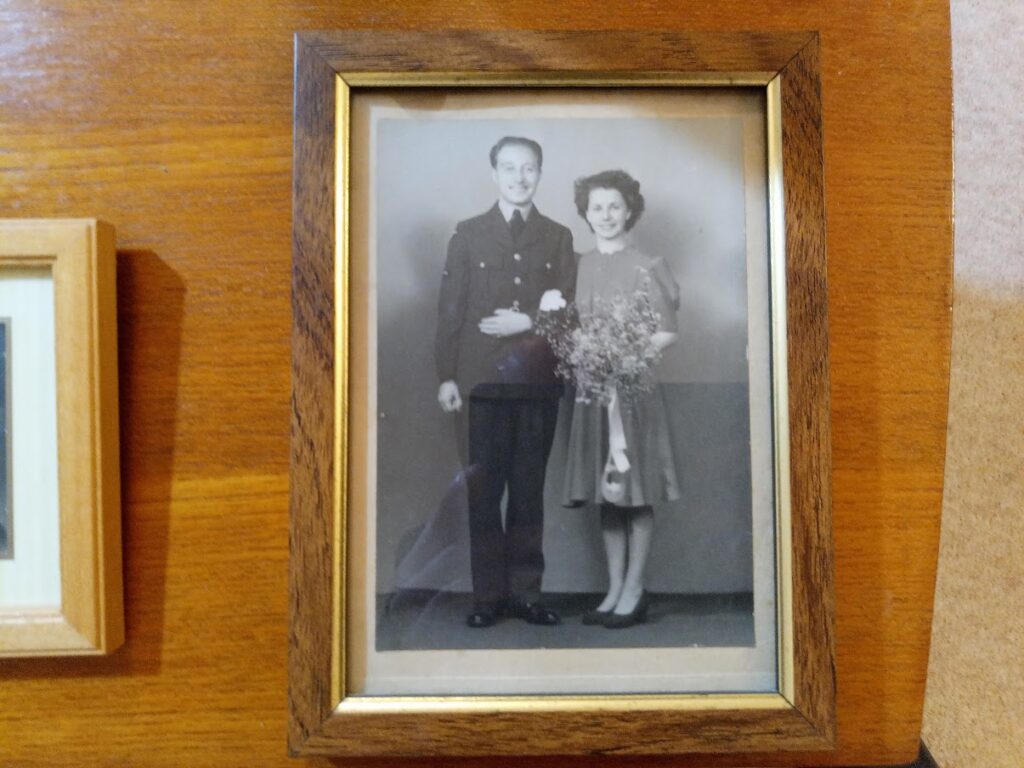
“But I danced with her anyway, and it developed. Her name was Helen Middlemiss Templeton. She was a Scottish lady, 19 years old, working as a wireless operator, and I was 23 by this stage. She became the love of my life,” he said.
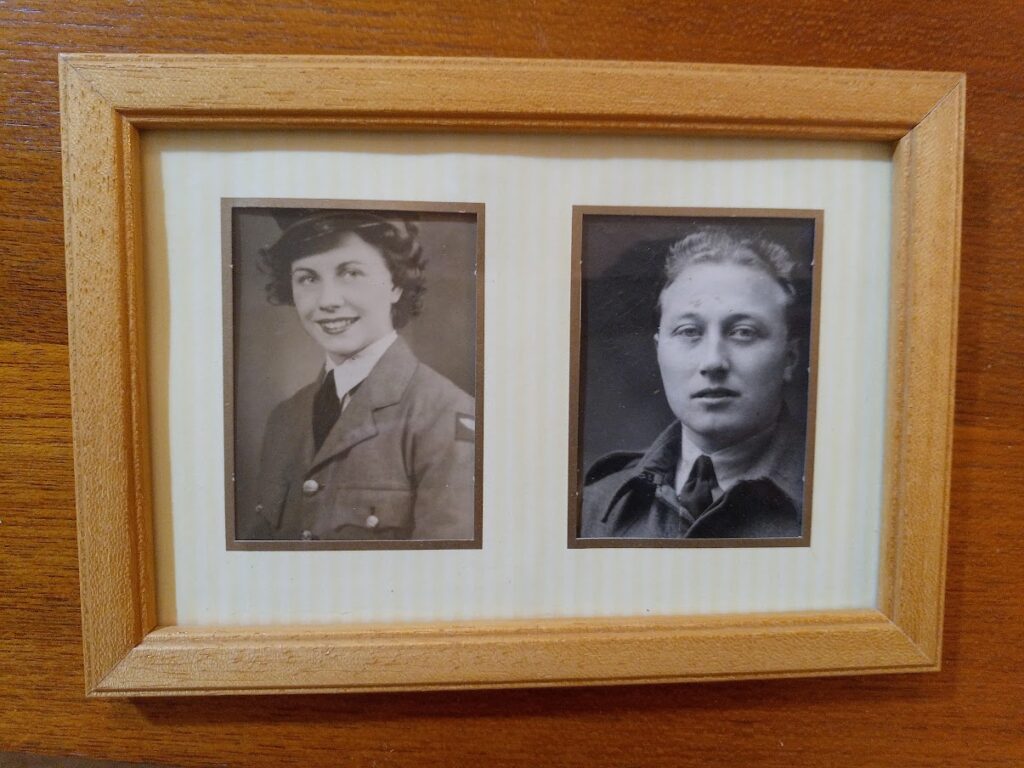
On VE Day, when the base was celebrating and things became rowdy, Bert, who always had keys to the aircraft hangers, sought refuge with Helen in the bomb aimers cone of an aircraft, where he proposed to her. She accepted, much to his delight.
Following the end of the war, the couple settled in Barry where they raised their sons, Raymond and Andrew.
Bert re-joined British Gas and worked his way up to become an internal auditor, where he often found himself seconded to the police Fraud Squad to assist them with high-profile cases.
Sadly, Helen died in 1993, and Bert still misses her very deeply. Despite his advancing years, Bert continues to live in his Barry bungalow, where his carer Non assists him with day-to-day tasks.
When asked what the secret is to his longevity, Bert said: “I try and live as independently as possible. Non is a great help to me and we enjoy a good rapport, but if I can do something for myself, I do it, and I think that’s very important.”

Follow us


TV personality comes to Penarth

First Minister accused of ‘letting victims down’ over grooming gangs inquiry

What does my ‘Sentinel Apiary’ actually do?
Trio are sentenced over ‘drugs in prison’ plot

The bells, the bells – bringing a Time and Tide Bell to Barry

Penalty shoot out leads to Cup exit for Airport