Group of mothers take legal action over Welsh Government sex education plans



By MARCUS STEAD

A group of four mothers are taking legal action against the Welsh Government over its plans to make relationships and sexuality education (RSE) compulsory for children as young as three when the new curriculum is rolled out in September.
Under the plans, parents will no longer have the right to withdraw their children from the classes, whereas in England, they will be entitled to remove their children until the age of 15.
Four mothers from the Public Child Protection Wales group have instructed international human rights barrister Paul Diamond to represent them and legal papers have been filed with the High Court in Cardiff.
A consultation document released by the Welsh Government last year proposes that for the ‘early development phase’ between the ages of three and seven, children will learn about ‘Developing empathy, kindness and compassion through positive, prosocial interactions’ along with ‘An awareness that there are different types of families and relationships’ and that ‘Everyone is unique’.
The document goes on to state that between the ages of eight and 11, children will be taught ‘An understanding of what characterises the nature of different families and range of relationships’ and ‘An understanding of the characteristics and value/benefits/challenges of living in a diverse society’.
The document proposes that between the ages of 12 and 16, children will learn about ‘Valuing safe, healthy and equitable relationships in a range of contexts (including marriage, and all types of civil partnership)’ and ‘How and why attitudes towards diversity are changing (including gender and sexual diversity)’.
Public Child Protection Wales consists of concerned parents, child abuse survivors and parents. In February, around 60 members of the group held a march from Cardiff Castle to the Welsh Parliament in protest at the plans.
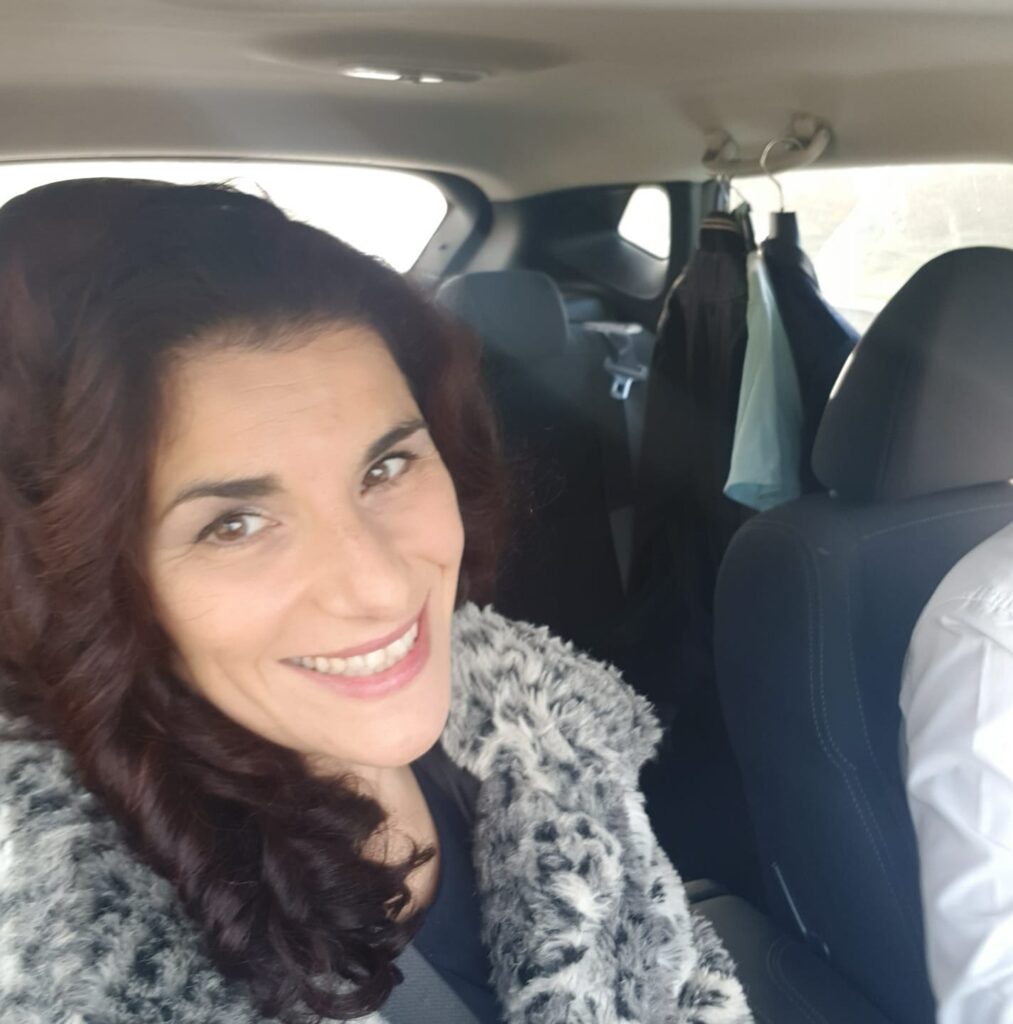
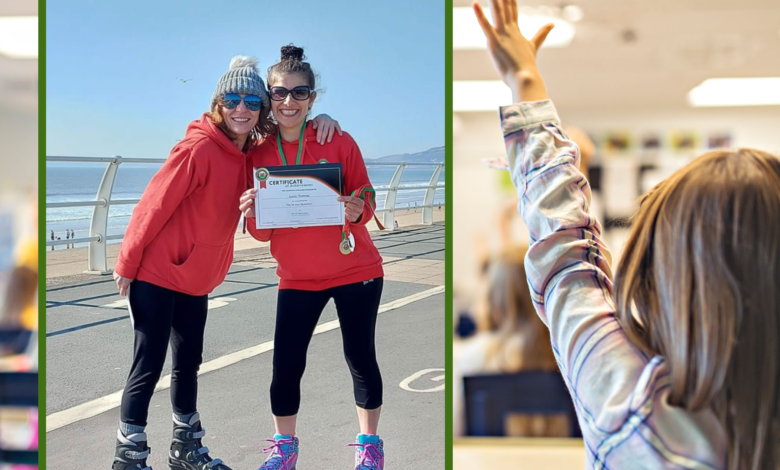
Lucia Thomas, a 41-year-old mother-of-two from Porthcawl and spokeswoman for the group said: “Ever since these proposals were announced, we’ve been seeking answers from the authorities with regards to who will be delivering these compulsory RSE lessons and we wanted specific details about what the content of the lessons would be, but we’ve been completely ignored.
“There’s a big ideology push taking place at the moment where the education system encourages children to think about their sexuality from a very young age. Children say they love their friends, but there are many types of love we feel towards different people in different contexts, and these proposals could cause a lot of confusion.”
Mrs Thomas, who runs her own accountancy business and is also a qualified neuro-linguistic programming coach, also expressed concerns about the loss of childhood innocence: “At the age of three, children don’t even know how to read and write. They’re beginning to develop friendships, they’re beginning to understand the concept of sharing with friends, they don’t need to be learning about the correct terms for their genitalia and sexual practises, and it can be detrimental to their mental health if they are burdened with so much information,” she said.
Mrs Thomas expressed concerns that the Welsh Government proposals do not take into account how children develop at different stages: “I have two children and they developed at slightly different ages. How can they force sex education on a class of 30? They’re not taking into account children with special needs, autistic children and children who have ADHD. One child may need to know about the birds and the bees at an earlier stage than another child.
“Primary school children should be allowed to enjoy their journey of self-discovery and focus on growing up. Sex and sex education shouldn’t come into their vocabulary.
“Children go through phases – when I was younger, I was a bit of a tomboy myself. If I was receiving these sex education lessons, I may have thought ‘maybe I want to be a boy’, because this huge push is stating that children who are interested in activities traditionally associated with the opposite sex may want to change their gender, but by the age of 16, I was much more feminine and I’d wear makeup,” she said.
The word ‘marriage’ only appears four times in the entire 22-page Welsh Government consultation document, whereas the word ‘sex’ appears 56 times, and one of Mrs Thomas’s main concerns is over the loss of the rights of parents to provide their children with sex education in the context of their religious and moral beliefs, rather than of those of the state: “I have now been married for 15 years, and it’s a journey you go through together. It’s about working through things, communication, and making time for one another.
“When children do learn about sex education, many people believe it should be done in the context of love and marriage. First of all, you meet someone and make a connection, and sex comes way afterwards.
“But the tone of what the Welsh Government is proposing seems to have an ‘anything goes’ approach to sex, telling children that you can have sex with whoever you want and from whatever gender you want, as long as it’s consensual, and those are attitudes that a very large number of parents disagree with.
“I’ve studied a great deal of scientific research that shows that casual sex and one-night stands leads to people feeling very empty and having a low self-worth. There’s nothing empowering about sexual promiscuity,” she said.
Last October, Tonia Antoniazzi, Labour MP for Gower, accused the Welsh Government of being ‘dictated’ to by LGBTQ+ charity Stonewall when it decided to adopt its definition of the Equality Act, which included swapping the term ‘gender reassignment’ to ‘gender identity’ in its Equality and Diversity Policy.
It was included in a document seen by the BBC, leading Ms Antoniazzi to say: “It is astonishing that the Welsh Government can so blatantly misrepresent the Equality Act 2010 as dictated to by Stonewall.
“They are promoting an ideological culture and rewriting the Equality Act at the same time. To misrepresent the law in this way shows a contempt not only for the law, but also to anyone who wishes to speak up for women or who has concerns around safeguarding.
“I’d also like to know what other organisations the Welsh Government draws on to test their policies and practices, and what their relationship is with Stonewall and the Senedd.
“This situation is risible, and as a Welsh Labour MP I am deeply disappointed that no minister has been available to respond to the BBC to defend their stance.”
Ms Antoniazzi also said there was a “lack of transparency and independence around policy making”: “I would urge [the Welsh Government] to provide a safe space for all staff to express their concerns without fear or favour,” she added.
In 2019, broadcaster Simon Fanshawe, who co-founded the British version of Stonewall in 1989 cut his links with the charity due to what he called their “intolerance of disagreement and discussion” and helped found the LGB Alliance later that year.
Mr Fanshawe’s fallout with Stonewall came when he expressed the opinion that proposed changes to the Gender Recognition Act for which Stonewall was campaigning meant people could legally ‘self-identify’ as whatever sex they chose, regardless of their biology, had serious implications for the rights of women.
A number of public bodies severed their links to Stonewall’s diversity scheme, including the BBC, the Equality and Human Rights Commission, Channel 4 and the House of Commons. However, the Welsh Government has strengthened its links with the controversial body, and last July First Minister Mark Drakeford issued an online video in which he endorsed Stonewall Cymru’s ‘Prouder Together’ celebration.
In response to the upcoming legal action, a spokesperson for the Welsh Government said groups including the NSPCC and the Welsh Children’s Commissioner’s Office supported the plans for compulsory RSE: “It is completely untrue to suggest that we’re “sexualising” children.
“As part of the new curriculum, all pupils in Wales will have full access to high-quality relationships and sexuality education designed to safeguard them and in time, support them to navigate the complex area of relationships and sexuality.”
Ommitted from printed version
In the printed version of the Glamorgan Star, published May 5, the very last word in this article did not appear on the page. Our apologies go to anyone confused by this error. The missing word is ‘sexuality’.


| Scroll down to comment on this article
First Minister accused of ‘letting victims down’ over grooming gangs inquiry

What does my ‘Sentinel Apiary’ actually do?
Trio are sentenced over ‘drugs in prison’ plot

The bells, the bells – bringing a Time and Tide Bell to Barry

Penalty shoot out leads to Cup exit for Airport
Ring rusty Barry RFC make a promising start

| Scroll down to comment on this article