


Pause for thought
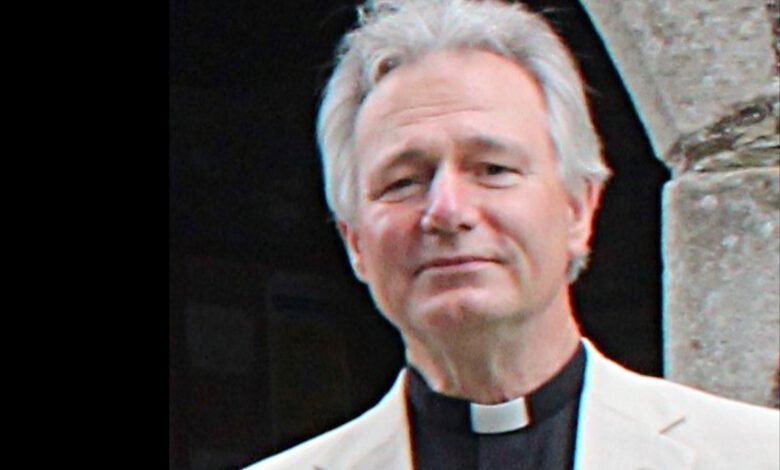
By Revd Robert Parrish
The Church in Wales clergy of Barry have particular reason to be grateful to the late Sharon Harris, for it was she who invited myself and Revd Zoë King to write a regular column for the Glamorgan Star. I thought at the time that it was a brave decision. For I was sure that many readers would object to a religion column in a secular newspaper.
But the only criticism we have received is from readers who think we have misrepresented Christianity by not insisting that every word of the Bible is literally true. One reader wrote ‘Jesus taught us “religion” and Christianity are not the same – think of those pious Pharisees –and that it is all about one’s personal relationship with the living Christ.’
In fact, Jesus never taught that there is a distinction between Christianity and other religions, including Judaism. For one thing, the word ‘Christian’ was never used in his lifetime (see Acts 11 v26). Jesus said ‘I was sent only to the lost sheep of Israel’ (Matthew 15 v24). He had come to prepare his people, the Jews, for the coming of God’s kingdom (Mark 1 v15). He criticised the Pharisees not because they refused to ‘become Christians’, but because they failed to practice what they preached (Matthew 23 v3).
The idea that there is a distinction between Christianity and other religions, with Christianity being God’s reaching down to humanity, and other religions being humanity’s futile attempt to reach up to God, was an idea of the 20th century theologian Karl Barth. Some earlier theologians took a more generous view of non-Christian religions. For example, St Augustine: ‘that very thing which is now called the Christian religion existed in antiquity, nor was absent since the beginning of the human race until such time as Christ should come in the flesh, whence true religion, which existed already, began to be called Christian.’ So people who have lived at times and places when it wasn’t possible to become Christians have known ‘true religion’ by living by the best insights available to them. Whenever people have prayed in sincerity of heart that have been heard by the one true God.
Take, for example, these words from the Hindu Bhagavad Gita (‘The Lord’s Song’): ‘Regard me as your dearest loved one.….The Lord lives in the heart of every creature…Take refuge utterly in him.’
But what about those who have had the opportunity to become Christians but have rejected it? Could it be that they have rejected Christianity because of the behaviour of Christians? ‘The name of God is blasphemed among the nations because of you’ (Romans 2 v24). Who would be at fault then?
I do not think there is a contradiction between evangelism (sharing the Christian faith) and dialogue between religions, because true evangelism means sharing one’s insights with others in openness and trust, and being prepared to learn from theirs. As St John Henry Newman wrote ‘heart speaks to heart.’
Some readers will think that the case for religion being a source for good has been destroyed by religious conflicts. Jonathan Swift said ‘We have just enough religion to make us hate, but not enough to make us love one another.’ But as GK Chesterton wrote: ‘Christianity has not been tried and found wanting. It has been found difficult and left untried.’ Doubtless the same can be said of other religions.

Disclaimer: The views expressed by columnists of this newspaper do not necessarily reflect the views of the Glamorgan Star, its employees or proprietors.